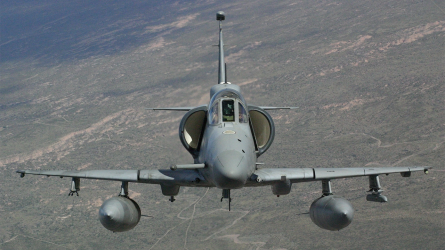

military operator of the Scooter (aka A-4 Skyhawk). One of my all-time favorite warbirds.
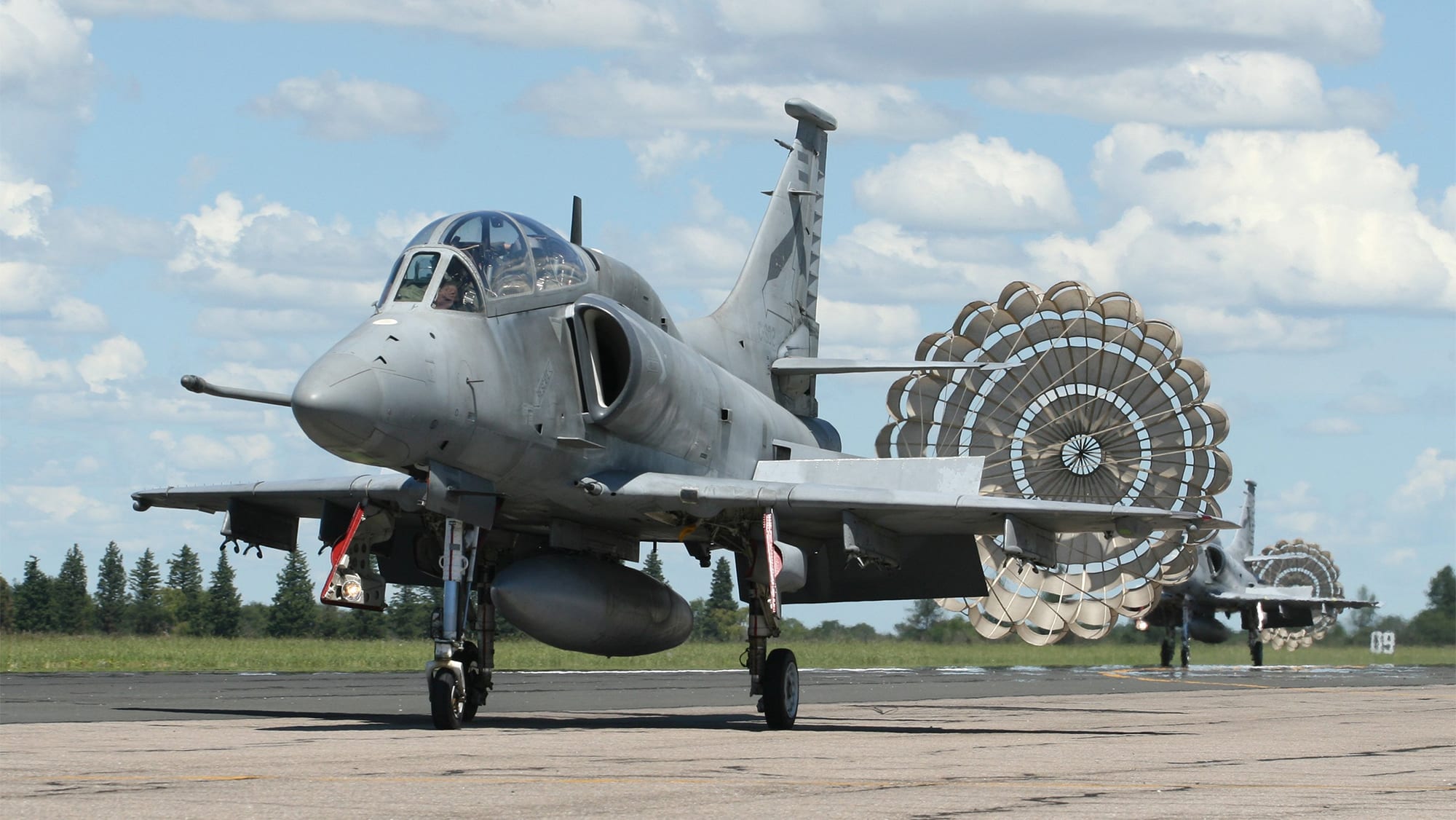
Argentina has withdrawn the last of its A-4AR/OA-4AR Fightinghawks, modernized versions of the classic A-4 Skyhawk, a type that saw six decades of service in the South American nation. The retirement of the A-4s comes as the Argentine Air Force (locally, the Fuerza Aérea Argentina, FAA) introduces the F-16 as its new fighter, signaling a major overhaul of capabilities.

 www.twz.com
 theaviationist.com

The FAA announced the “definitive decommissioning” of the Fightinghawk fleet at Villa Reynolds Air Base in San Luis province yesterday. The base was home to the final Argentine A-4 unit, the 5th Air Brigade (V Brigada Aérea).


A version that was unique to Argentina, the Fightinghawk emerged from a major modernization program carried out by Lockheed Martin on former U.S. Marine Corps A-4M and OA-4M Skyhawks, which were taken out of storage at the Aerospace Maintenance and Regeneration Center (AMARC). Work on the first batch of aircraft was conducted by Lockheed Martin in Ontario, California, with the remainder upgraded in Córdoba, Argentina.

Fightinghawk deliveries to Argentina comprised 32 A-4ARs and four OA-4ARs, beginning in the mid-1990s. Interestingly, these upgraded jets were equipped with the same AN/APG-66 radar used in early F-16 variants and were capable of carrying AIM-9M Sidewinder air-to-air missiles.
In the cockpit, the Fightinghawk introduced hands-on-throttle-and-stick (HOTAS) controls, multifunction displays, and a new head-up display. Also installed were an onboard computerized mission-planning system and a new navigation/attack computer. Radar-warning receivers and onboard oxygen-generating equipment rounded out the upgrade package.
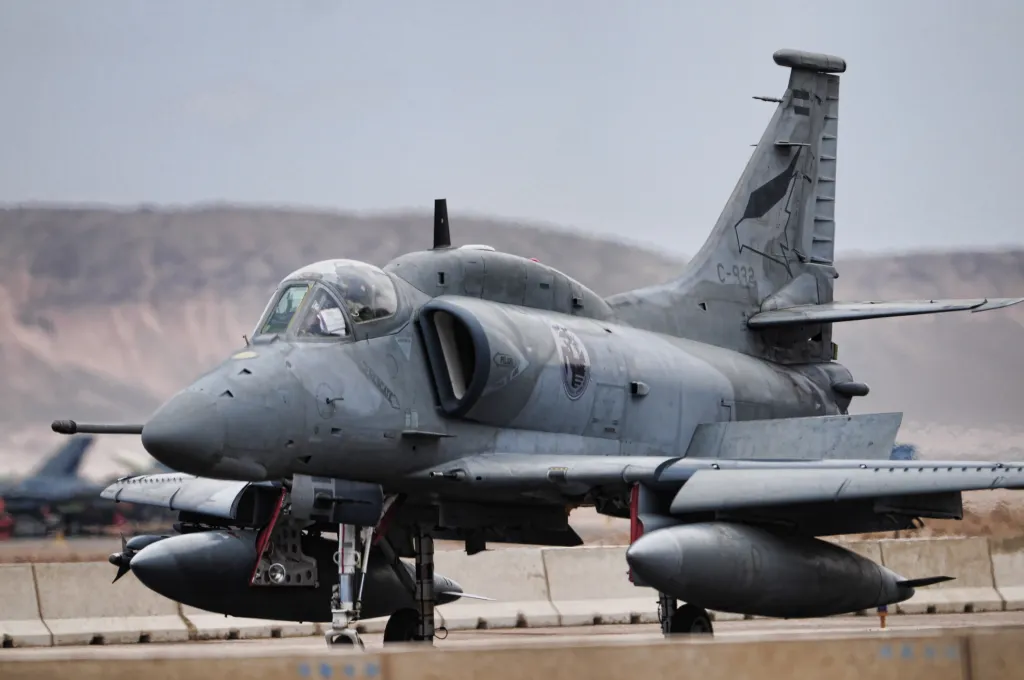
Although significantly more capable than the Vietnam-era Skyhawks they evolved from, the Fightinghawk was never designed as a dedicated air-defense fighter. Nevertheless, it was forced into that role after Argentina retired its last French-built Mirage fighters in 2015.
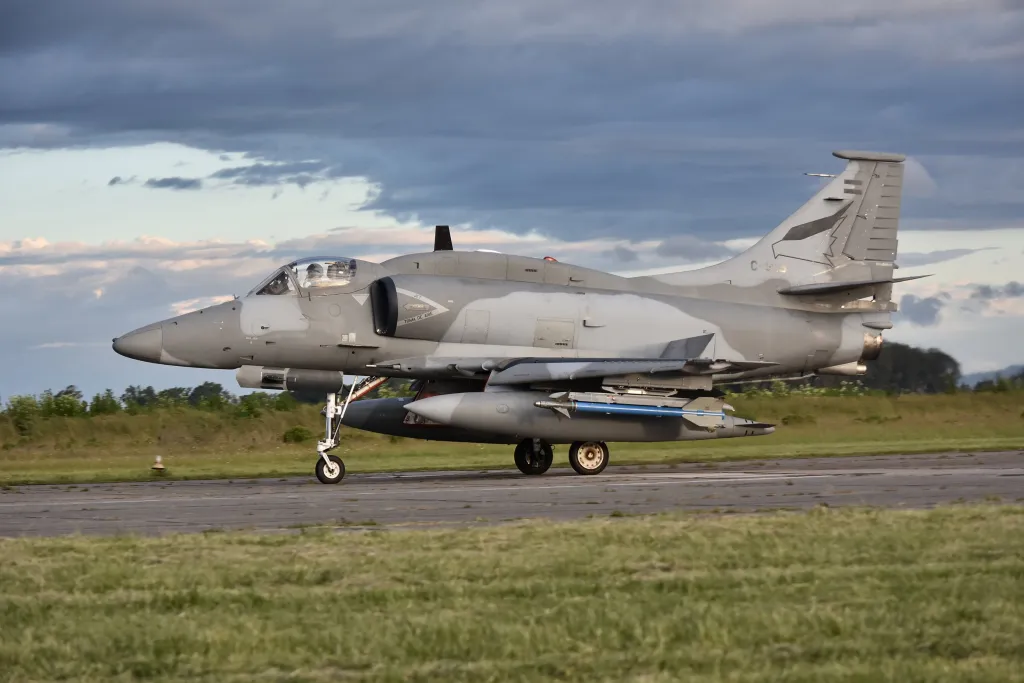
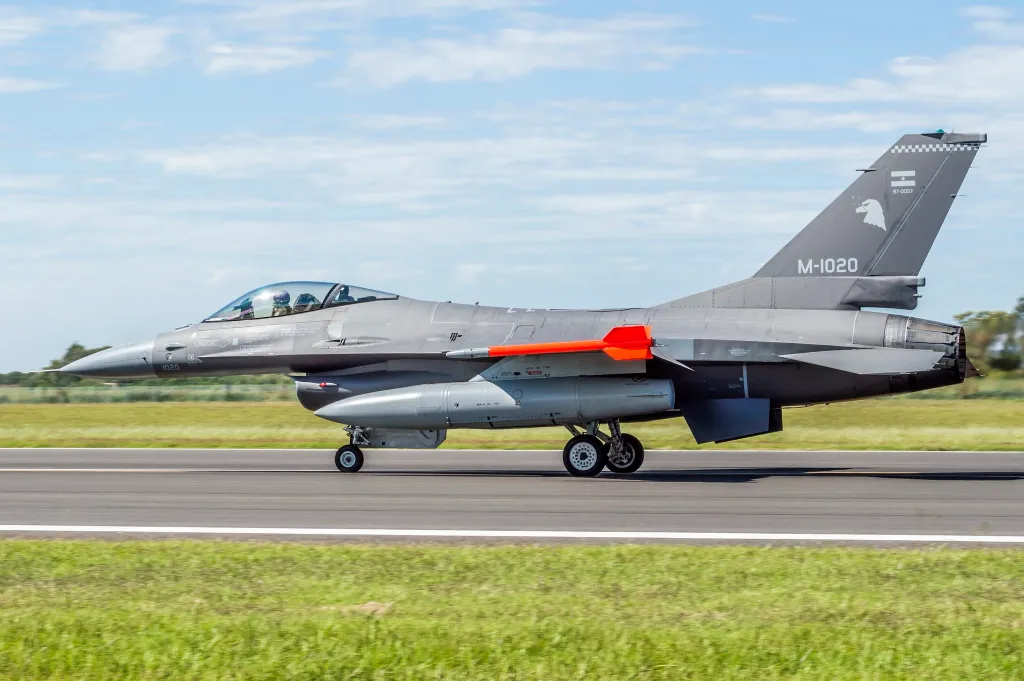
The FAA is now in the process of introducing 24 ex-Danish F-16s, in the form of 16 single-seat F-16AMs and eight two-seat F-16BMs. It is also receiving several older Viper airframes for use as training aids and a spare parts source.
With the retirement of the Fightinghawk, the A-4 remains in active military service only with neighboring Brazil.
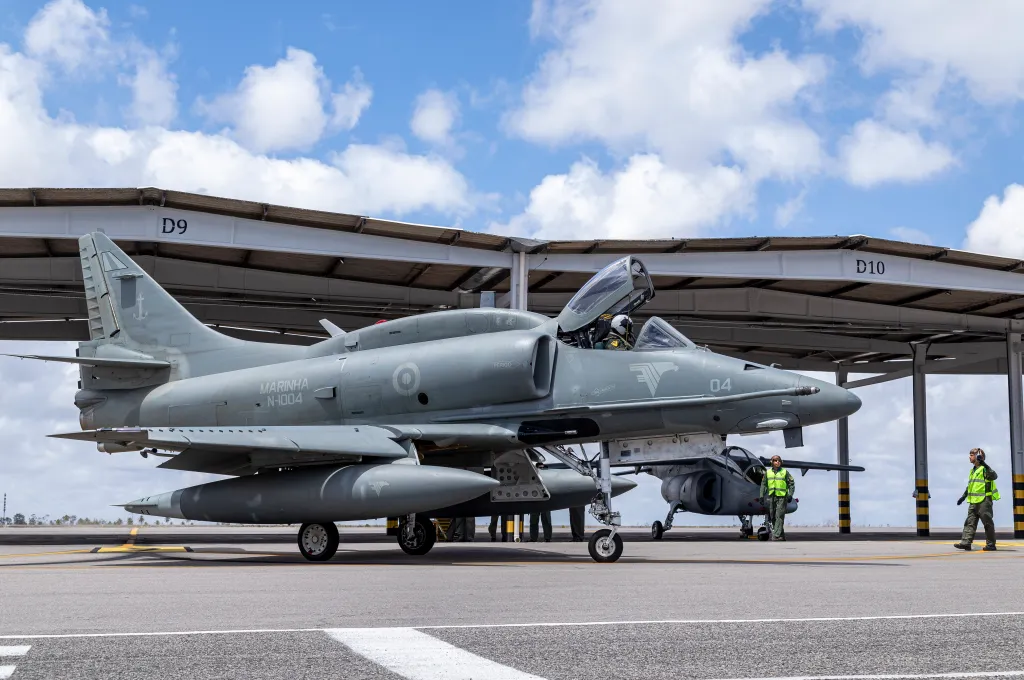
The Brazilian Navy also acquired A-4s for carrier operations, but the retirement of its sole flattop, Sao Paulo, means that the value of its Skyhawks, locally designated AF-1, is increasingly questionable. However, work has been undertaken to upgrade these aircraft to ensure they remain viable, albeit now operating from a land base, at São Pedro da Aldeia.
In all, five single-seaters and a pair of two-seaters were brought up to AF-1B and AF-1C standards, respectively. The seven upgraded Skyhawks received airframe and engine overhauls, a new Elta Systems EL/M-2032 multi-mode radar, a glass cockpit with HOTAS controls, and various other improvements.
In the meantime, however, the A-4 continues to provide good service to private military contractors, who appreciate the jet for its versatility, agility, and relatively low operating costs, meaning that it excels as both an adversary and as a test and training platform. Chief among these operators is the Canadian Top Aces, flying ex-Israeli A-4s, and Florida-based Draken International, which operates a fleet of the jets that previously flew with the Royal New Zealand Air Force.
Argentina has withdrawn the last of its A-4AR/OA-4AR Fightinghawks, modernized versions of the classic A-4 Skyhawk, a type that saw six decades of service in the South American nation. The retirement of the A-4s comes as the Argentine Air Force (locally, the Fuerza Aérea Argentina, FAA) introduces the F-16 as its new fighter, signaling a major overhaul of capabilities.
Argentina Retires Its A-4 Fightinghawks
After six decades of service, the A-4’s first export operator has finally stood down its Skyhawks as it introduces its first F-16s. After six decades of service, the A-4’s first export operator has finally stood down its Skyhawks as it introduces its first F-16s.
www.twz.com
Argentina Retires Last A-4 Skyhawks as F-16s Enter Service
The withdrawal of Argentina's last A-4AR Fightinghawks was officially announced on May 14, 2026, ending 60 years of Argentinian A-4 operations.
theaviationist.com
The FAA announced the “definitive decommissioning” of the Fightinghawk fleet at Villa Reynolds Air Base in San Luis province yesterday. The base was home to the final Argentine A-4 unit, the 5th Air Brigade (V Brigada Aérea).
A version that was unique to Argentina, the Fightinghawk emerged from a major modernization program carried out by Lockheed Martin on former U.S. Marine Corps A-4M and OA-4M Skyhawks, which were taken out of storage at the Aerospace Maintenance and Regeneration Center (AMARC). Work on the first batch of aircraft was conducted by Lockheed Martin in Ontario, California, with the remainder upgraded in Córdoba, Argentina.
Fightinghawk deliveries to Argentina comprised 32 A-4ARs and four OA-4ARs, beginning in the mid-1990s. Interestingly, these upgraded jets were equipped with the same AN/APG-66 radar used in early F-16 variants and were capable of carrying AIM-9M Sidewinder air-to-air missiles.
In the cockpit, the Fightinghawk introduced hands-on-throttle-and-stick (HOTAS) controls, multifunction displays, and a new head-up display. Also installed were an onboard computerized mission-planning system and a new navigation/attack computer. Radar-warning receivers and onboard oxygen-generating equipment rounded out the upgrade package.
Although significantly more capable than the Vietnam-era Skyhawks they evolved from, the Fightinghawk was never designed as a dedicated air-defense fighter. Nevertheless, it was forced into that role after Argentina retired its last French-built Mirage fighters in 2015.
The FAA is now in the process of introducing 24 ex-Danish F-16s, in the form of 16 single-seat F-16AMs and eight two-seat F-16BMs. It is also receiving several older Viper airframes for use as training aids and a spare parts source.
With the retirement of the Fightinghawk, the A-4 remains in active military service only with neighboring Brazil.
The Brazilian Navy also acquired A-4s for carrier operations, but the retirement of its sole flattop, Sao Paulo, means that the value of its Skyhawks, locally designated AF-1, is increasingly questionable. However, work has been undertaken to upgrade these aircraft to ensure they remain viable, albeit now operating from a land base, at São Pedro da Aldeia.
In all, five single-seaters and a pair of two-seaters were brought up to AF-1B and AF-1C standards, respectively. The seven upgraded Skyhawks received airframe and engine overhauls, a new Elta Systems EL/M-2032 multi-mode radar, a glass cockpit with HOTAS controls, and various other improvements.
In the meantime, however, the A-4 continues to provide good service to private military contractors, who appreciate the jet for its versatility, agility, and relatively low operating costs, meaning that it excels as both an adversary and as a test and training platform. Chief among these operators is the Canadian Top Aces, flying ex-Israeli A-4s, and Florida-based Draken International, which operates a fleet of the jets that previously flew with the Royal New Zealand Air Force.