

dylanrutan
Alpha
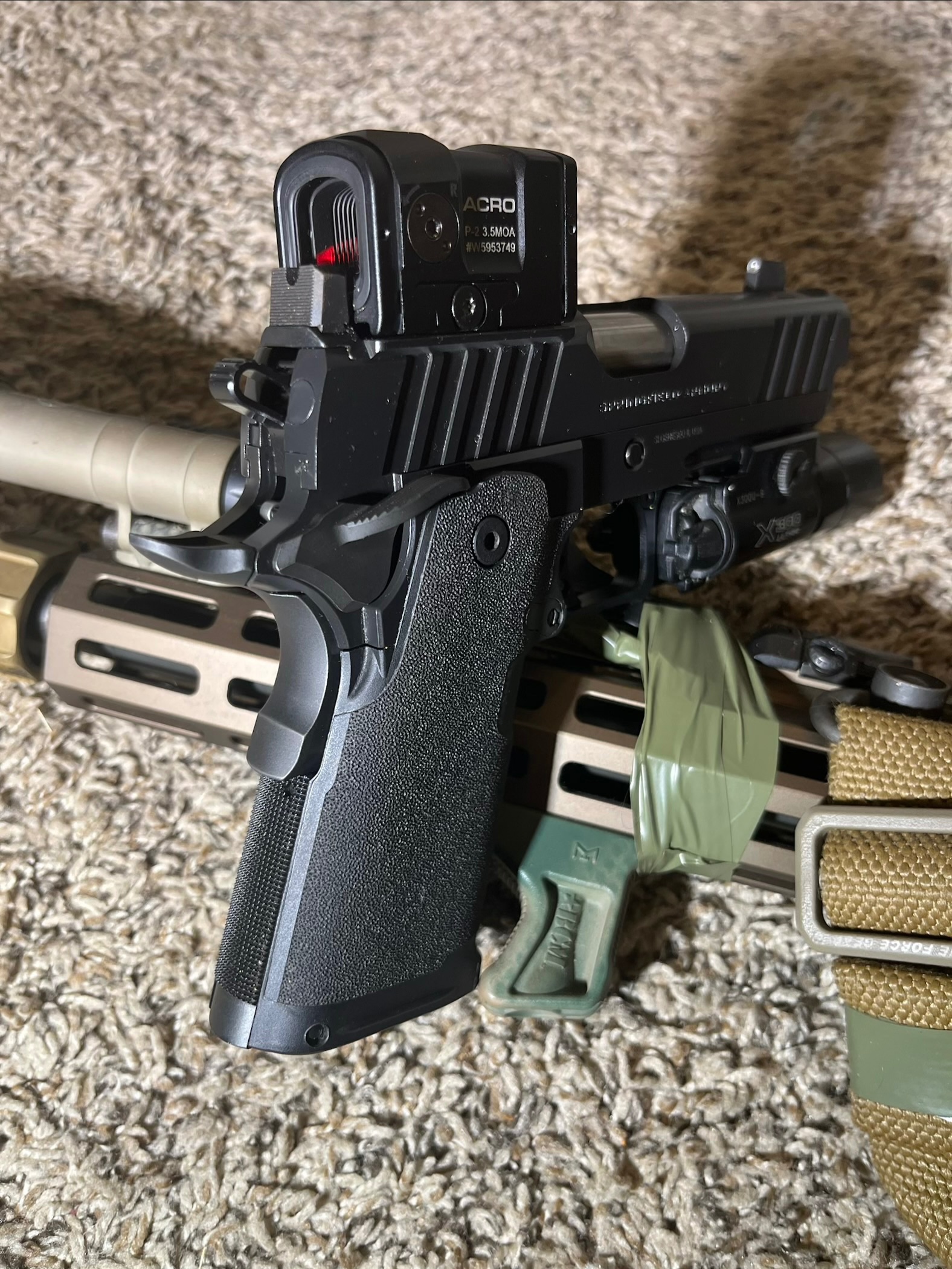
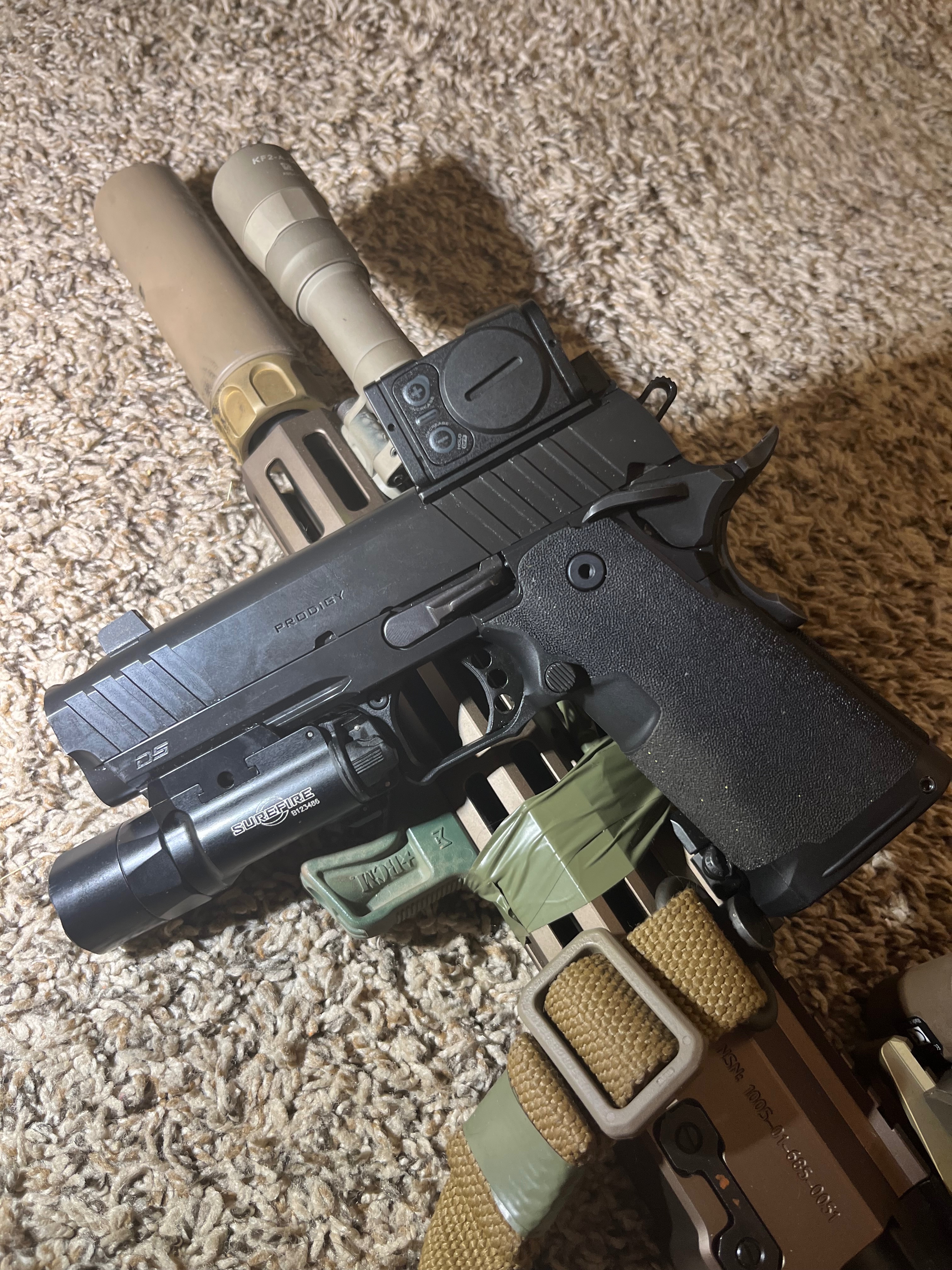
I recently upgraded my Prodigy with an ignition kit and a mainspring housing kit, and wanted to share my experience for anyone considering a similar setup. For the ignition kit, I spec’d it with a blued solid hammer, Prodigy short sear, ball head disconnector, Colt sear spring, stainless hammer strut, and a blued strut pin. Right out of the package, all parts were of excellent quality with clean machining and no noticeable burrs or imperfections.
Installation was straightforward, but it did require fitting of the thumb safety. In order to achieve proper engagement without significant binding, I removed a small amount of material from the safety lobe where it interfaces with the sear using a triangular needle file, then refined the surface with 1000 grit sandpaper wetted with CLP. After that, the safety engaged cleanly and positively. I would strongly recommend ordering a new thumb safety along with the ignition kit so you can retain your original parts and revert to stock if needed. I however did not and was fitting the OEM safety.
At the same time, I installed the MSH housing and build kit, which I spec’d with a 19 lb mainspring. The housing itself has aggressive texturing exactly where you want it on a CCW pistol—at the rear of the frame where it won’t rub during appendix carry. It looks great and noticeably improves the feel and control of the pistol in hand.
The trigger is where this setup really shines. There is a very cleanly defined wall with practically no creep once you reach it, followed by a crisp, glass like break. The overall trigger weight felt about the same as before, but I believe it can be reduced further with some additional sear spring tuning. I did intentionally tune the trigger return spring a bit on the heavier side since I prefer a more aggressive reset, and I also tuned the grip safety spring for a stronger return.
The following day, I put 450 rounds of 124gr NATO ball (M882) through the gun with zero stoppages. I ran a mix of failure-to-stop drills controlled pairs, and single shots at distances ranging from 5 to 25 yards. The clean trigger break made follow-up shot cadence consistent under speed. However, with the 19 lb mainspring and higher-pressure NATO ammo, the recoil impulse was noticeably sharper compared to the stock setup.
To address that, I’m considering a few adjustments, including installing a short radius firing pin stop, experimenting with a slightly stronger recoil spring, or possibly moving up to a 21 lb mainspring to split the difference between the stock 23 lb and the current 19 lb. For reference, I’m currently running the EGW full-length guide rod kit with a 12 lb flat wire ISMI recoil spring.
Overall, I’m very happy with the upgrade. The improvement in trigger feel alone makes it worthwhile, and reliability has been perfect so far. The only tradeoff is needing to fine-tune the spring setup to balance recoil with hotter ammo, which is expected when deviating from factory specifications. Curious to hear what others are running in terms of spring weights and firing pin stop setups, especially with NATO pressure loads.
Installation was straightforward, but it did require fitting of the thumb safety. In order to achieve proper engagement without significant binding, I removed a small amount of material from the safety lobe where it interfaces with the sear using a triangular needle file, then refined the surface with 1000 grit sandpaper wetted with CLP. After that, the safety engaged cleanly and positively. I would strongly recommend ordering a new thumb safety along with the ignition kit so you can retain your original parts and revert to stock if needed. I however did not and was fitting the OEM safety.
At the same time, I installed the MSH housing and build kit, which I spec’d with a 19 lb mainspring. The housing itself has aggressive texturing exactly where you want it on a CCW pistol—at the rear of the frame where it won’t rub during appendix carry. It looks great and noticeably improves the feel and control of the pistol in hand.
The trigger is where this setup really shines. There is a very cleanly defined wall with practically no creep once you reach it, followed by a crisp, glass like break. The overall trigger weight felt about the same as before, but I believe it can be reduced further with some additional sear spring tuning. I did intentionally tune the trigger return spring a bit on the heavier side since I prefer a more aggressive reset, and I also tuned the grip safety spring for a stronger return.
The following day, I put 450 rounds of 124gr NATO ball (M882) through the gun with zero stoppages. I ran a mix of failure-to-stop drills controlled pairs, and single shots at distances ranging from 5 to 25 yards. The clean trigger break made follow-up shot cadence consistent under speed. However, with the 19 lb mainspring and higher-pressure NATO ammo, the recoil impulse was noticeably sharper compared to the stock setup.
To address that, I’m considering a few adjustments, including installing a short radius firing pin stop, experimenting with a slightly stronger recoil spring, or possibly moving up to a 21 lb mainspring to split the difference between the stock 23 lb and the current 19 lb. For reference, I’m currently running the EGW full-length guide rod kit with a 12 lb flat wire ISMI recoil spring.
Overall, I’m very happy with the upgrade. The improvement in trigger feel alone makes it worthwhile, and reliability has been perfect so far. The only tradeoff is needing to fine-tune the spring setup to balance recoil with hotter ammo, which is expected when deviating from factory specifications. Curious to hear what others are running in terms of spring weights and firing pin stop setups, especially with NATO pressure loads.


