A-10s Deployed To The Middle East Now Flying With New Refueling Probe And Angry Kitten EW Pod
Just over a month after the first test, the A-10C is now flying in the Middle East with the new Probe Refueling Adapter which allows it to refuel from the HC-130J with the probe and drogue system.
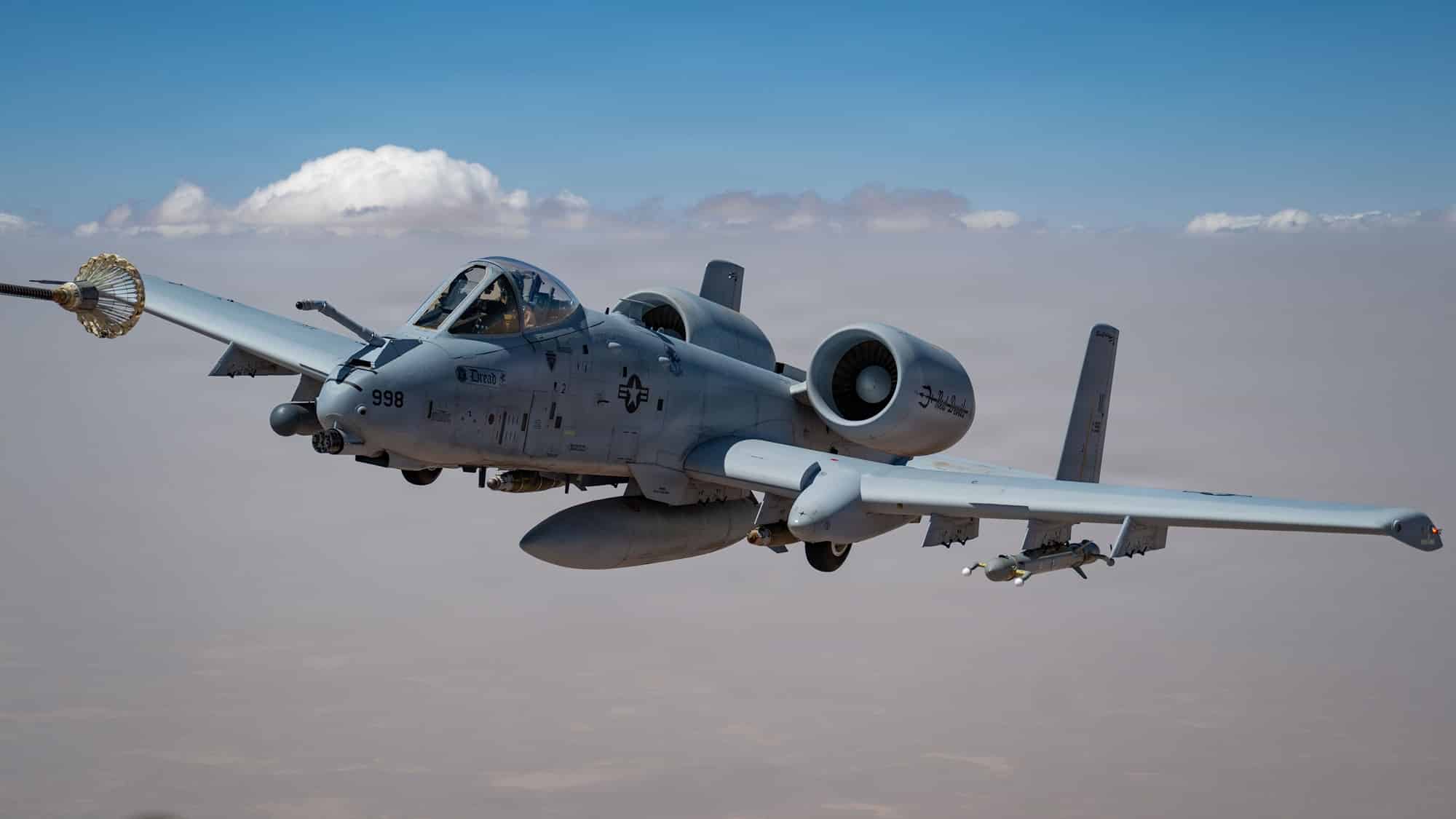
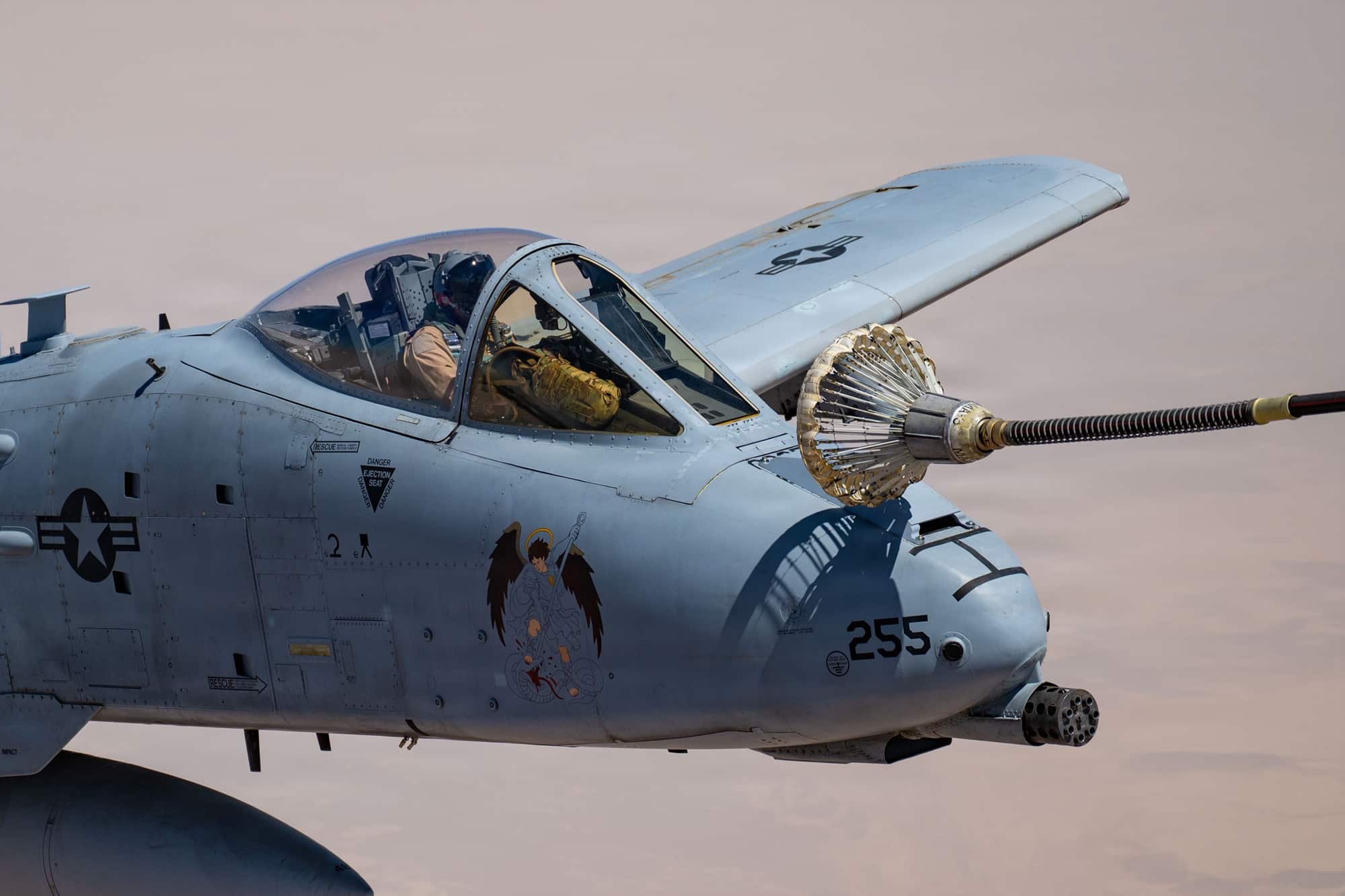
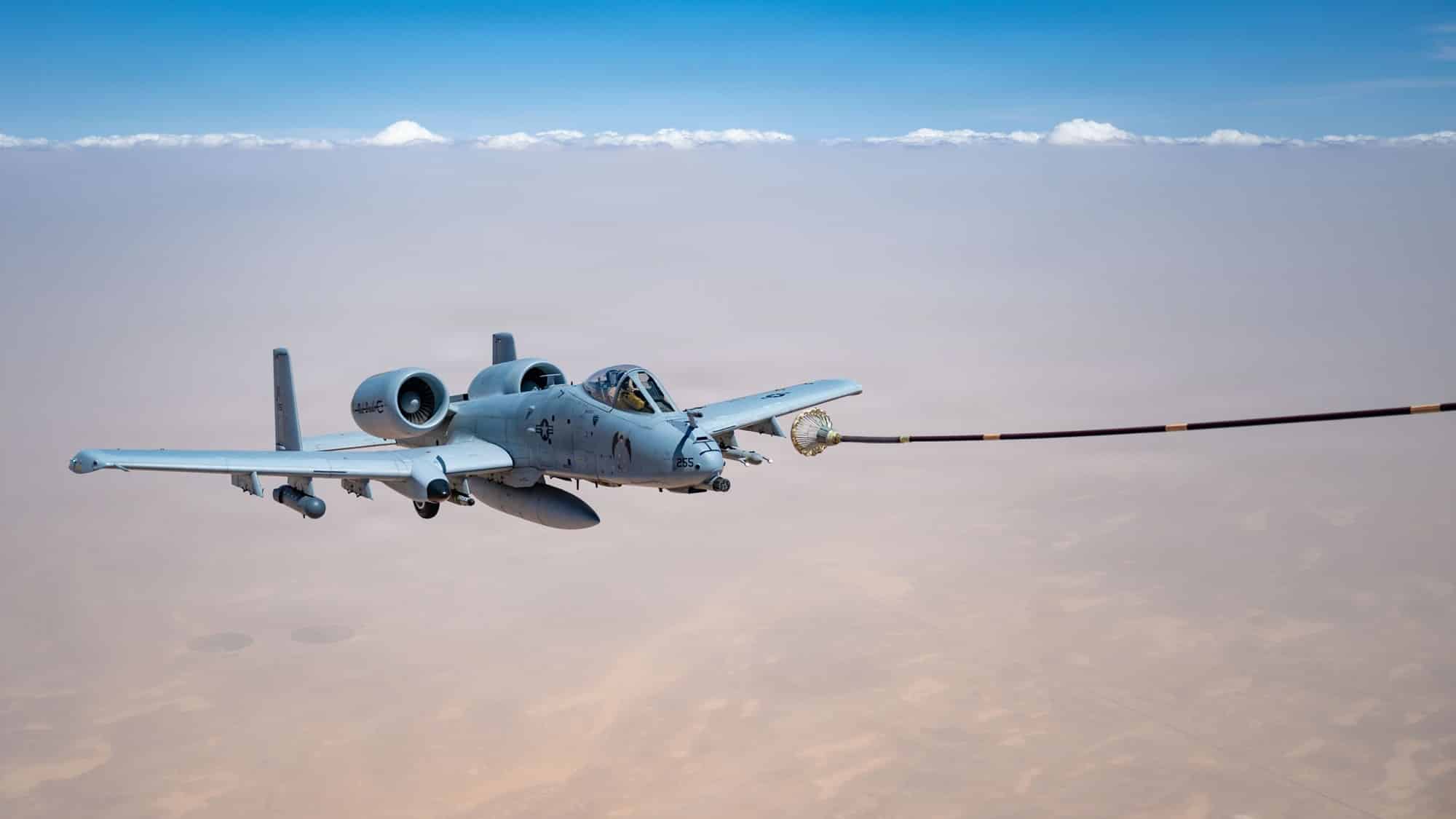
The U.S. Air Force has released the first photos showing the A-10C Thunderbolt II attack jet using the Probe Refueling Adapter in the Middle East to refuel from an HC-130J Combat King II. The system was first tested in early April to give the A-10 a new probe and drogue air refueling capability and significantly expand its refueling options.
Just over a month after the first test, the A-10C is now flying in the Middle East with the new Probe Refueling Adapter which allows it to refuel from the

theaviationist.com
The U.S. Air Force has released the first photos showing the A-10C Thunderbolt II attack jet using the Probe Refueling Adapter in the Middle East to refuel from an HC-130J Combat King II. The system
was first tested in early April to give the A-10 a new probe and drogue air refueling capability and significantly expand its refueling options.
The close air support aircraft has been so far dependent on the KC-135 Stratotanker, as it is not yet cleared to refuel from the newer KC-46 Pegasus. An urgent combatant command requirement thus emerged to address operational availability of aerial refueling in theater, with the goal of refueling the A-10 from C-130-based tankers.
The new photos, released on May 21, 2026, show A-10s refueling from an HC-130J in the U.S. Central Command area of responsibility on May 9, 2026. The Warthogs are assigned to the 107th Fighter Squadron from Selfridge ANGB, Michigan,
which arrived in the Middle East in early April.
 A U.S. Air Force A-10C Thunderbolt II aircraft approaches an HC-130J Combat King II aircraft for aerial refueling
in the U.S. Central Command area of responsibility, May 9, 2026. (Image Credit: U.S. Air Force)
The photos have been released just a day after a video showing the first use of the new probe by the A-10s from Moody Air Force Base, Georgia. The refueling, conducted on May 19, similarly used an HC-130J as tanker.
Probe Refueling Adapter
An urgent combatant command requirement aimed to address operational availability of aerial refueling in theater with the use of C-130-based tankers. In a short timeframe, a Probe Refueling Adapter was designed and tested for the first time on Apr. 2, 2026.
As it can be seen in the photos, the adapter fits into the
air refueling receptacle on the nose of the A-10. Once installed, this converts the aircraft from its standard boom refueling configuration to a probe and drogue system.
The Air National Guard Air Force Reserve Command Test Center (AATC) says the probe adapter is a field-configurable solution, and thus can be installed by operational flight line personnel “in a matter of hours,” without having to resort to depot facilities. This allows “aircraft to be reconfigured between boom and probe refueling capability based on mission requirements,” explains the statement.
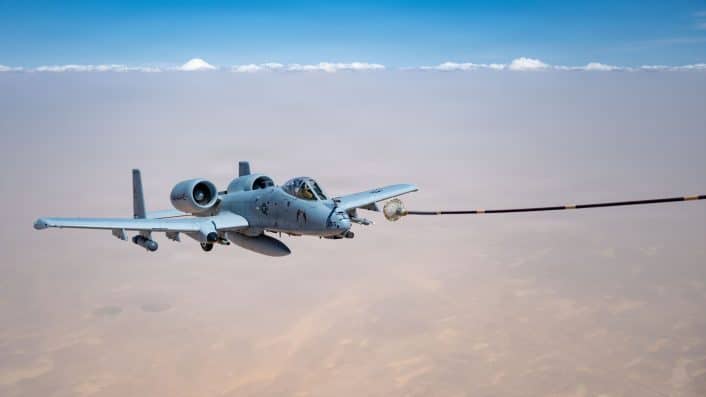
A U.S. Air Force A-10C Thunderbolt II aircraft approaches an HC-130J Combat King II aircraft for aerial refueling in the U.S. Central Command area of responsibility, May 9, 2026. (Image Credit: U.S. Air Force)
Angry Kitten pod
The
Angry Kitten electronic warfare pod, initially born as a training pod derived from the AN/ALQ-167, has evolved as a modular DFRM-based electronic warfare pod and is now at its first combat employment.
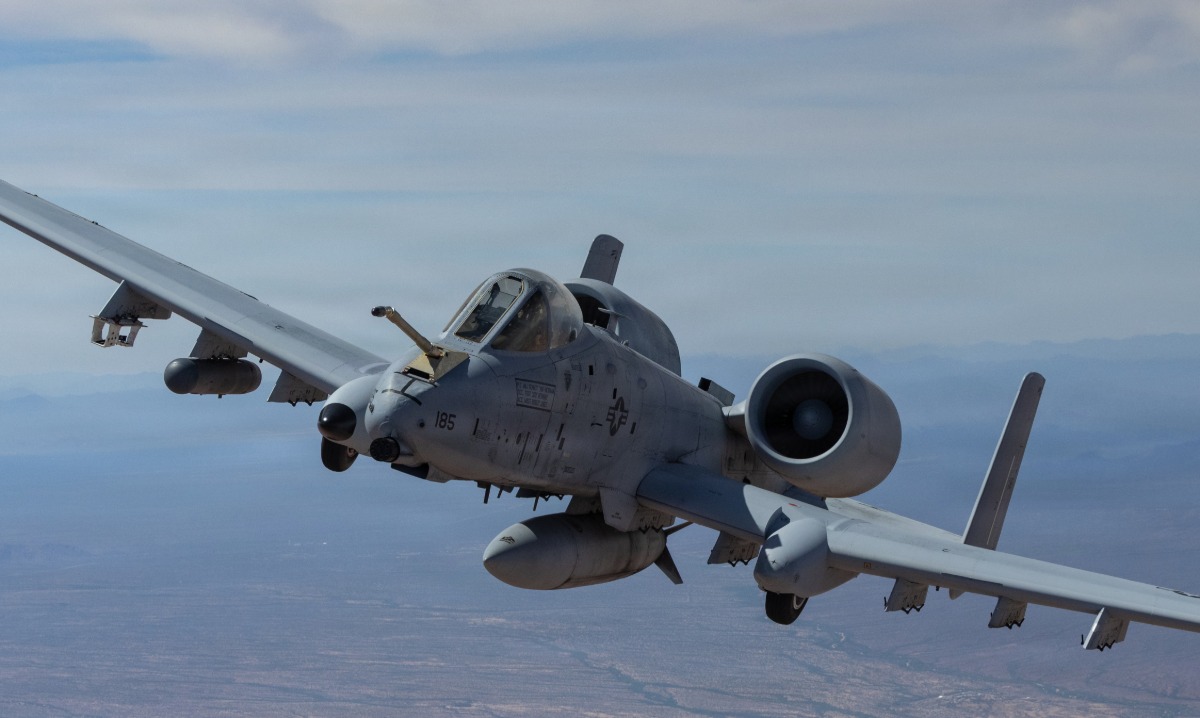
Notably, the A-10s photographed in the Middle East are also equipped with the Angry Kitten electronic warfare pod. The pod, which
saw the first combat use during Operation Epic Fury aboard the F-16s flying Suppression of Enemy Air Defenses (SEAD) missions, was previously tested on the A-10 but never publicly seen in an operational setting abroad.
The pod is also said to be quickly reprogrammable with updates pushed in real-time, without sending it back to the contractor. The approach enables rapid optimization of jamming against threat systems with reduced costs and development times.



 www.militarytimes.com

 taskandpurpose.com

 www.twz.com

 www.airandspaceforces.com

 www.airforcetimes.com

 www.defensenews.com

 aviationweek.com