testtest

The Last Revolver Samuel Colt Ever Made

Talyn

Emissary
Founding Member
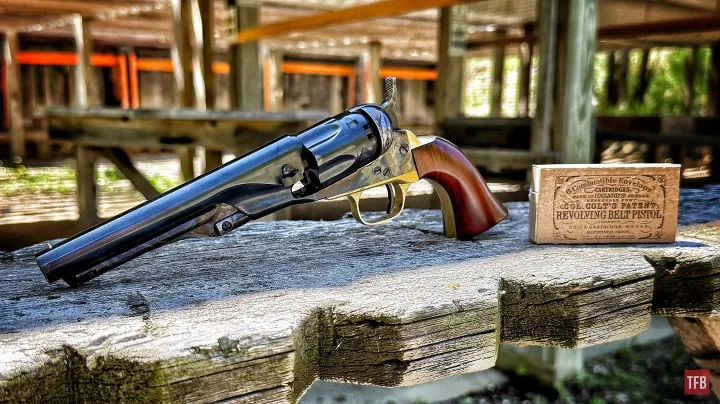
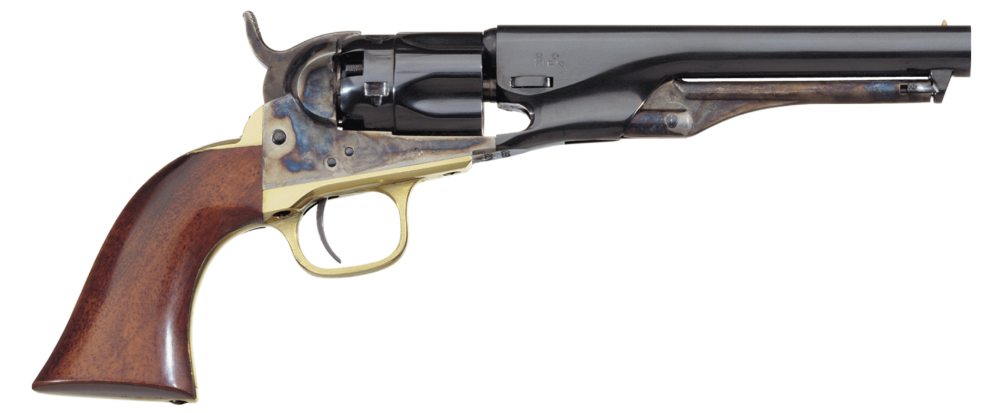
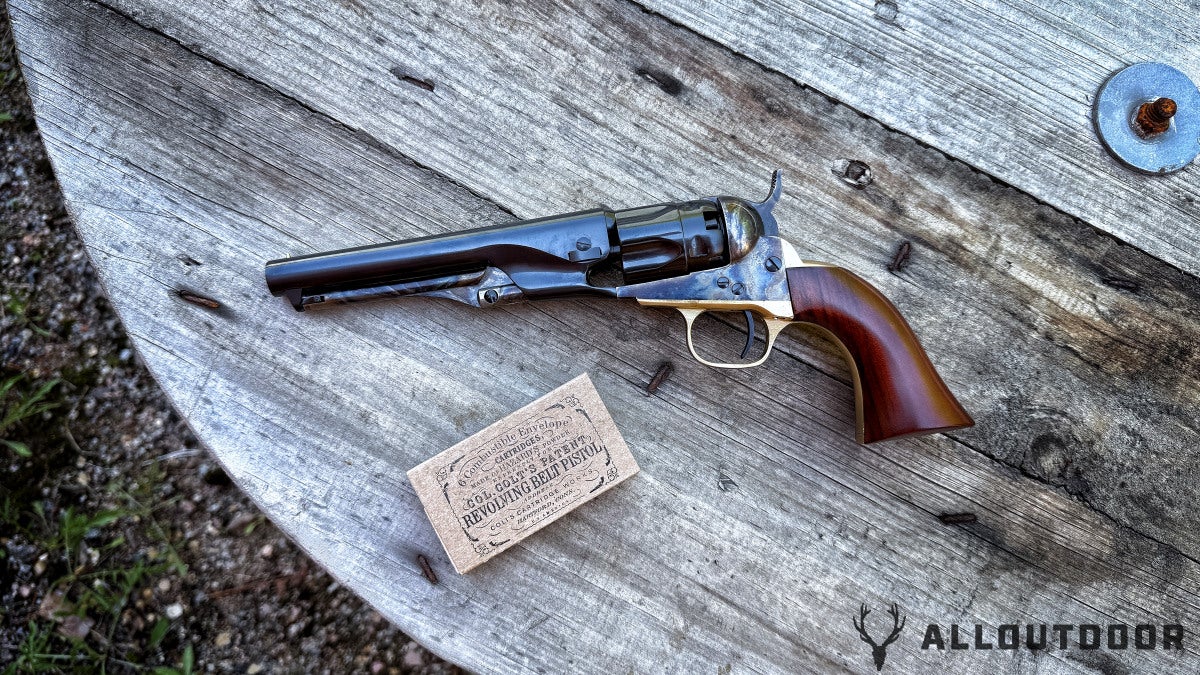
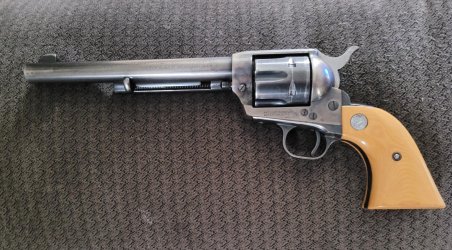
There's a pretty common misconception floating around gun circles that Samuel Colt had some hand in the Single Action Army. Maybe he designed it, maybe he approved it, maybe he at least lived to see it.

The reality is that Colt died in January 1862, more than a decade before the SAA ever existed. The gun that actually closes the chapter on his life's work isn't the one nestled in a holster in every western movie. It's a small, refined, five-shot .36 caliber pocket revolver that most people couldn't pick out of a lineup. The Colt 1862 Police.

1782422351675.png


1782422026549.png


1782422389037.png


1782422441808.png
 
The second generation guns were made in the US under license by Colt using Colt machines. I believe Iver Johnson did some if not all of the work. Some Italian parts were used but they will letter to Colt. My 1860 and my Walker are second generation guns. I believe the 3rd generation guns were Italian made under the Colt Blackpowder Arms Company name. I am no expert but that's my gist.
 
I have an Italian clone that was made in 380acp. To bring it into the US it came with a 6" barrel. I had our gunsmith shorten it to 3". It carries much nicer
 
Back in the 80’s early 90’s when I shot quite a bit of black powder I always like the Remington revolvers the best. The Colts are a work of art but I hated the sights being on the hammer. Except for the repop of the Dragoon my friend I shot with every weekend had all the Colt cap and ball revolver and I shot them a good amount.
 
As per a previous post...

Colt 1862 Pocket Police cartridge conversions are historically significant variants of the famous cap-and-ball revolver, originally converted between 1873 and 1875 to fire self-contained metallic cartridges. Today, modern reproductions and drop-in cylinder kits allow shooters to experience this classic revolver design using modern, readily available ammunition.

History of the Original Conversions
  • The Original Process: Colt converted roughly 6,500 of their percussion revolvers (including the closely related Pocket Navy) by milling off the back of the cylinder and installing a breech plate and loading gate.
  • Caliber: Original factory conversions were typically chambered for the .38 Rimfire or .38 Centerfire cartridges.
  • Features: They typically lacked an ejector rod housing and required users to use a loading pin to manually punch out spent brass.

Modern Reproductions & Replicas

For shooters looking to own and shoot a replica without hunting down rare antiques, modern manufacturers offer faithful reproductions:
  • Manufacturer: Uberti produces the Uberti 1862 Police Conversion, an authentic reproduction of the original cartridge model.
  • Caliber: To replicate period configurations without modifying the small cylinder diameter to accept .38 Special, these replicas are often chambered in .380 ACP. This allows for a proper 5-round capacity.
  • Handling: True to historical form, these revolvers often omit a loading gate and ejector rod. This requires the shooter to point the muzzle down while loading so cartridges don't fall out.

1782498232109.png


Drop-in Conversion Kits

If you already own an authentic antique or an Italian-made percussion replica (like a Pietta or Uberti) and do not want to shoot black powder cap-and-ball, you can convert it using a drop-in cylinder:
  • Manufacturer: Kirst Konverter offers kits specifically designed for Colt Pocket Models.
  • Caliber Option: Kirst produces a .22 Colt Cartridge Conversion Kit that replaces your cap-and-ball cylinder with a .22 rimfire cylinder, allowing for very affordable and easy shooting
 
As per a previous post...

Colt 1862 Pocket Police cartridge conversions are historically significant variants of the famous cap-and-ball revolver, originally converted between 1873 and 1875 to fire self-contained metallic cartridges. Today, modern reproductions and drop-in cylinder kits allow shooters to experience this classic revolver design using modern, readily available ammunition.

History of the Original Conversions
  • The Original Process: Colt converted roughly 6,500 of their percussion revolvers (including the closely related Pocket Navy) by milling off the back of the cylinder and installing a breech plate and loading gate.
  • Caliber: Original factory conversions were typically chambered for the .38 Rimfire or .38 Centerfire cartridges.
  • Features: They typically lacked an ejector rod housing and required users to use a loading pin to manually punch out spent brass.

Modern Reproductions & Replicas

For shooters looking to own and shoot a replica without hunting down rare antiques, modern manufacturers offer faithful reproductions:
  • Manufacturer: Uberti produces the Uberti 1862 Police Conversion, an authentic reproduction of the original cartridge model.
  • Caliber: To replicate period configurations without modifying the small cylinder diameter to accept .38 Special, these replicas are often chambered in .380 ACP. This allows for a proper 5-round capacity.
  • Handling: True to historical form, these revolvers often omit a loading gate and ejector rod. This requires the shooter to point the muzzle down while loading so cartridges don't fall out.

View attachment 113417

Drop-in Conversion Kits

If you already own an authentic antique or an Italian-made percussion replica (like a Pietta or Uberti) and do not want to shoot black powder cap-and-ball, you can convert it using a drop-in cylinder:
  • Manufacturer: Kirst Konverter offers kits specifically designed for Colt Pocket Models.
  • Caliber Option: Kirst produces a .22 Colt Cartridge Conversion Kit that replaces your cap-and-ball cylinder with a .22 rimfire cylinder, allowing for very affordable and easy shooting
Those are a really cool part of history. I’ve got to fire a repop that was chambered in 38spl.
 
There's a pretty common misconception floating around gun circles that Samuel Colt had some hand in the Single Action Army. Maybe he designed it, maybe he approved it, maybe he at least lived to see it.

The reality is that Colt died in January 1862, more than a decade before the SAA ever existed. The gun that actually closes the chapter on his life's work isn't the one nestled in a holster in every western movie. It's a small, refined, five-shot .36 caliber pocket revolver that most people couldn't pick out of a lineup. The Colt 1862 Police.

View attachment 113341


View attachment 113339


View attachment 113342


View attachment 113344
Nice Post...Thanks
 
Back
Top