testtest

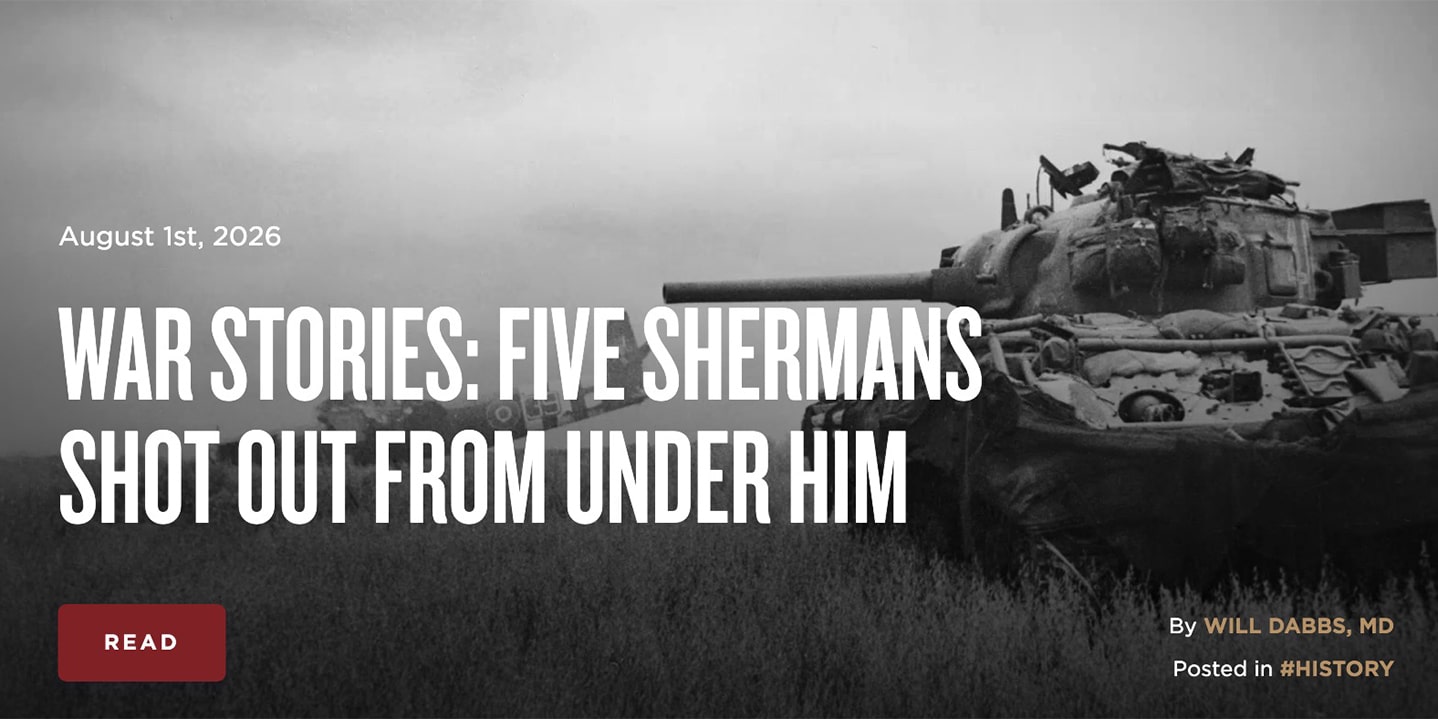
Discussion: War Stories: Five Shermans Shot Out From Under Him

1. Myth: the Sherman was not designed as an infantry support tank only. That's why Shermans were part of an armored division and the initial models with the 75mm was considered an all-purpose gun. 2. Using the bump knee method, I'd say something is wrong. The commander had a sight extension and should have commanded the gunner "steady...on" before the gunner made the final lay and fired. 3. Most tanks encountered by US tankers were not "bigger" or better. There were many cases of mistaken identity when troops would identify Pz IV's (roughly equivalent to a 75mm Sherman) as Tigers. 4. I would be careful using the movie Fury as an historical source. 5. As far as being cramped inside, the Sherman was ergonomically way ahead of its contemporaries Allied or Axis.
 
1. Myth: the Sherman was not designed as an infantry support tank only. That's why Shermans were part of an armored division and the initial models with the 75mm was considered an all-purpose gun. 2. Using the bump knee method, I'd say something is wrong. The commander had a sight extension and should have commanded the gunner "steady...on" before the gunner made the final lay and fired. 3. Most tanks encountered by US tankers were not "bigger" or better. There were many cases of mistaken identity when troops would identify Pz IV's (roughly equivalent to a 75mm Sherman) as Tigers. 4. I would be careful using the movie Fury as an historical source. 5. As far as being cramped inside, the Sherman was ergonomically way ahead of its contemporaries Allied or Axis.

+1000
 
1. Myth: the Sherman was not designed as an infantry support tank only. That's why Shermans were part of an armored division and the initial models with the 75mm was considered an all-purpose gun. 2. Using the bump knee method, I'd say something is wrong. The commander had a sight extension and should have commanded the gunner "steady...on" before the gunner made the final lay and fired. 3. Most tanks encountered by US tankers were not "bigger" or better. There were many cases of mistaken identity when troops would identify Pz IV's (roughly equivalent to a 75mm Sherman) as Tigers. 4. I would be careful using the movie Fury as an historical source. 5. As far as being cramped inside, the Sherman was ergonomically way ahead of its contemporaries Allied or Axis.
I am quite certain that no one is interested in any criticism of Dr Dabs repeating any reminences of a WW2 friend. Just saying ..
 
I am quite certain that no one is interested in any criticism of Dr Dabs repeating any reminences of a WW2 friend. Just saying ..
I understand, and personal anecdotes certainly have a place in history. I view it as a contribution to the narrative but not the sole one. There are others besides me who correct the record to stop myths from spreading over the years. See the ongoing bickering between the Band of Brothers 26 years after the mini-series. The result of Stephen Ambrose relying mainly anecdotal narrative without context - and not just this book. It's not meant to denigrate his service.
 
Now, now Boys as the aw shucks begin, LOL... Ah the ability to speak your mind and have a beer afterwards, is a pleasure men have, women will never understand, (Thank goodness). :rolleyes: I for one would gladly hide behind a tank regardless of it's designation until it becomes a bazooka magnet. That is why it needed infantry for those pesky troops with them panzerfausts.
1786219040687.png


I better watch it based on the avatars one of us uses about me women's comments...
 
Excellent article! My dad was a Navy veteran who served on an LST in the Pacific Theater. The stories he told were never about the action they saw, but were funny or interesting things that happened aboard ship. Dad was 17 when he enlisted and 18 when he saw his first invasion. A lot of what I learned about his service came from USN archives. To hear him tell it, he never really saw much action. A colleague and good friend of mine was with the 101st Airborne in Vietnam. He would go with three of us to our deer camp, but never hunted. I mentioned Dad not telling me about battles and my friend said, “It’s painful for your dad to talk about that. Those memories are best left buried in the back of his mind.”
 
IMO every trooper, like the one in the OP article, who was a tanker in WW2 was a hero considering the hazards encountered, and the tech at that time.

My uncle was a WW2 Tanker and was injured enough to be discharged during the War.

Another more well-known US Army officer was a WW2 tanker, Creighton Abrams.


Lieutenant Colonel Creighton Abrams earned fame in World War II as an aggressive armor commander who led the 37th Tank Battalion of the 4th Armored Division through Europe under General George S. Patton's Third Army.


Creighton Abrams wore out six Sherman tanks, all named Thunderbolt, during the war in the span of 10 months (7/44-5/45), but never had one shot out from underneath him, eventhough he usually rode at the head of his tank columns.

1790210528099.png
1790211038332.png


World War II Assignments & Actions
  • Normandy Breakout: Fought across France following the 1944 invasion, pushing rapidly through enemy lines.
  • Battle of Arracourt: Led his battalion in September 1944 during a massive tank engagement, helping destroy numerous German Panther and Tiger tanks.
  • Relief of Bastogne: Spearheaded the breakthrough on December 26, 1944, lifting the German siege of the 101st Airborne Division during the Battle of the Bulge.


  • Advance Across Europe: Led the first Third Army elements across the Moselle River and to the Rhine River. General Patton famously called him the best tank commander in the U.S. Army.

1790210262106.png
1790210472586.png


Thunder-1-Left-Profile-1.jpg


Thunderbolt VII was the final personal M4A3E8 "Easy Eight" Sherman tank used during World War II by then-Lieutenant Colonel Creighton Abrams, commander of the 37th Tank Battalion in the U.S. 4th Armored Division.

Key Facts About Thunderbolt VII
  • Vehicle Model: M4A3E8 (76mm) HVSS Sherman, commonly called the "Easy Eight".
  • Customizations: Abrams modified the tank in the field by welding extra armor plates (often salvaged from knocked-out tanks) onto the front hull and turret, and adding an extra .30 caliber machine gun on the turret.
  • Timeframe: It served as his command tank during the final push into Germany in 1945 until the end of the war in Europe.
  • Legacy: Abrams famously named multiple successive replacement tanks "Thunderbolt" (I through VII) as he wore them out during campaigns across Europe, though none were ever destroyed while he was inside.
 
Back
Top