

The much-maligned air war over North Vietnam first kicked into high gear on 2 March 1965 with the commencement of Operation Rolling Thunder. The extensive bombing campaign and its trials and tribulations went down in history for all the wrong reasons.
It was during Rolling Thunder, however, on 3 April 1965, that U.S. and North Vietnamese aircraft met in aerial combat for the first time. The conflict’s first U.S. air-to-air kills soon followed on 17 June, courtesy of a pair of the U.S. Navy’s flashy new McDonnell Douglas F-4 Phantom IIs and their sophisticated AIM-7 Sparrow missiles.
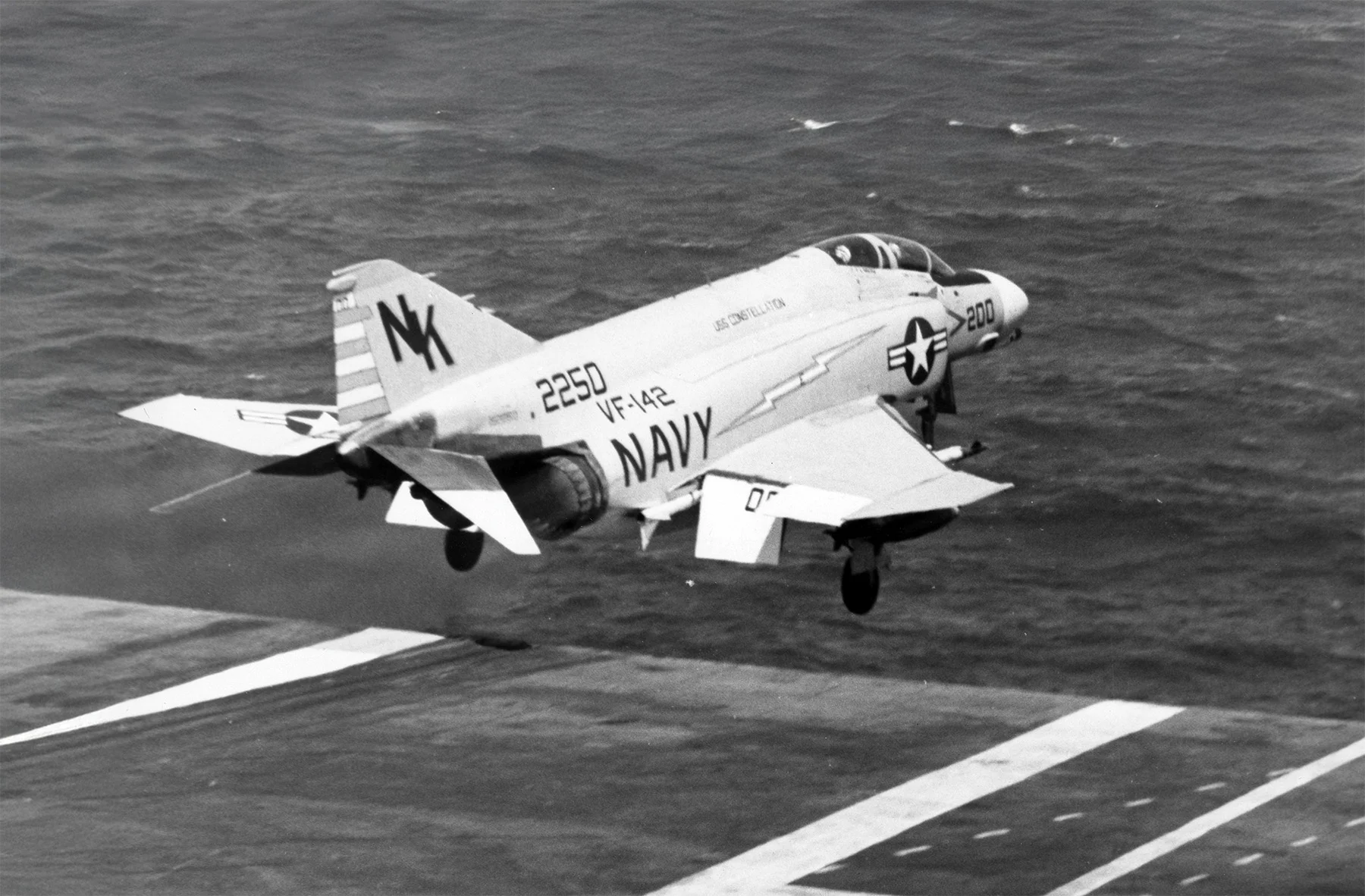
A McDonnell Douglas F-4 Phantom II leaps from the flight deck of the carrier USS Constellation (CVA-64) for a
strike mission over Vietnam. F-4s had fired dozens of missiles over multiple aerial engagements, yet had only two
confirmed kills to show for it. During the same period, Navy fighter squadrons flying the Chance Vought F-8 Crusader
scored five confirmed MiG kills with no losses. Naval History and Heritage Command
The F-4s had fired dozens of missiles, mostly Sparrows, over the course of multiple engagements. Yet they had only two confirmed kills to show for it, and these were scored with the AIM-9 Sidewinder.1 Adding insult to injury, one of the kills was a Ryan AQM-34 Firebee—an AWOL U.S. drone.2 Meanwhile, the Navy fighter squadrons flying the Chance Vought F-8 Crusader had scored five confirmed MiG kills with no losses, all using AIM-9s.

 www.usni.org
The third week of September had been especially busy for Crusader pilots, with MiG engagements on the 17th, 18th, and 19th. The last of this trio resulted in a MiG-21 kill credited to the Fighter Squadron (VF) 111 “Sundowners” detachment on board the Essex-class carrier USS Intrepid (CVS-11).
Also involved in this engagement was a pair of F-8s assigned to the “Fighting Checkmates” of VF-211 off the USS Hancock (CVA-19). Despite firing two missiles, the pair walked away with nothing to show for it. VF-211 had a proud history of MiG kills with its Crusaders, scoring the type’s inaugural victory on 12 June 1966.
Two more kills followed on the 21st. VF-211’s next cruise in 1967 resulted in four more MiG kills, with successful engagements over famous locations such as Kep Airfield and the Hanoi Thermal Power Plant, adding to the Checkmate Crusader lore.
Several probable kills also were recorded by VF-211 pilots.
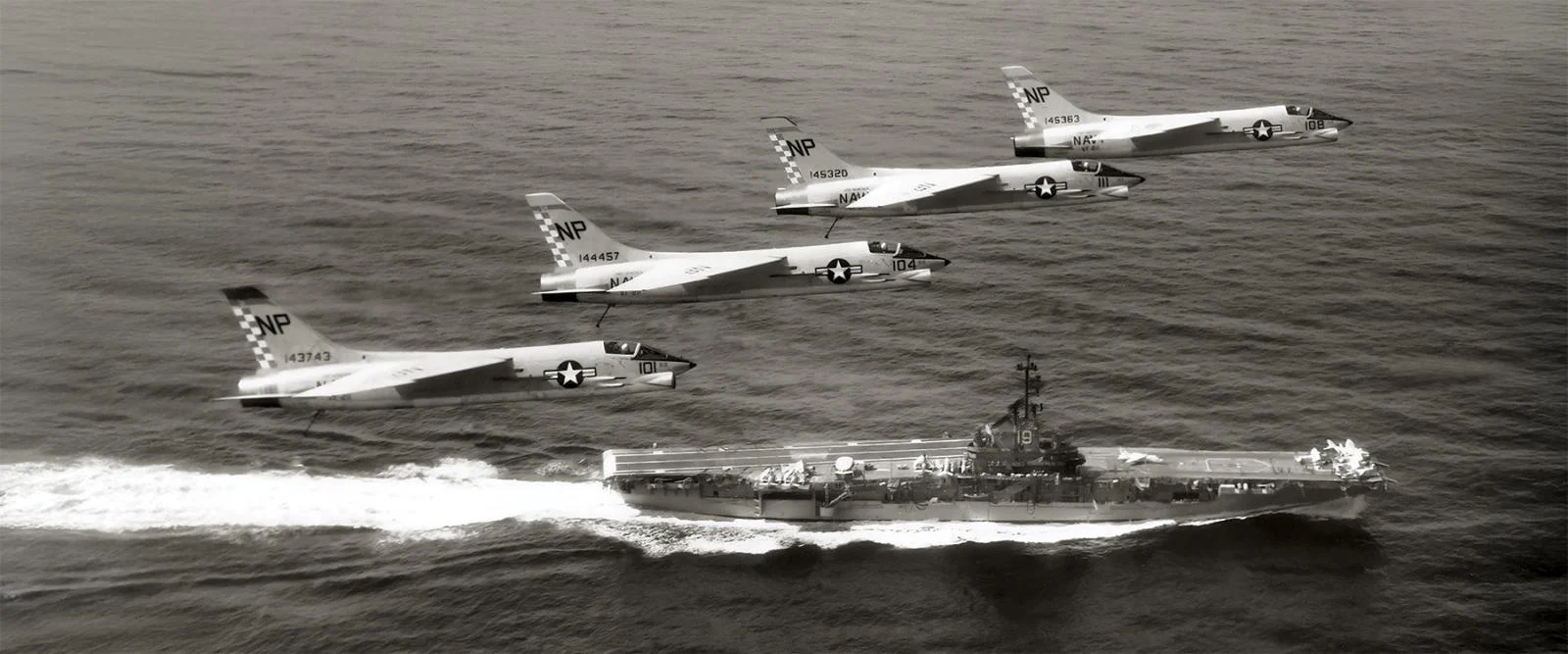
F-8 Crusaders of the “Fighting Checkmates” of Fighter Squadron (VF) 211 in flight over the carrier USS Hancock. VF-211 had a reputation as MiG killers and, in 1968, Lieutenant (junior grade) Gary W. Williams was eager to join their ranks.
National Naval Aviation Museum
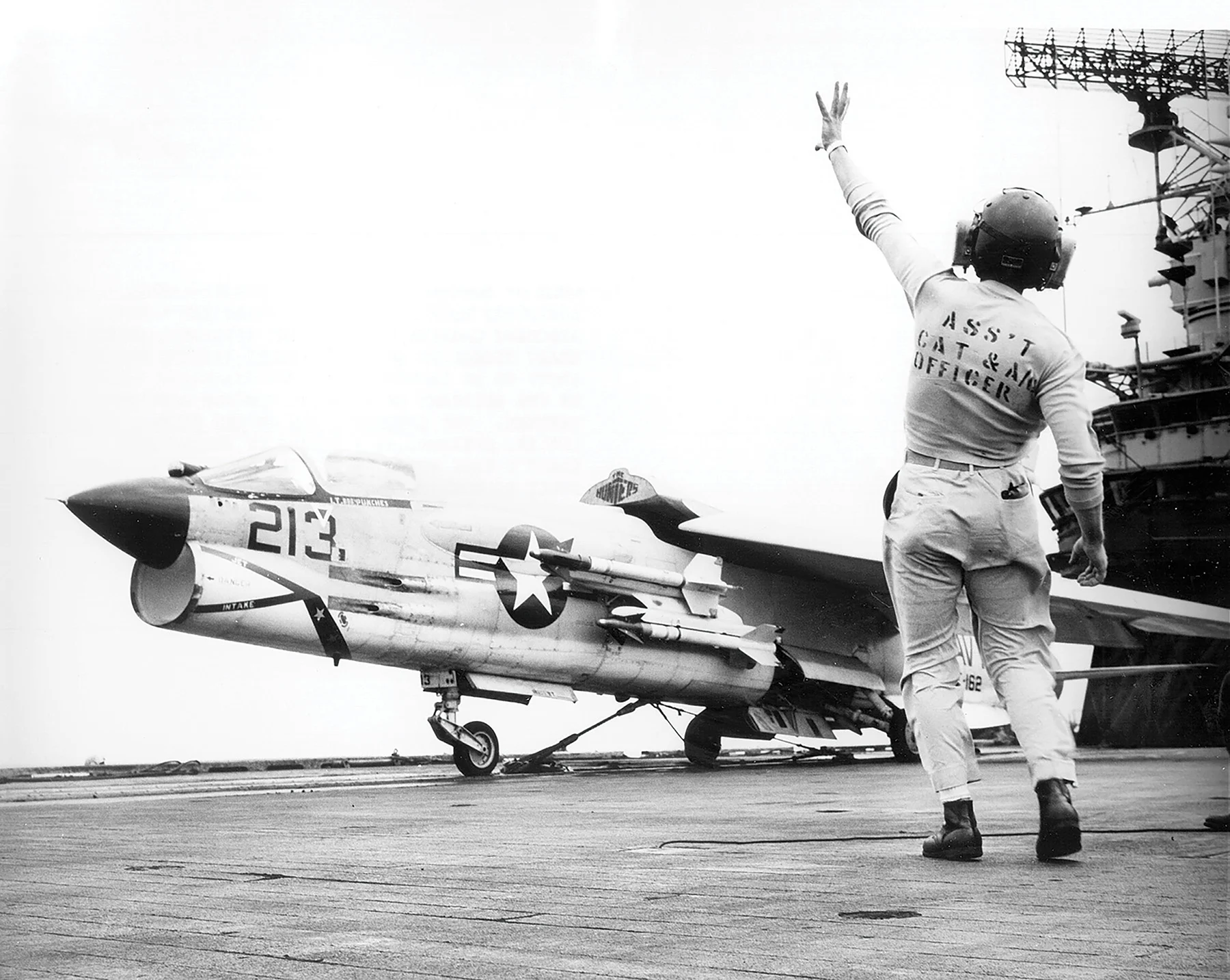
An F-8 Crusader assigned to the VF-162 “Hunters” prepares to launch from the deck of the USS Oriskany (CVA-34) on a strike mission over North Vietnam in August 1967. Note the AIM-9 Sidewinders on the fuselage and the variable incidence wing in the raised position. U.S. Naval Institute Photo Archive
It was during Rolling Thunder, however, on 3 April 1965, that U.S. and North Vietnamese aircraft met in aerial combat for the first time. The conflict’s first U.S. air-to-air kills soon followed on 17 June, courtesy of a pair of the U.S. Navy’s flashy new McDonnell Douglas F-4 Phantom IIs and their sophisticated AIM-7 Sparrow missiles.
A McDonnell Douglas F-4 Phantom II leaps from the flight deck of the carrier USS Constellation (CVA-64) for a
strike mission over Vietnam. F-4s had fired dozens of missiles over multiple aerial engagements, yet had only two
confirmed kills to show for it. During the same period, Navy fighter squadrons flying the Chance Vought F-8 Crusader
scored five confirmed MiG kills with no losses. Naval History and Heritage Command
The F-4s had fired dozens of missiles, mostly Sparrows, over the course of multiple engagements. Yet they had only two confirmed kills to show for it, and these were scored with the AIM-9 Sidewinder.1 Adding insult to injury, one of the kills was a Ryan AQM-34 Firebee—an AWOL U.S. drone.2 Meanwhile, the Navy fighter squadrons flying the Chance Vought F-8 Crusader had scored five confirmed MiG kills with no losses, all using AIM-9s.
View from the Cockpit: The Final Air-to-Air Kill of Rolling Thunder
Based on interviews with the aviators who were there, here is a gripping account of aerial combat from Vietnam ’68.
The third week of September had been especially busy for Crusader pilots, with MiG engagements on the 17th, 18th, and 19th. The last of this trio resulted in a MiG-21 kill credited to the Fighter Squadron (VF) 111 “Sundowners” detachment on board the Essex-class carrier USS Intrepid (CVS-11).
Also involved in this engagement was a pair of F-8s assigned to the “Fighting Checkmates” of VF-211 off the USS Hancock (CVA-19). Despite firing two missiles, the pair walked away with nothing to show for it. VF-211 had a proud history of MiG kills with its Crusaders, scoring the type’s inaugural victory on 12 June 1966.
Two more kills followed on the 21st. VF-211’s next cruise in 1967 resulted in four more MiG kills, with successful engagements over famous locations such as Kep Airfield and the Hanoi Thermal Power Plant, adding to the Checkmate Crusader lore.
Several probable kills also were recorded by VF-211 pilots.
F-8 Crusaders of the “Fighting Checkmates” of Fighter Squadron (VF) 211 in flight over the carrier USS Hancock. VF-211 had a reputation as MiG killers and, in 1968, Lieutenant (junior grade) Gary W. Williams was eager to join their ranks.
National Naval Aviation Museum
An F-8 Crusader assigned to the VF-162 “Hunters” prepares to launch from the deck of the USS Oriskany (CVA-34) on a strike mission over North Vietnam in August 1967. Note the AIM-9 Sidewinders on the fuselage and the variable incidence wing in the raised position. U.S. Naval Institute Photo Archive

