

Advertised barrel life is a minimum acceptable estimated service life used under normal conditions. What does that mean? Used under normal shooting schedules per the TM and design parameters. If a gun runs faster and hotter than intended, a barrel can wear out quickly; you can even burn a barrel out in one day, but that is definitely outside its design parameters. Barrel service life is generally the minimum expected period before a barrel begins to show measurable degradation in areas such as accuracy, dispersion, erosion, or headspace.
Reaching the stated service-life figure does not necessarily mean the barrel suddenly becomes incapable of firing. Likewise, a barrel that has fired fewer rounds than its nominal service life is not automatically in perfect condition. The round count provides a useful engineering benchmark, but it exists within a larger system of maintenance, inspection, ammunition, and firing conditions.
When engineers set a barrel-life requirement, they generally focus on when the component stops meeting a defined performance standard. That might involve changes in accuracy or dispersion, excessive erosion, dimensional changes, or another condition specified by the weapon's technical documentation.
Different operational requirements, such as for special forces, have different requirements; the heavier SOCOM-profile barrel was developed for M4A1 configurations and was subsequently incorporated into the Army M4A1 modernization and conversion Product Improvement Program (PIP).
Second are the new HICAC and Flyweight programs: they call for hypervelocity 5.56 M855A1+ spicy ammunition, but they also call for using standard M855A1. The guns would be designed around a hotter cartridge, which would overbuild the weapon and barrel, so barrel life would increase by strictly using standard-velocity ammunition instead of hypervelocity ammunition.

 www.thefirearmblog.com
Shooting until a barrel glows red hot causes severe, permanent damage. This extreme heat accelerates erosion and wear and can cause permanent metallurgical changes and a loss of mechanical properties.
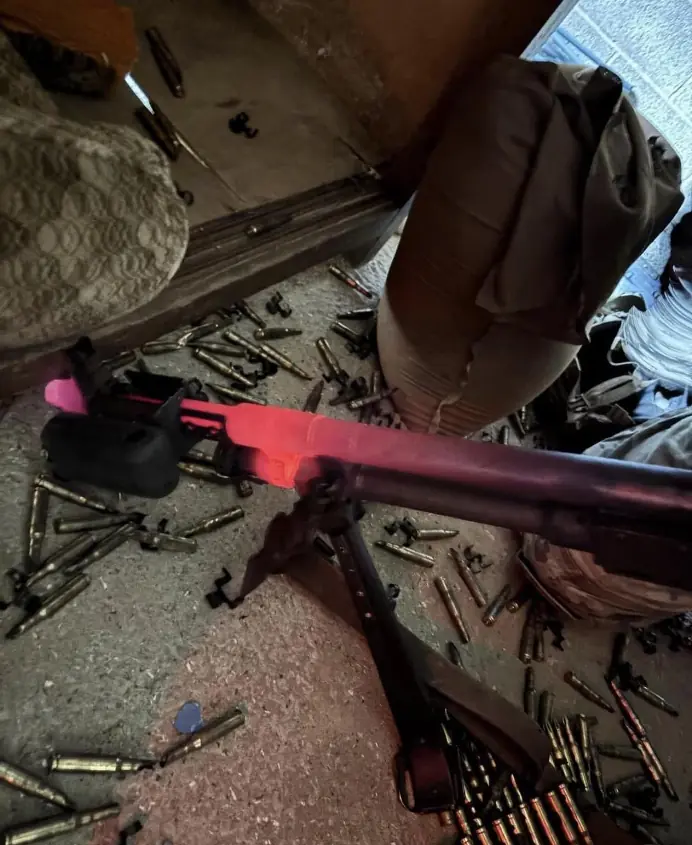
As the metal loses its mechanical integrity, the barrel becomes permanently compromised, drastically increasing the risk of a catastrophic failure.
Reaching the stated service-life figure does not necessarily mean the barrel suddenly becomes incapable of firing. Likewise, a barrel that has fired fewer rounds than its nominal service life is not automatically in perfect condition. The round count provides a useful engineering benchmark, but it exists within a larger system of maintenance, inspection, ammunition, and firing conditions.
When engineers set a barrel-life requirement, they generally focus on when the component stops meeting a defined performance standard. That might involve changes in accuracy or dispersion, excessive erosion, dimensional changes, or another condition specified by the weapon's technical documentation.
Different operational requirements, such as for special forces, have different requirements; the heavier SOCOM-profile barrel was developed for M4A1 configurations and was subsequently incorporated into the Army M4A1 modernization and conversion Product Improvement Program (PIP).
Second are the new HICAC and Flyweight programs: they call for hypervelocity 5.56 M855A1+ spicy ammunition, but they also call for using standard M855A1. The guns would be designed around a hotter cartridge, which would overbuild the weapon and barrel, so barrel life would increase by strictly using standard-velocity ammunition instead of hypervelocity ammunition.
Quick Overview of Barrel Service Life
Barrel-life specifications are a familiar sight in government solicitations, technical documents, and manufacturer literature, but what do they actually mean?A barrel rated for a certain number of rounds is not necessarily guaranteed to perform identically throughout that entire service life...
www.thefirearmblog.com
Shooting until a barrel glows red hot causes severe, permanent damage. This extreme heat accelerates erosion and wear and can cause permanent metallurgical changes and a loss of mechanical properties.
As the metal loses its mechanical integrity, the barrel becomes permanently compromised, drastically increasing the risk of a catastrophic failure.
