

MikeyH
Alpha
The 1911 is the most modified pistol ever. Starting in the 50's with gunsmiths like Austin Behlert, and Armand Swenson, the quest for the perfect combination of accuracy and innovation, the 1911 was the weapon of choice to improve.
Colt had the corner on the market, and became the base for accurizing. Ambi safeties, fitted bushings, improved sights, compensators all evolved first on the 1911.
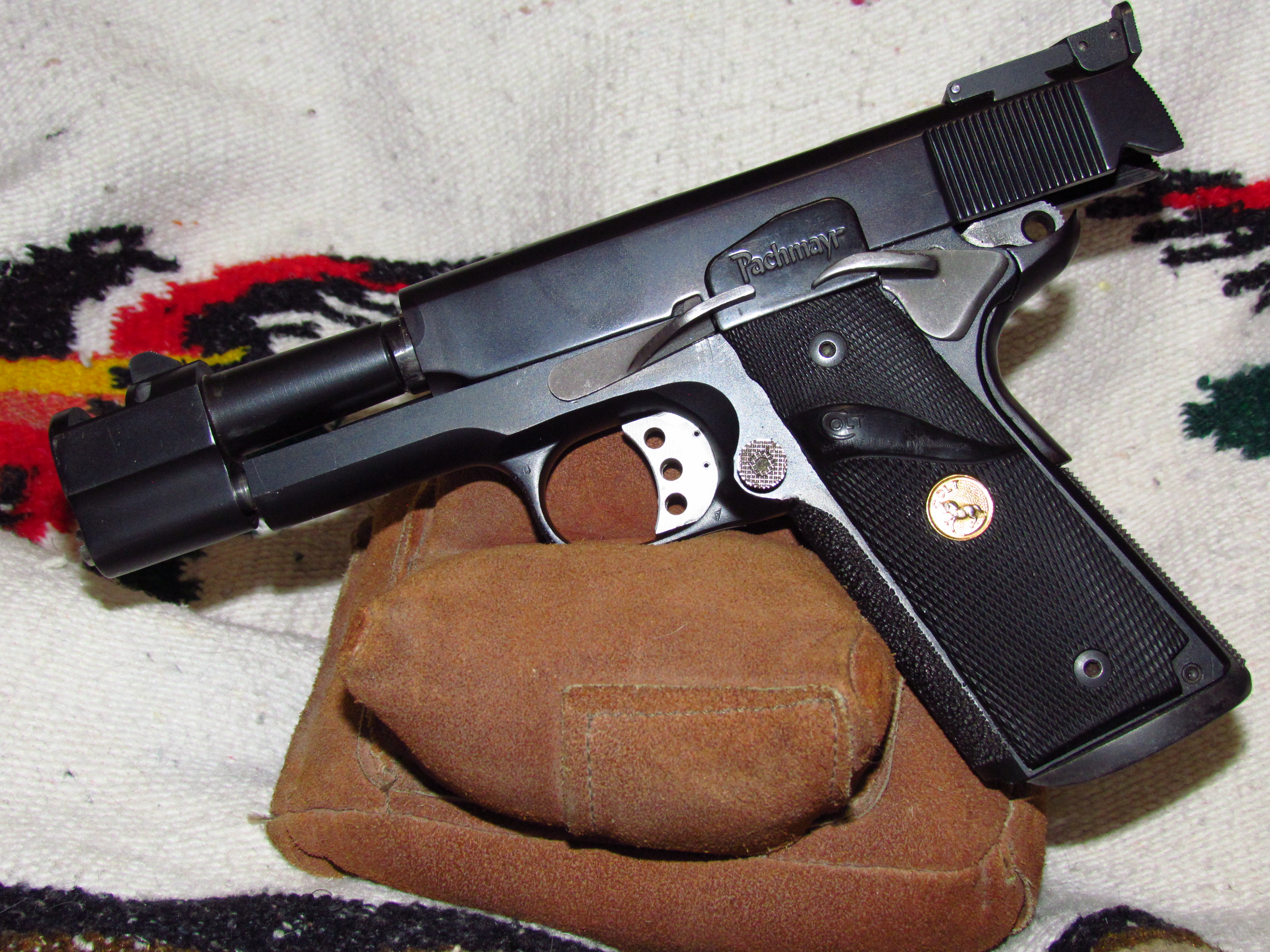
Now, all those innovations are standard for just about every handgun sold on the market. I have several 1911's in my stable, all are accurate, and dependable. I would carry any of them any day of the week, especially the 1911 pictured here. This one started as a drawing on a napkin. It has all the bells and whistles, and accurate.
My favorite and the one I carry the most.
Colt had the corner on the market, and became the base for accurizing. Ambi safeties, fitted bushings, improved sights, compensators all evolved first on the 1911.
Now, all those innovations are standard for just about every handgun sold on the market. I have several 1911's in my stable, all are accurate, and dependable. I would carry any of them any day of the week, especially the 1911 pictured here. This one started as a drawing on a napkin. It has all the bells and whistles, and accurate.
My favorite and the one I carry the most.
 Wikipedia