

When shooters talk about ammunition they tend to focus on the bullet: its weight, its profile and what it does when it hits the target. The cartridge case rarely gets the same attention, which is a shame because it is doing more work than most people realize.
The case holds everything together. It contains the primer, the propellant and the projectile in a single neat package. When the round fires, the case expands to seal the chamber against escaping gas, then springs back enough to extract cleanly.
It even acts as a heat sink, pulling thermal energy out of the chamber every time a spent case is ejected.

 www.ssusa.org
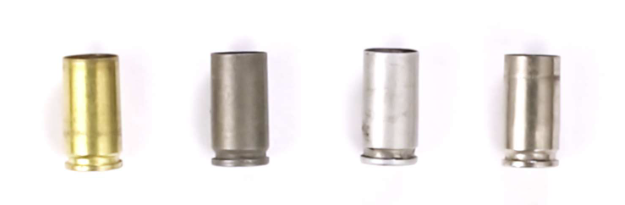
Four common cartridge case materials side by side (from left): brass, steel, aluminum and nickel-plated brass.
Each serves a different purpose depending on cost, performance and intended use.
The case holds everything together. It contains the primer, the propellant and the projectile in a single neat package. When the round fires, the case expands to seal the chamber against escaping gas, then springs back enough to extract cleanly.
It even acts as a heat sink, pulling thermal energy out of the chamber every time a spent case is ejected.
An NRA Shooting Sports Journal | Cartridge Case Materials Explained: Brass, Steel, Aluminum and Nickel-Plated Brass
Brass, steel, aluminum or nickel-plated? Learn the differences between cartridge case materials, their pros and cons, and how to identify each by sight.
Four common cartridge case materials side by side (from left): brass, steel, aluminum and nickel-plated brass.
Each serves a different purpose depending on cost, performance and intended use.