
The U.S. Navy needed to evolve and adapt to overcome Japan’s last-ditch suicide tactics.
On the afternoon of 30 October 1944, Task Group (TG) 38.4 was “about 100 miles to the eastward of Samar” ready to give on-call air support to forces on the Philippine island of Leyte. The Leyte invasion and the Battle of Leyte Gulf had occurred a few days before, and the U.S. Navy controlled the surrounding waters, but not the skies. At 1410, the carrier USS Franklin’s (CV-13) radar detected enemy aircraft 37 miles away and approaching from the west. Twelve fighters were launched, and the Franklin’s crew rushed to put the ship into the highest state of readiness. They did not succeed before three Imperial Japanese Navy (IJN) Mitsubishi A6M Zeros attacked, led by Chief Petty Officer Sei Sakita.
The first “missed the ship and crashed in the water on the starboard side.” Moments later, the second plane crashed into the carrier. Its 551-pound bomb detonated, blowing “a hole about 30 by 35 feet” in the flight deck. Fires spread swiftly, consuming planes on the hangar deck and spreading into the ship through unsealed hatches.
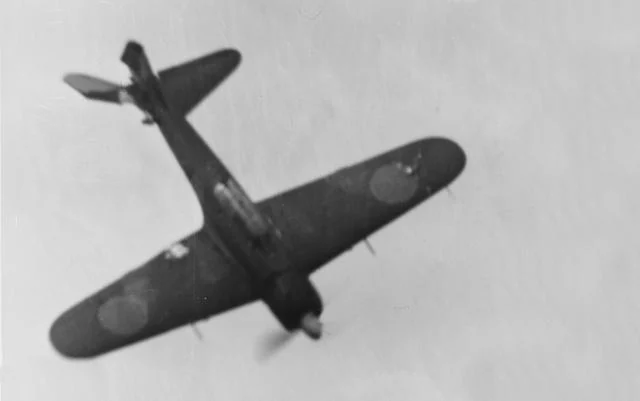
Thwarted by aintiaircraft fire, its tail damaged and a hole in its starboard wing, an A6M Zero is about to
crash into the sea near the USS Essex (CV-9) on 14 May 1945. National Archives
The third plane dropped its bomb harmlessly and then made an aggressive turn toward the light carrier Belleau Wood (CVL-24). Despite being hit “repeatedly by the barrage of antiaircraft fire,” the A6M crashed into the Belleau Wood’s flight deck and set the planes spotted there ablaze. Both carriers would survive, but TG 38.4 lost half its carrier strength in a single attack by just a few determined pilots.2
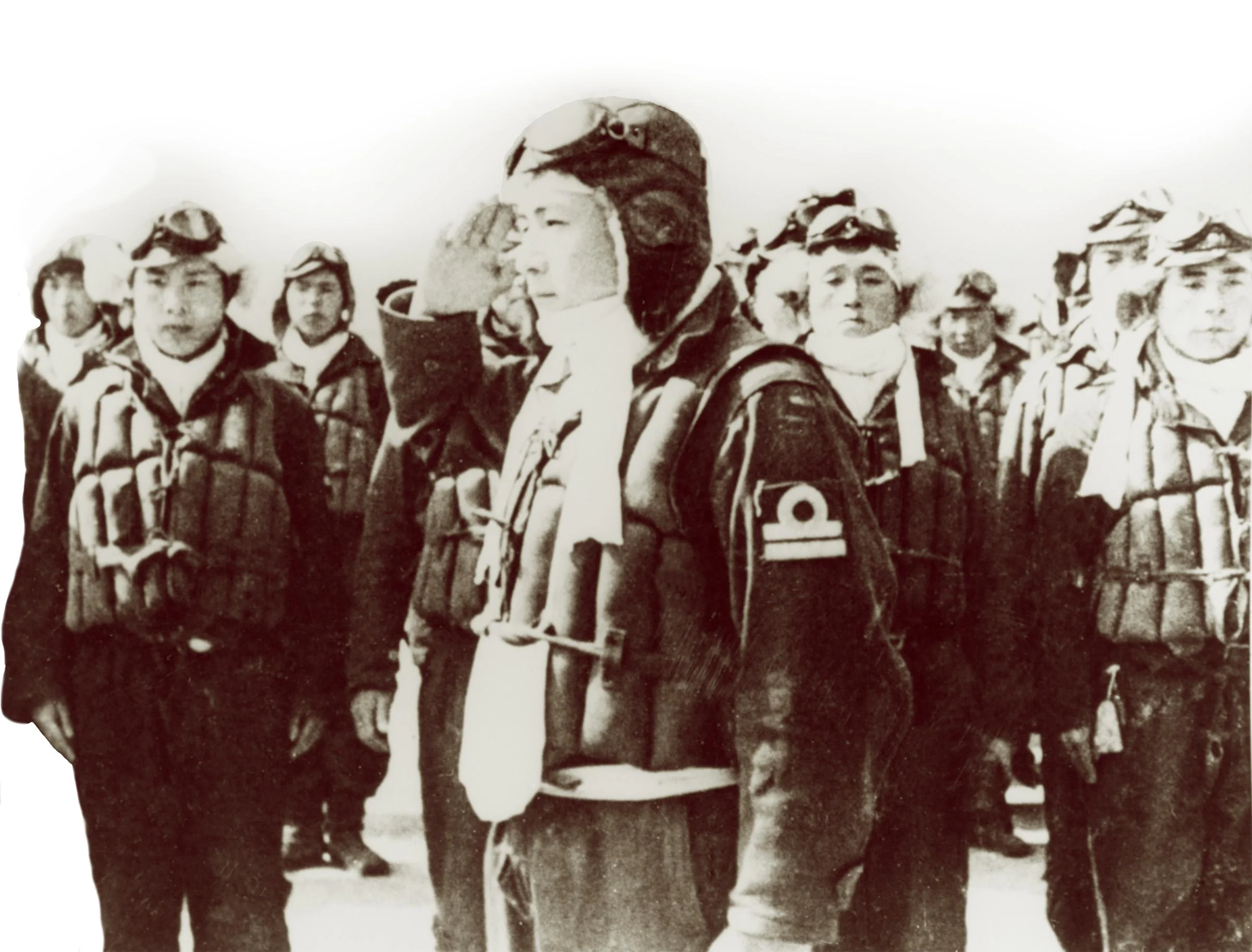
Final mission: A kamikaze pilot (a naval lieutenant, as indicated by the two bars on his sleeve) salutes as he receives
his sortie orders. In their deadly attacks on U.S. ships, “kamikazes exploited everything the Japanese had learned
about Navy radars and their limitations.” Naval History and Heritage Command
On the afternoon of 30 October 1944, Task Group (TG) 38.4 was “about 100 miles to the eastward of Samar” ready to give on-call air support to forces on the Philippine island of Leyte. The Leyte invasion and the Battle of Leyte Gulf had occurred a few days before, and the U.S. Navy controlled the surrounding waters, but not the skies. At 1410, the carrier USS Franklin’s (CV-13) radar detected enemy aircraft 37 miles away and approaching from the west. Twelve fighters were launched, and the Franklin’s crew rushed to put the ship into the highest state of readiness. They did not succeed before three Imperial Japanese Navy (IJN) Mitsubishi A6M Zeros attacked, led by Chief Petty Officer Sei Sakita.
The first “missed the ship and crashed in the water on the starboard side.” Moments later, the second plane crashed into the carrier. Its 551-pound bomb detonated, blowing “a hole about 30 by 35 feet” in the flight deck. Fires spread swiftly, consuming planes on the hangar deck and spreading into the ship through unsealed hatches.
Thwarted by aintiaircraft fire, its tail damaged and a hole in its starboard wing, an A6M Zero is about to
crash into the sea near the USS Essex (CV-9) on 14 May 1945. National Archives
The third plane dropped its bomb harmlessly and then made an aggressive turn toward the light carrier Belleau Wood (CVL-24). Despite being hit “repeatedly by the barrage of antiaircraft fire,” the A6M crashed into the Belleau Wood’s flight deck and set the planes spotted there ablaze. Both carriers would survive, but TG 38.4 lost half its carrier strength in a single attack by just a few determined pilots.2
Final mission: A kamikaze pilot (a naval lieutenant, as indicated by the two bars on his sleeve) salutes as he receives
his sortie orders. In their deadly attacks on U.S. ships, “kamikazes exploited everything the Japanese had learned
about Navy radars and their limitations.” Naval History and Heritage Command