
Hello all, here is today's article posted on TheArmoryLife.com. It is titled “Are Cheap Skills Worth Learning?” and can be found at https://www.thearmorylife.com/are-cheap-skills-worth-learning/.
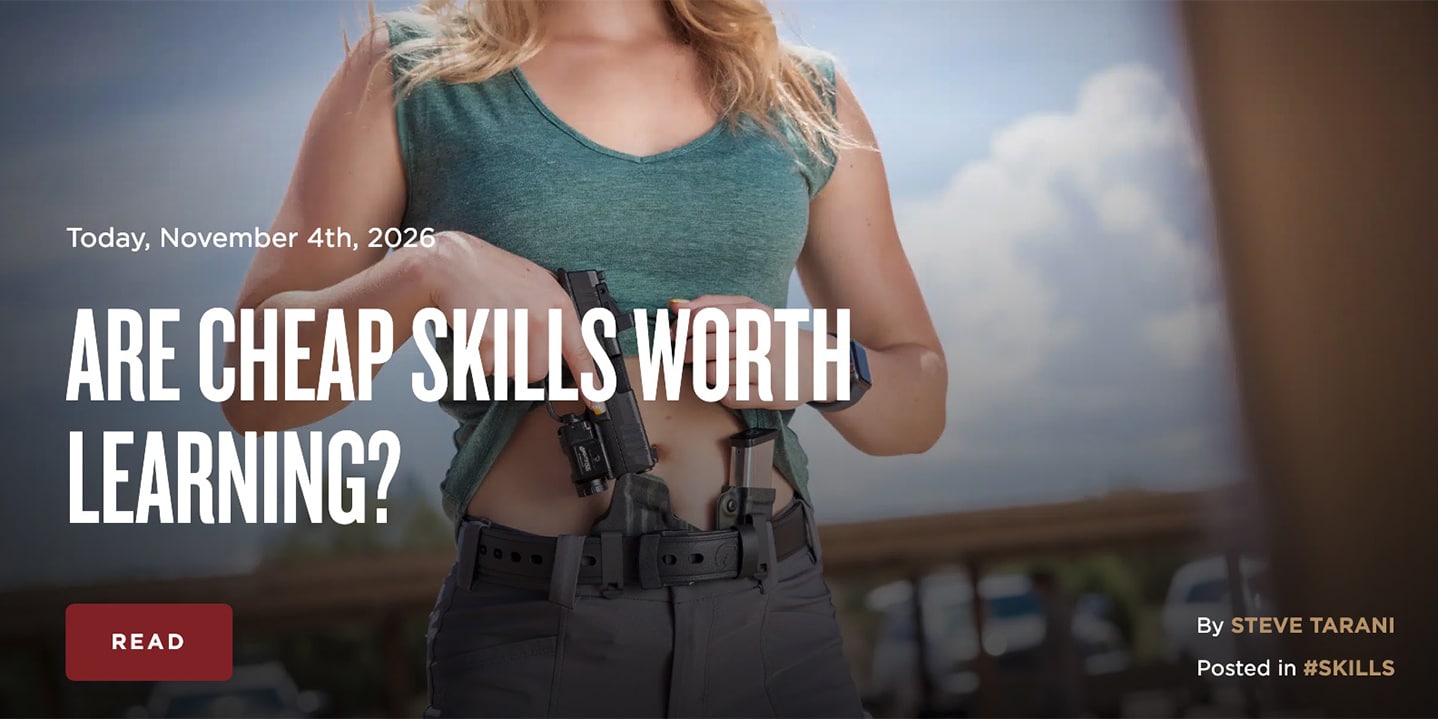



 "Professional shooters, instructors, and high-level competitors all converge on the same definition of skill: on-demand performance." Okay yet most of us are not in these categories. We are carpenters, truck drivers, electricians, doctors, lawyers (YUK), butchers, bakers, candlestick makers and have lives outside of the gun. Even first responders are not professional shooters. 99% have other professional responsibilities other than dropping the hammer. "High speed low drag" training is great. If someone has the opportunity grab it. However, every little bit is a plus. Instead of looking down our nose at shooters that don't meet our perceived standards of acceptability maybe just maybe we should encourage them to keep doing what they can and not turn them off so we can pat ourselves on the back.


"Fundamentals" = "Foundation" Without a solid foundation, anything built thereupon will crumble.Perfect Practice of the Fundamentals is the basis of the advanced degrees in any field of study. This includes shooting, or anything else...

