

Onewolf426
Hellcat
In 1992, audiences watched Vinny Gambini walk into an Alabama courtroom in a ridiculous suit and assumed they were watching a legal disaster.
Years later, law professors started pressing pause.
That is the strange afterlife of My Cousin Vinny. What looked like a fish-out-of-water comedy slowly became something far more respected: one of Hollywood’s sharpest demonstrations of how trial work actually functions.
The surprise is not that the movie gets legal details right. Plenty of serious dramas try to do that.
The surprise is that it gets them right while being genuinely funny.
Vinny does not save his clients with a soaring speech or a last-minute confession. He wins by doing the unglamorous work real lawyers do. He tests timelines. He exposes weak eyesight. He forces witnesses to confront physical facts they cannot explain away.
The famous “grits” cross-examination is a joke on the surface, but underneath it is disciplined impeachment. Vinny takes a witness who sounds confident and quietly proves that the man’s timing does not add up.
Then comes the elderly eyewitness. Vinny never calls her dishonest. He asks about her glasses, her vision, and the distance from her window to the road. Her own answers unravel her certainty.
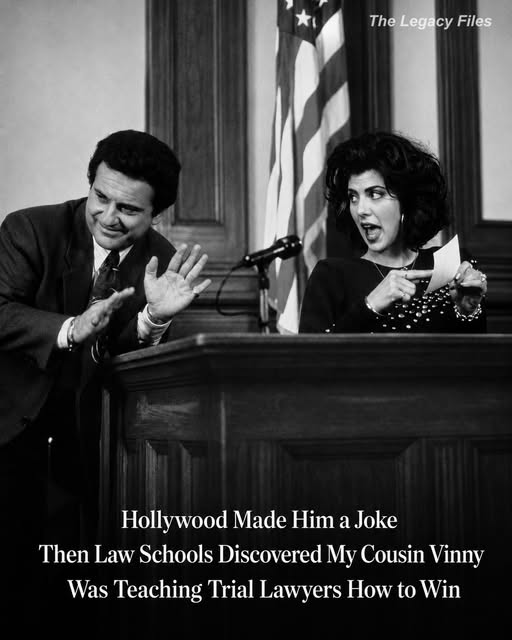
And then Mona Lisa Vito takes the stand.
What follows is not Hollywood pretending to understand expert testimony. Her qualifications are established step by step. Her knowledge is tested. Her expertise becomes relevant to the physical evidence. The questioning builds logically until the prosecution’s theory starts collapsing.
Lawyers noticed.
Professors noticed.
Eventually, clips from a Joe Pesci comedy began showing up in classrooms, legal writing, training seminars, and discussions of trial advocacy.
That twist makes the movie even better, because its deepest joke was never really about law.
It was about appearance.
Vinny looks wrong. Sounds wrong. Dresses wrong. He walks into a room where everyone has already decided what competence is supposed to look like.
Then the evidence starts.
And suddenly the man everyone underestimated is the only person in the courtroom asking the right questions.
That is why the movie still lands decades later. Most people know the feeling of being judged before they have had the chance to show what they can do.
Sometimes the best answer is not a speech.
Sometimes it is simply being so prepared that the room has no choice but to reconsider you.
Years later, law professors started pressing pause.
That is the strange afterlife of My Cousin Vinny. What looked like a fish-out-of-water comedy slowly became something far more respected: one of Hollywood’s sharpest demonstrations of how trial work actually functions.
The surprise is not that the movie gets legal details right. Plenty of serious dramas try to do that.
The surprise is that it gets them right while being genuinely funny.
Vinny does not save his clients with a soaring speech or a last-minute confession. He wins by doing the unglamorous work real lawyers do. He tests timelines. He exposes weak eyesight. He forces witnesses to confront physical facts they cannot explain away.
The famous “grits” cross-examination is a joke on the surface, but underneath it is disciplined impeachment. Vinny takes a witness who sounds confident and quietly proves that the man’s timing does not add up.
Then comes the elderly eyewitness. Vinny never calls her dishonest. He asks about her glasses, her vision, and the distance from her window to the road. Her own answers unravel her certainty.
And then Mona Lisa Vito takes the stand.
What follows is not Hollywood pretending to understand expert testimony. Her qualifications are established step by step. Her knowledge is tested. Her expertise becomes relevant to the physical evidence. The questioning builds logically until the prosecution’s theory starts collapsing.
Lawyers noticed.
Professors noticed.
Eventually, clips from a Joe Pesci comedy began showing up in classrooms, legal writing, training seminars, and discussions of trial advocacy.
That twist makes the movie even better, because its deepest joke was never really about law.
It was about appearance.
Vinny looks wrong. Sounds wrong. Dresses wrong. He walks into a room where everyone has already decided what competence is supposed to look like.
Then the evidence starts.
And suddenly the man everyone underestimated is the only person in the courtroom asking the right questions.
That is why the movie still lands decades later. Most people know the feeling of being judged before they have had the chance to show what they can do.
Sometimes the best answer is not a speech.
Sometimes it is simply being so prepared that the room has no choice but to reconsider you.


