

shanneba
Professional
The NASA Johnson Space Center (JSC) in Houston, Texas is the home of the NASA WB-57 High Altitude Research Program. Three fully operational WB-57 aircraft are based near JSC at Ellington Field. The aircraft have been flying research missions since the early 1960's, and continue to be an asset to the scientific community with professional, reliable, customer-oriented service designed to meet all scientific objectives.
The WB-57 is a mid-wing, long-range aircraft capable of operation for extended periods of time from sea level to altitudes in excess of 63,000 feet. Two crew members are positioned at separate tandem stations in the forward section of the fuselage. The pilot station contains all the essential equipment for flying the aircraft while the sensor equipment operator (SEO) station contains both navigational equipment and controls for the operation of the payloads that are located throughout the aircraft. The WB-57 can fly for approximately 6.5 hours, has a range of approximately 2500 miles, and can carry up to 8,800 lbs of payload.
 www.nasa.gov
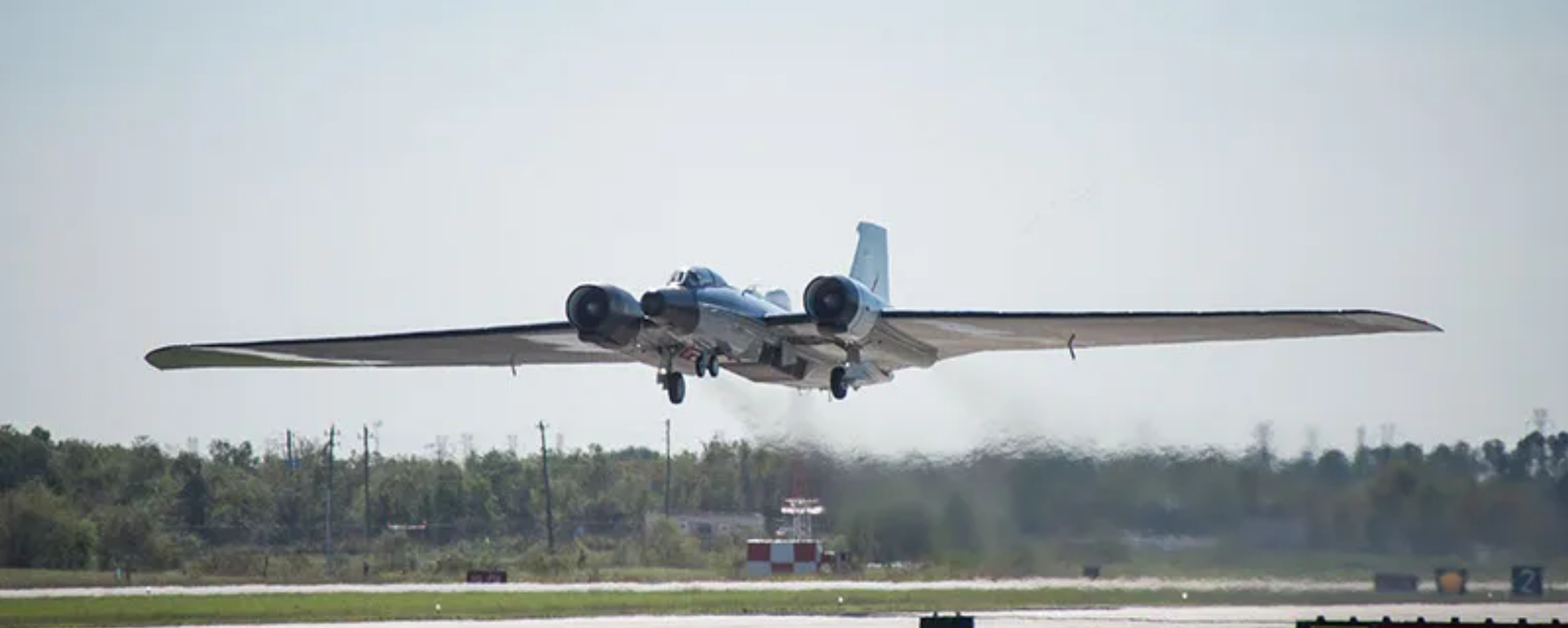
The WB-57 is a mid-wing, long-range aircraft capable of operation for extended periods of time from sea level to altitudes in excess of 63,000 feet. Two crew members are positioned at separate tandem stations in the forward section of the fuselage. The pilot station contains all the essential equipment for flying the aircraft while the sensor equipment operator (SEO) station contains both navigational equipment and controls for the operation of the payloads that are located throughout the aircraft. The WB-57 can fly for approximately 6.5 hours, has a range of approximately 2500 miles, and can carry up to 8,800 lbs of payload.


