

shanneba
Professional
NASA’s experimental X-59 aircraft marked a major milestone Friday, June 5, when it flew faster than the speed of sound for the first time, setting the stage for demonstrating its quiet supersonic capabilities later this year.
The X-59 is designed to fly at supersonic speeds while creating only a quiet thump instead of a loud sonic boom. For this flight, a NASA F‑15 chase plane flew nearby to monitor the X‑59. The loud sonic booms from the F-15 obscured any sound made by the X-59.
“The X-59’s first supersonic flight is a testament to America’s enduring leadership in science, engineering, and aerospace innovation,” said Michael Kratsios, Assistant to the President for Science and Technology and Director of the Office of Science and Technology Policy. “This achievement comes as the Trump Administration continues work to unleash supersonic flight and enable American ingenuity.”
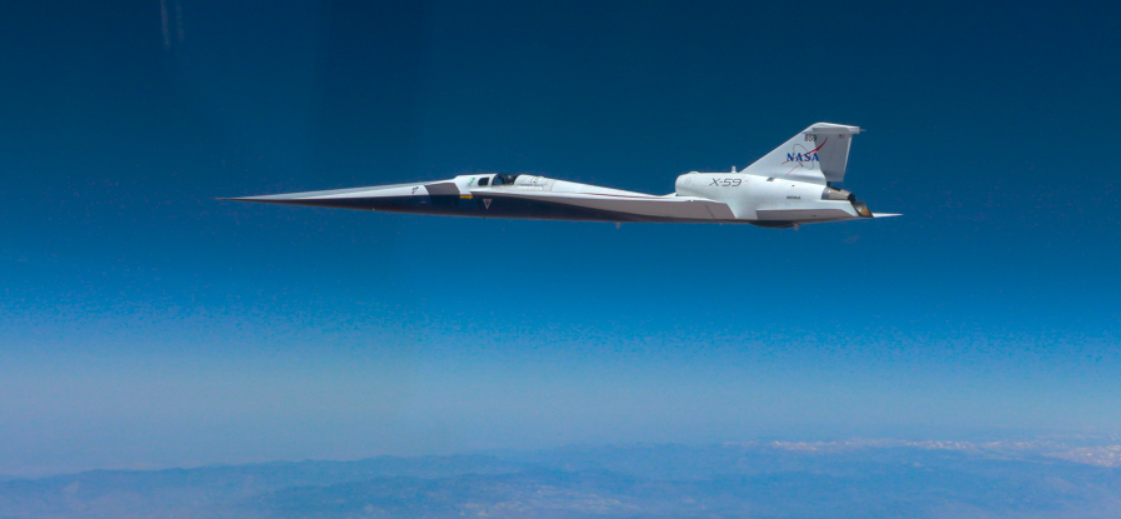
NASA’s X-59 quiet supersonic research aircraft completed its first supersonic flight Friday, June 5, 2026, marking the first time the aircraft exceeded the speed of sound in support of NASA’s Quesst mission.

 www.nasa.gov
 www.nasa.gov
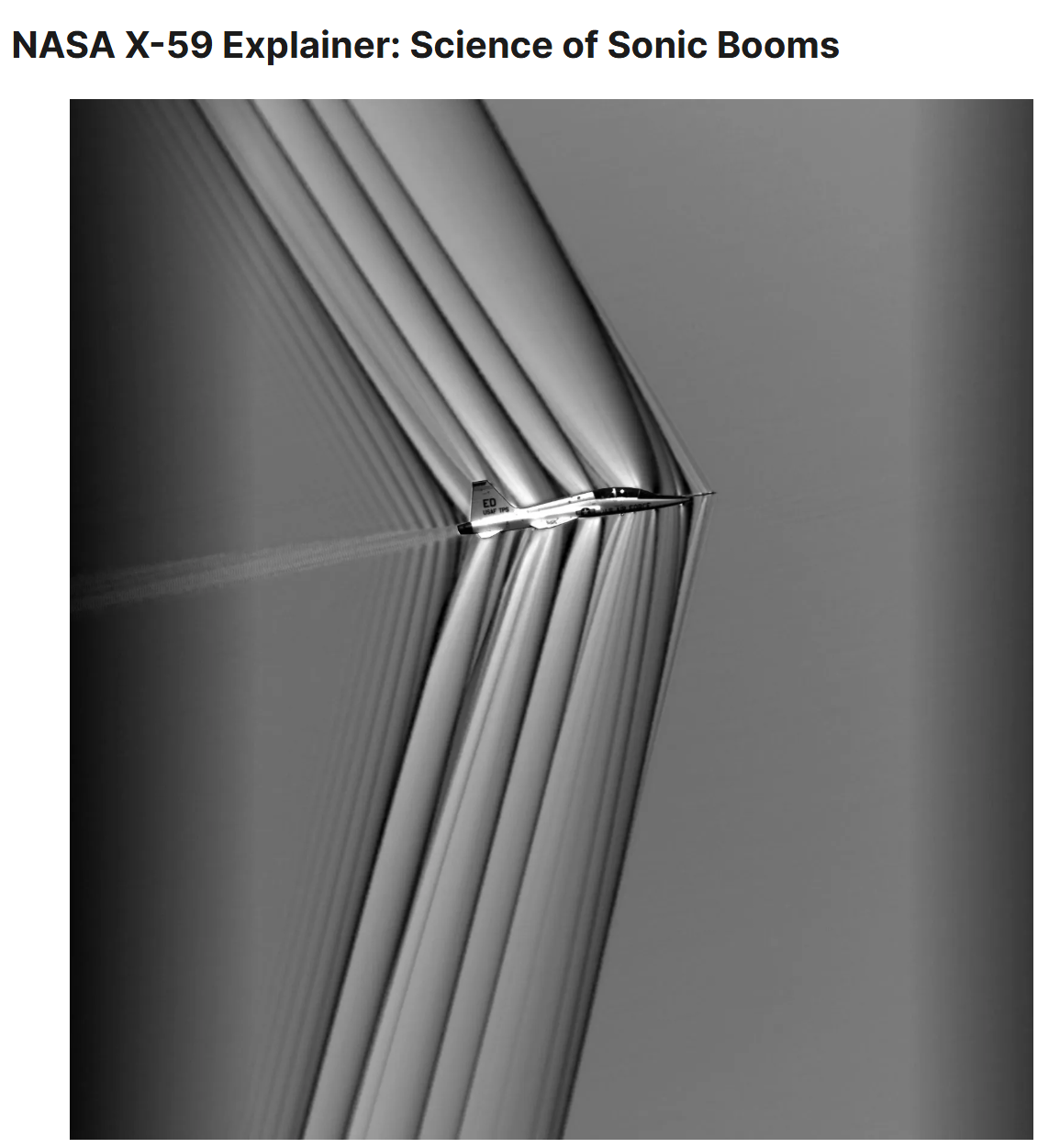
Shock waves are visible around a T-38 trainer aircraft during NASA’s Air-to-Air Background Oriented Schlieren flights in 2019. Schlieren imaging makes normally invisible changes in air density visible, giving researchers a way to see the same shock waves that can create sonic booms on the ground.
The X-59 is designed to fly at supersonic speeds while creating only a quiet thump instead of a loud sonic boom. For this flight, a NASA F‑15 chase plane flew nearby to monitor the X‑59. The loud sonic booms from the F-15 obscured any sound made by the X-59.
“The X-59’s first supersonic flight is a testament to America’s enduring leadership in science, engineering, and aerospace innovation,” said Michael Kratsios, Assistant to the President for Science and Technology and Director of the Office of Science and Technology Policy. “This achievement comes as the Trump Administration continues work to unleash supersonic flight and enable American ingenuity.”
NASA’s X-59 quiet supersonic research aircraft completed its first supersonic flight Friday, June 5, 2026, marking the first time the aircraft exceeded the speed of sound in support of NASA’s Quesst mission.
NASA's X-59 Aircraft Flies Supersonic for First Time - NASA
NASA’s experimental X-59 aircraft marked a major milestone Friday, June 5, when it flew faster than the
www.nasa.gov
NASA X-59 Explainer: Science of Sonic Booms - NASA
The most common misconception about sonic booms is that they’re just the sound created at the
www.nasa.gov
Shock waves are visible around a T-38 trainer aircraft during NASA’s Air-to-Air Background Oriented Schlieren flights in 2019. Schlieren imaging makes normally invisible changes in air density visible, giving researchers a way to see the same shock waves that can create sonic booms on the ground.