

The amphibious assault at Inchon marked the Cold War rebirth of the U.S. Navy and Marine Corps.
The expertly planned and boldly executed air-sea-ground attack of September 1950, Operation Chromite, put to rest the post-World War II argument that globe-spanning warplanes armed with atomic bombs were all that was needed for the United States to fight and win wars of the future.
Sea power projected ashore would enable the United Nations to preserve the independence of the Republic of Korea and limit the conflict to the Korean Peninsula.
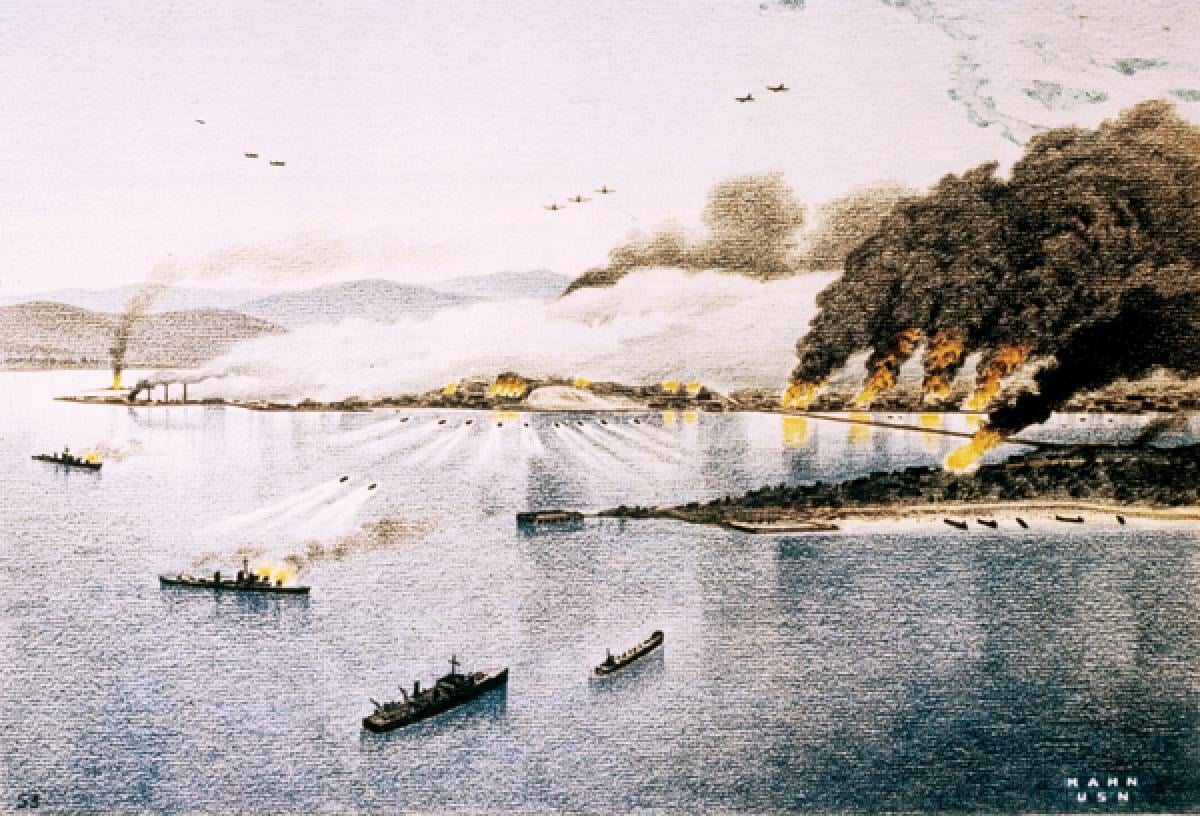
15 September 1950: One of history's most brilliant amphibious operations is under way as U.S. forces hit the beaches at Inchon; what had been deemed a risky undertaking would prove a decisive counterstroke in the Korean War.
This drawing by U.S. Navy combat artist Herbert C. Hahn depicts flames rising from Inchon as landing craft head ashore and destroyers belch forth supporting fire. Navy Art Collection, Naval History & Heritage Command
The expertly planned and boldly executed air-sea-ground attack of September 1950, Operation Chromite, put to rest the post-World War II argument that globe-spanning warplanes armed with atomic bombs were all that was needed for the United States to fight and win wars of the future.
Sea power projected ashore would enable the United Nations to preserve the independence of the Republic of Korea and limit the conflict to the Korean Peninsula.
https://www.usni.org/magazines/naval-history-magazine/2010/october/operation-chromite-target-inchon?
15 September 1950: One of history's most brilliant amphibious operations is under way as U.S. forces hit the beaches at Inchon; what had been deemed a risky undertaking would prove a decisive counterstroke in the Korean War.
This drawing by U.S. Navy combat artist Herbert C. Hahn depicts flames rising from Inchon as landing craft head ashore and destroyers belch forth supporting fire. Navy Art Collection, Naval History & Heritage Command
