

To keep the Cactus Air Force flying, a U.S. Navy convoy loaded down with a volatile cargo of aviation fuel and munitions set out for Guadalcanal through dangerous waters. The voyage didn’t go as planned.

 www.usni.org
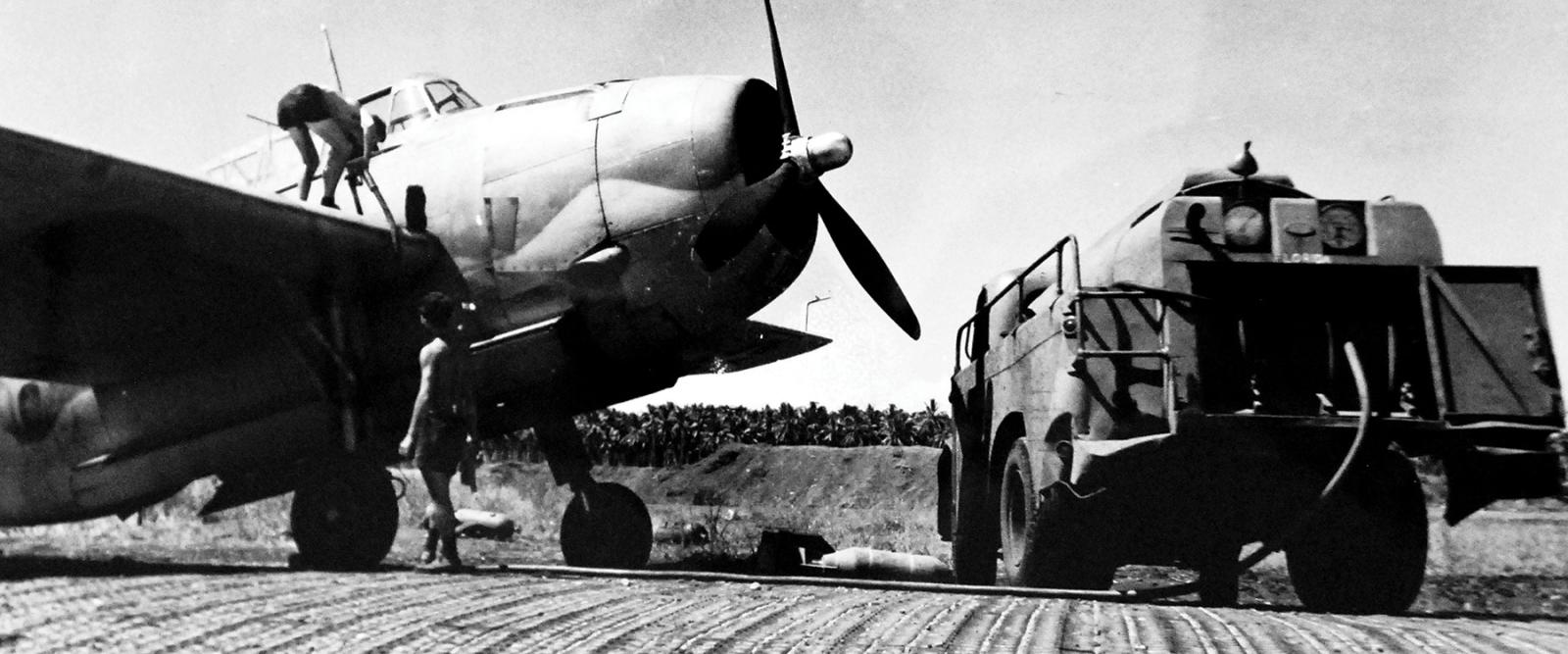
A ground crewman fuels a Grumman Avenger at Guadalcanal’s Henderson Field. In mid-October 1942, frustrated by the trickle of aviation gasoline (avgas) and munitions reaching the island on board destroyer-minesweepers, Rear Admiral Richmond K. Turner dispatched a small supply convoy to Guadalcanal.
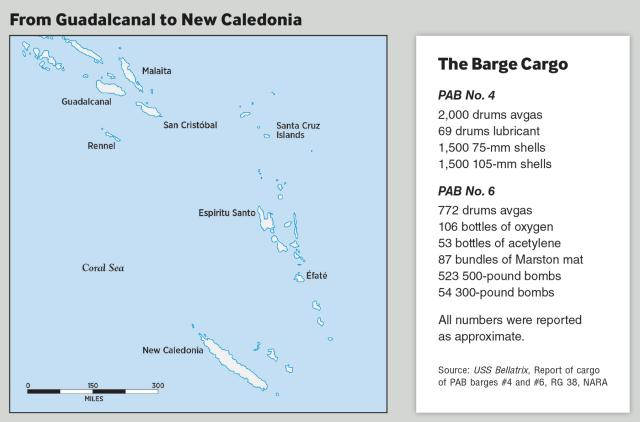
Thus, on 12 October, Task Unit (TU) 62.4.5 departed Luganville for Guadalcanal. The convoy comprised two cargo ships—the USS Bellatrix (AK-20) and Alchiba (AK-23)—escorted by the converted yacht Jamestown (AGP-3), the oceangoing tug Vireo (AT-144), and the destroyer Meredith (DD-434). PAB No. 4 and PAB No. 6, two large Pan American Airlines barges loaded with drums of avgas and various munitions, were towed by the Bellatrix and Alchiba, respectively.
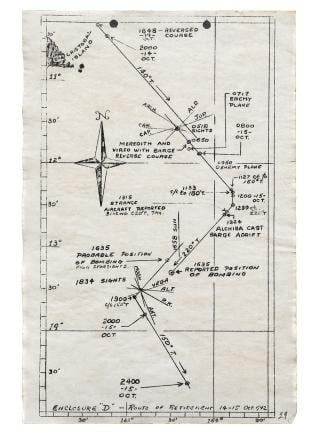
Persistent problems with the Alchiba’s tow of PAB No. 6 further reduced the cargo ships’ already slow speed to an average of 9.5 knots. At 1600 on 14 October, while still 25 nautical miles east of the tip of San Cristóbal Island, the convoy was joined by the new destroyer USS Nicholas (DD-449).4 The convoy continued a slow zigzag advance along a base course of 320 degrees approaching the entrance of Indispensable Strait between San Cristóbal and Malaita until orders from Turner arrived at 1855. In accordance with those orders, the entire convoy reversed course....
The enemy was in the area.
Perilous Mission to Guadalcanal
The Cactus Air Force needed aviation fuel, and a U.S. Navy convoy aimed to deliver the volatile cargo to them, Japanese dive bombers and sharks be damned.
A ground crewman fuels a Grumman Avenger at Guadalcanal’s Henderson Field. In mid-October 1942, frustrated by the trickle of aviation gasoline (avgas) and munitions reaching the island on board destroyer-minesweepers, Rear Admiral Richmond K. Turner dispatched a small supply convoy to Guadalcanal.
Thus, on 12 October, Task Unit (TU) 62.4.5 departed Luganville for Guadalcanal. The convoy comprised two cargo ships—the USS Bellatrix (AK-20) and Alchiba (AK-23)—escorted by the converted yacht Jamestown (AGP-3), the oceangoing tug Vireo (AT-144), and the destroyer Meredith (DD-434). PAB No. 4 and PAB No. 6, two large Pan American Airlines barges loaded with drums of avgas and various munitions, were towed by the Bellatrix and Alchiba, respectively.
Persistent problems with the Alchiba’s tow of PAB No. 6 further reduced the cargo ships’ already slow speed to an average of 9.5 knots. At 1600 on 14 October, while still 25 nautical miles east of the tip of San Cristóbal Island, the convoy was joined by the new destroyer USS Nicholas (DD-449).4 The convoy continued a slow zigzag advance along a base course of 320 degrees approaching the entrance of Indispensable Strait between San Cristóbal and Malaita until orders from Turner arrived at 1855. In accordance with those orders, the entire convoy reversed course....
The enemy was in the area.