
testtest

Primer pushed in after firing ???

BookemDano

Operator
I'm stumped by what happened yesterday.

2nd round of testing Hornady 75 grain hpbt match bullet with TAC powder.
5.56 with 2.25 col, cci standard primer.
Western Powder lists the max load at 25.8 grains.

I did initial testing last week with 23.8 - 25.3 grains of powder.
I decided to just test 24.6 and 24.7 yesterday.
Primers flattened, not excessive, with minimal cratering.
weighted each load individually & hand primed each.
2825 average velocity w/ 24.7 grains, then this one shot hit 2908 fps and the primer appears pushed in, instead of flushed out to case head.
It was not pierced.

Never seen anything like this before. Anyone have a clue?
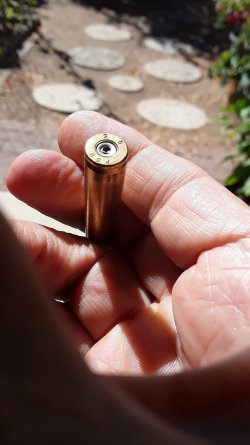
 

Attachments

  • 20260930_112436.jpg
    20260930_112436.jpg
    303.2 KB · Views: 27
I'm stumped by what happened yesterday.

2nd round of testing Hornady 75 grain hpbt match bullet with TAC powder.
5.56 with 2.25 col, cci standard primer.
Western Powder lists the max load at 25.8 grains.

I did initial testing last week with 23.8 - 25.3 grains of powder.
I decided to just test 24.6 and 24.7 yesterday.
Primers flattened, not excessive, with minimal cratering.
weighted each load individually & hand primed each.
2825 average velocity w/ 24.7 grains, then this one shot hit 2908 fps and the primer appears pushed in, instead of flushed out to case head.
It was not pierced.

Never seen anything like this before. Anyone have a clue?
i have only been reloading maybe now about 4 years this month (October???)

pistols only and always "under max charges"

so no, in my limited time/experience, i have not seen that before.
 
I know this can happen when firing vintage military rifles. Read that this happened because original military ammo had “harder” primers that allowed the ammo to fire after long time storage. So since we are brainstorming, perhaps your primers are softer than what’s being used on standard factory ammo. I had this problem when firing my Type 38 Japanese rifles. The primers they used were “harder” than today’s factory ammo.
 
if so it's possible that that brass was just not good on pockets. if the rest of the reloads did the same thing or a great percentage of them did, it's more than just brass issues as it could be firearm related. the load data was from hornady or western powders (ramshot)? and was it in the 223rem data or service rifle/5.56nato?
 
hornady #11 list tac @ 23.8gr max with 75bthp's @ 2.250"

as many know most load data publishers plat safe and are usually lower than actual max psi, but always remember load safety............start low and work up!

i haven't tested loads using different brands/types of primers to know if cci400's burn hotter than wsrp's (winchester small rifle primers? wsp was used in hornady's load data. back off 2gr and work back up
 
make sure that primers are just a tad passed flush cause if not from firing it could make the primer go in deeper when fired.

if familiar with quick load (ql/QL) it also shows 24.6 is op'd depending on case capacities. the inputs i did was for a 20" barrel and produced a velocity of 2,797 so case capacity isn't much off, but that also means 24.8 produces ~2,820fps and is over pressured. marginal op'ing isn't an exact science of what brass and primers will show. QL requires good known inputs to adjust for reliable output/data.
 
@TEXASforLIFE - You're asking all the right questions. I was going to jump in, but after reading your responses/questions, I've nothing to add at this time... I love working on solving a good mystery! Hopefully the OP will respond soon with answers to the questions you've posed.
 
Back
Top