

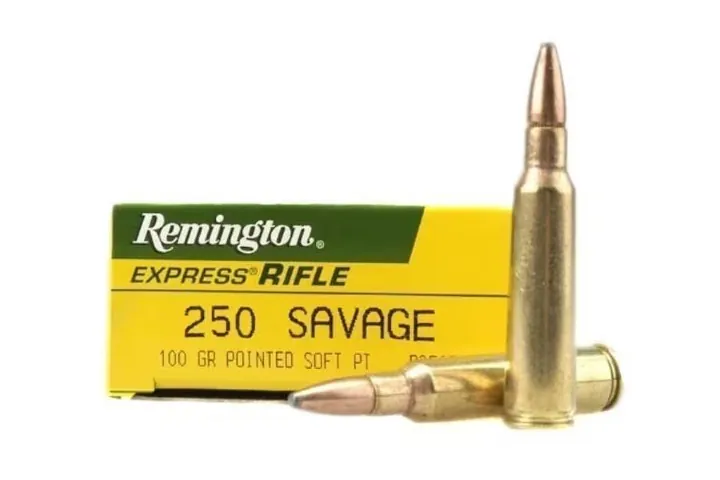
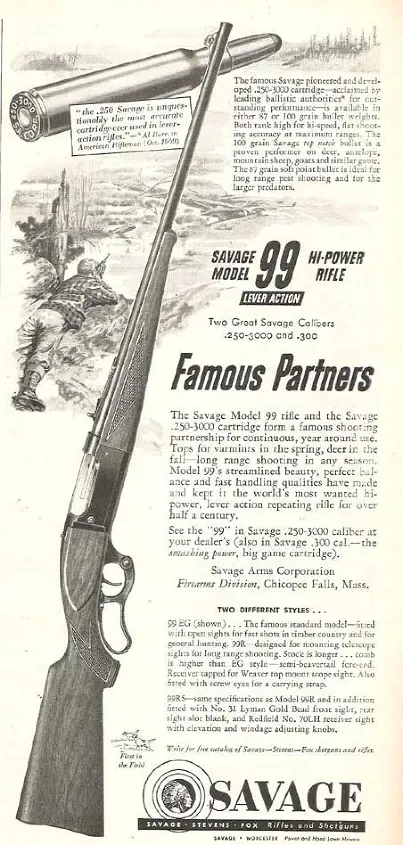
Luv my two .250-3000's. One Rem M700 & One Savage M99.
-----------------
The .250-3000 was the brainchild of Charles Newton, one of the great firearms designers of the early 20th century. Newton long collaborated with Savage Arms, coming up with classics like the .22 Hi-Power and the .300 Savage.
The .250-3000 slotted in between those two rounds, as sort of a middleweight cartridge aimed at practical small game hunting. It hit the market in 1915, as World War I raged in Europe, but the U.S. had not yet entered.
As the first commercial cartridge claimed to break the 3,000 fps mark, the .250-3000 (you can see where the name came from) was the hotshot of its day. Unfortunately, the greatest hype for the cartridge, its blistering speed, was also its worst enemy.
Under Savage’s advisement, Newton used an 87-grain bullet to reach that 3,000 fps mark, but bullet technology of that day was not what it is today. Those 87-grain bullets had a reputation, rightly or wrongly, for being easily knocked off course when woods hunting, or blowing up instead of holding together for deep penetration. Newton would have preferred to use a 100-grain bullet, but then he couldn’t achieve the sacred 3,000 fps mark.

 www.thefirearmblog.com
-----------------
The .250-3000 was the brainchild of Charles Newton, one of the great firearms designers of the early 20th century. Newton long collaborated with Savage Arms, coming up with classics like the .22 Hi-Power and the .300 Savage.
The .250-3000 slotted in between those two rounds, as sort of a middleweight cartridge aimed at practical small game hunting. It hit the market in 1915, as World War I raged in Europe, but the U.S. had not yet entered.
As the first commercial cartridge claimed to break the 3,000 fps mark, the .250-3000 (you can see where the name came from) was the hotshot of its day. Unfortunately, the greatest hype for the cartridge, its blistering speed, was also its worst enemy.
Under Savage’s advisement, Newton used an 87-grain bullet to reach that 3,000 fps mark, but bullet technology of that day was not what it is today. Those 87-grain bullets had a reputation, rightly or wrongly, for being easily knocked off course when woods hunting, or blowing up instead of holding together for deep penetration. Newton would have preferred to use a 100-grain bullet, but then he couldn’t achieve the sacred 3,000 fps mark.
Fudd Friday: The .250-3000 Walked So The .243 Could Fly
Before World War II, and especially before World War I, the rifles of the whitetail-hunting world looked a lot different from today.Lever-actions ruled supreme, and they were often chambered for rounds that have fallen from favor.These include .33 Winchester, .303 Savage and even .44-40.
www.thefirearmblog.com