Scares the hell out of me!I wish the Army would stop wasting money on this stuff.
Uniforms 2 billion dollars. Seemingly every other year.
And now the "replacement" for the M4 has been going on since GWOT.
the new tanks they said they didn't need now they suddenly need
There are so many options out there already which fit the bill of increased range, and better ballistics with minimal loss in round count and minimal increase of weight.

testtest
You are using an out of date browser. It may not display this or other websites correctly.
You should upgrade or use an alternative browser.
You should upgrade or use an alternative browser.
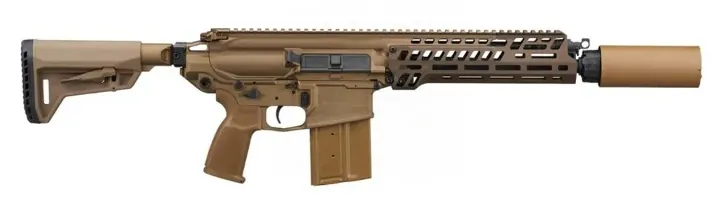
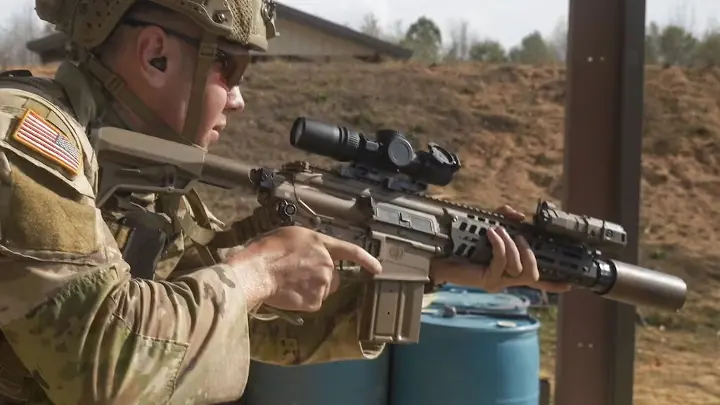
The Army has another new rifle, the XM8 carbine
- Thread starter Talyn
- Start date
Yup. Wrong tool for the job.Sort of like the 5.56 lost performance by going from the A2 20" barrel to the M4 14.5 " because folks wanted to get in & out of APCs better? And everyone was OK with that until the M4s were outranged in Afganistan.


you just described the last 200 yrs.. no one needs it till its cutting edge right? And we dont have it but the enemy does.I wish the Army would stop wasting money on this stuff.
Uniforms 2 billion dollars. Seemingly every other year.
And now the "replacement" for the M4 has been going on since GWOT.
the new tanks they said they didn't need now they suddenly need
There are so many options out there already which fit the bill of increased range, and better ballistics with minimal loss in round count and minimal increase of weight.
If we didnt do R&D folks would ***** that we are behind Russia and China.
When we do R&D, they ***** its too expensive.
LoneGunman
Operator
The 6.5 Grendel exceeds the current option. it's already a production model.you just described the last 200 yrs.. no one needs it till its cutting edge right? And we dont have it but the enemy does.
If we didnt do R&D folks would ***** that we are behind Russia and China.
When we do R&D, they ***** its too expensive.
For large platform
The 6.0/6.5 Creedmore exceeds the current 556 rifle, it's already in production.
Wasting billions of dollars on a rifle they won't use and you're footing the bill.
It would take a small percentage of the R&D cost if they came up with a middle sized AR. AR-mid.
Make it a .25 and longer case for more powder or a longer case for the 556 so you can send 110gr+ 2800+fps
That's the issue. We were getting out gunned in Afgan. 556 was made for short to medium range. The typical engagement was 300 yards.
Making a new rifle from scratch is retarded and screams of a general's golden parachute.
LoneGunman
Operator
Army ARs aren't cheap bro. Often 2K for reg issue rifle.And the worst part is knowing that you hold in your hands, a tool for the various needs of a variety of purposes, all put together, by the lowest bidder.
Then night or thermals, and other cool guy stuff.
New thermals i think are over 40K a piece,

Belt Fed
Emissary
It's also a bigger platform rifle.The 6.0/6.5 Creedmore exceeds the current 556 rifle, it's already in production.
LoneGunman
Operator
True, however, the Army was looking hard and "approved" the 6.8 so, in that aspect, it would appear form factor wasn't a consideration or a minor one at best. Looks like the army is once again see-sawing back to a larger format.It's also a bigger platform rifle.

U.S. Army Officially Deploys M7 6.8mm Rifle to Replace M4A1 in Combat Units
U.S. Army soldiers in Hawaii train on the new 6.8mm M7 rifle as Next Generation Squad Weapon fielding expands.
 www.armyrecognition.com

More...

 www.thefirearmblog.com
Goodbye M7, Hello XM8
The Pentagon's FY2027 budget request booklet outlines continued investment in the Generation Squad Weapons program but previously planned procurement of more M7s will now be replaced by the XM8. The US Army hasn't procured any M7 rifles in Federal FY2026 (which began on 1 October 2025).
Goodbye M7, Hello XM8
We’ve been following the US Army’s Next Generation Squad Weapons program here at TFB from the very beginning and we recently reported that the US Army had received the first batch of the new and improved version of the NGSW-Rifle - the XM8.The XM8 Carbine is a shorter and lighter variant of the...
www.thefirearmblog.com
LoneGunman
Operator
Why do we still pay taxes. :|

Cedric
Professional
I'm late on this, but I'll see if I can answer some of your riddles.With the ops in Afghanistan (mostly) and Iraq, the troop were being "out-ranged" by enemy fire.
Basically, the US Army wasn't comfortable with the idea during the Afghanistan War that US squads with 5.56 mm M4/M16 and M249 were being out-ranged by enemy personnel utilizing 7.62x54mmR weaponry. Essentially, the 7.62x54mmR weapons like SVD rifles and PK machine guns allowed the OPFOR to engage from 800+ meters away while the 5.56 mm weapons were only able to engage ~500 m effectively.
Also, there was a need to increase the stopping power because in Afghanistan they found out the 5.56 wasn't putting & keeping down the insurgents reliably when they were hit. That's when they started introducing the 77 gr. Mk.262 loads that were more effective.
The advantage of 6.8x51 is that it has higher muzzle velocity, higher muzzle energy and a much flatter trajectory than the 5.56 and 7.62x51 (and the 7mm/08 & 260 Rem) and does all this out of a 13” barrel.
The front-line combat formations and combat service support units will be fielding the new M7/8 rifles & M250 MGPMGs. Majority of the rear echelon units and probably all of the reserves and guard units are still keeping their M4’s for the foreseeable future.
So, riddle me this...
#1 - Were there any complaints when the M16/5.56 was first adopted?I think it took awhile to get the bugs out in the A2, and they moved to a 62/64 gr bullet for more effectiveness against supposed Russian armor, when they figured out the 55 gr pill wouldn't cut the mustard.
#2 - Why didn't the US Armed Forces use the "heavy" M1 Garand/30-06 when the lighter M1 carbine/.30 carbine was available and the troops then could have a lighter & higher ammo load-out?
#3 - Why did the USMC move to the lower-performance M4 carbine due to the US Army experience in Afghanistan when they had higher-performance A2/A4s, other than the M4s were easier to carry when in vehicles?
First, you are correct on the Afghanistan problem. In addition to ballistics, the terrain and tactical situation overmatched the 5.56. By that I mean you had, as you said, longer ranges, firing "uphill" in many cases, and what many don't realize is that US infantrymen were largely trained to spot/call for artillery as a first resort with the rifleman relegated to protection unless the enemy was at close range. Ultimately, Armalite shipped over AR-10s to help get the infantry back in the direct fire mode since artillery was not always available. (I had a slew of Armalite technical bulletins on disk, but they are in the inner sanctum...somewhere). At least we can't lay claim to the worst rifle over there, the Brit SA80. I heard they just dropped these on the ground and picked up M4s or AKs when they had the chance.
Second, the A2 was great IMO. This was our rifle starting just before the Gulf War. Didn't hear any complaints.
Third, as to the Garand, it had better target effect, but I also think the carbine got a bad rep because of its support troop role. I'm not an expert, but I do know the French paratroopers loved the carbine in Indochina.
Fourth, honestly, I didn't know the Marines went to the M4, I thought they used the M16A4. The controversy about the M4 in Afghanistan was about the rime we started looking for a replacement. However, two retired Marine GOs ran Colt Defense and absolutely put the kibosh on replacing the M16. They maintained the M16A4 was the way to go and I thought that's what the Corps did.
Let’s see-ammo uses a 3 piece (can you say expensive?) case to launch a bullet at pressures far in excess of SAAMI specs (can you can increased wear/short barrel life); we have an incredibly expensive complex optic system (what could possibly go wrong in a combat environment) and a Very expensive rifle all to accomplish what could be done equally well by an off the shelf AR10 RIFLE in 6.5 Creedmoor with a proven ACOG system for a fraction of the cost. I suspect one could buy 1/2 dozen AR’s or more and a ton of factory ammo for what one new whiz bang and a couple hundred rounds would cost. Your tax $$ at work. Somebody needs to go to prison over this!

USMC6094
Professional
As I see it, and taking an objective look at history only strengthens the observation, it's the current state of affairs as far as recruits, and active duty soldiers go.
Kids today are veterans of Call of Duty, but put a real weapon in their hands and you get whats the current "issue " with marksmanship.
More powerful rifles and ammo won't fix the problem, but cooking the books will divert attention elsewhere.
Kids today are veterans of Call of Duty, but put a real weapon in their hands and you get whats the current "issue " with marksmanship.
More powerful rifles and ammo won't fix the problem, but cooking the books will divert attention elsewhere.
@Cedric
et al.
USSOCOM has been using a 6.5CM AR-10 type for years.
https://soldiersystems.net/2018/03/23/ussocom-adopts-6-5-cm/
https://soldiersystems.net/2023/01/...xt-generation-individual-weapon-system-redux/

 www.twz.com
U.S. Special Operations Command (SOCOM) has aggressively adopted 6.5mm Creedmoor for select mid-range and sniper rifles, including the Geissele MRGG-S and the multi-caliber LMT MRGG-A. The cartridge was selected because it effectively doubles hit probabilities at targets up to 1,000 meters compared to the legacy 7.62mm NATO round.
SOCOM 6.5 Creedmoor Programs
The U.S. military's embrace of the 6.5mm Creedmoor focuses on elite units requiring superior mid-range ballistic performance—flatter trajectory and better-retained energy.
SOCOM's testing has validated the 6.5mm Creedmoor as a major upgrade for special
forces:
Civilian Equivalents and Builds
Civilians and competitive shooters can access the same ballistic advantages using standard AR-10 pattern rifles chambered in 6.5mm Creedmoor. Numerous manufacturers sell specialized "SOCOM-style" 6.5 Creedmoor barrels and complete rifle builds:

 www.sandboxx.us
-----------
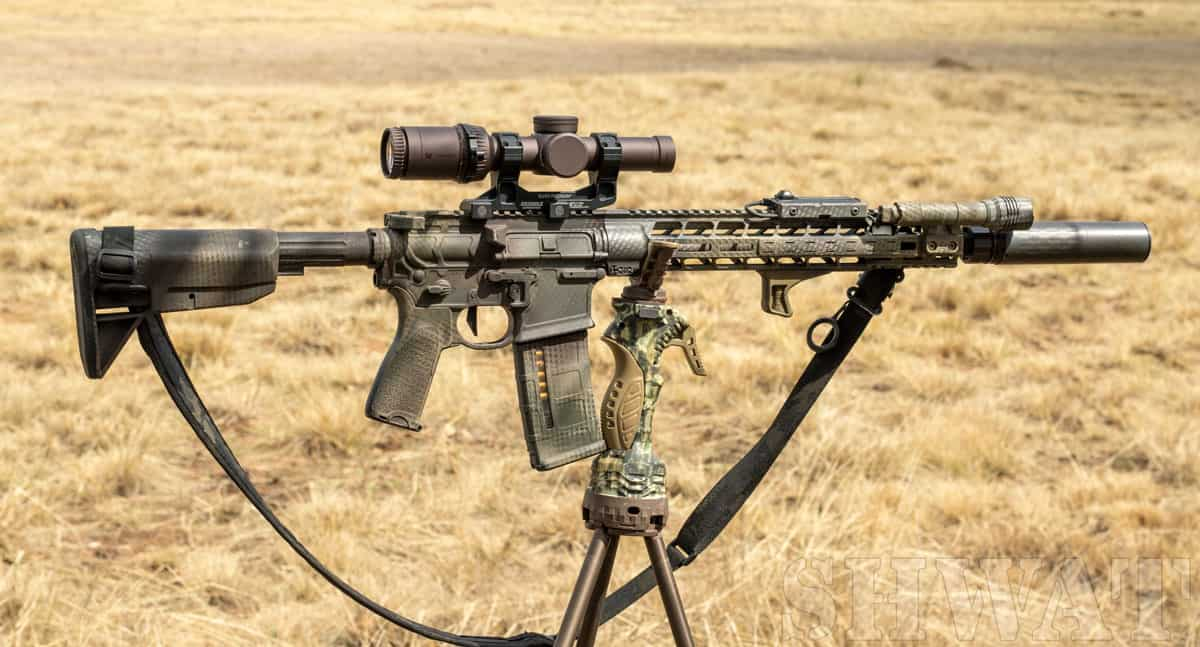
For a major caliber AR-type I've done the same.
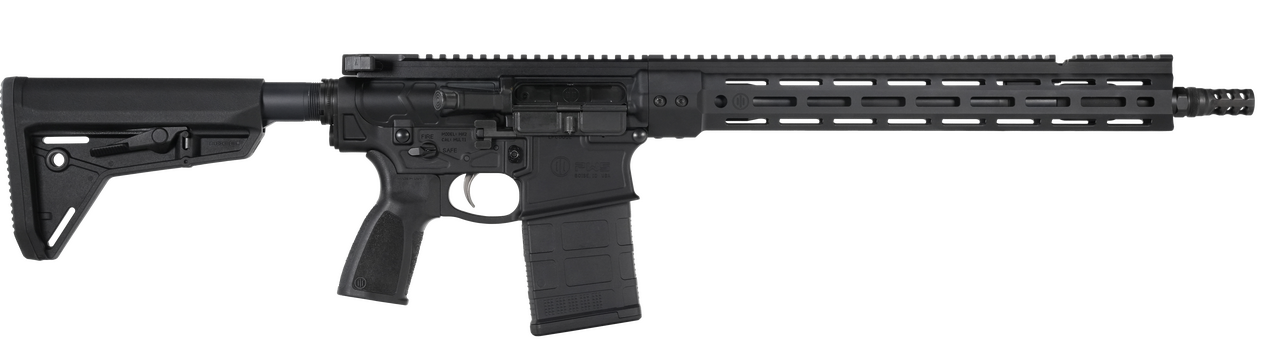
Right now I've been using a PSA PA10 Gen 3 6.5CM, as an interim, but will replace it with a PWS Mk.218 MOD 2 6.5CM when it comes out later this year.
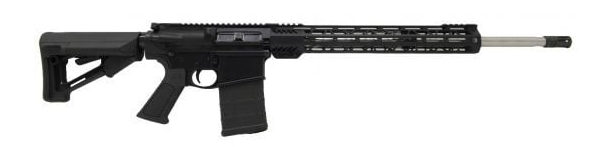
PWS just released the .308/7.62x51 in the new Gen recently, and the 6.5CM will follow.

 primaryweapons.com
et al.
USSOCOM has been using a 6.5CM AR-10 type for years.
https://soldiersystems.net/2018/03/23/ussocom-adopts-6-5-cm/
https://soldiersystems.net/2023/01/...xt-generation-individual-weapon-system-redux/
New Rifles Chambered In 6.5mm Creedmoor Heading To U.S. Special Operations Armories
The new Mid-Range Gas Gun-Assault will give U.S. special operators a rifle option for greater reach, accuracy, and ballistic performance.
www.twz.com
U.S. Special Operations Command (SOCOM) has aggressively adopted 6.5mm Creedmoor for select mid-range and sniper rifles, including the Geissele MRGG-S and the multi-caliber LMT MRGG-A. The cartridge was selected because it effectively doubles hit probabilities at targets up to 1,000 meters compared to the legacy 7.62mm NATO round.
SOCOM 6.5 Creedmoor Programs
The U.S. military's embrace of the 6.5mm Creedmoor focuses on elite units requiring superior mid-range ballistic performance—flatter trajectory and better-retained energy.
- MRGG-A (Mid-Range Gas Gun-Assaulter): SOCOM awarded LMT Defense a 10-year, $92 million contract for the MRGG-A. This AR-10 platform rifle features a quick-change barrel system, allowing operators to rapidly swap between 7.62mm and 6.5mm Creedmoor depending on the mission and field supply environment.
- MRGG-S (Mid-Range Gas Gun-Sniper): SOCOM selected Geissele Automatics for a designated marksman and sniper support role. It features a 20-inch barrel and is explicitly designed to maximize stability and accuracy at extreme ranges.
- Conversion of Legacy Weapons: SOCOM also fielded kits to rechamber legacy weapons, such as the Knight’s Armament M110 Semi-Automatic Sniper System (SASS), to the 6.5mm Creedmoor.
SOCOM's testing has validated the 6.5mm Creedmoor as a major upgrade for special
forces:
- Extended Range: Supersonic past 1,400 yards, which is roughly 350+ yards further than the standard .308 Winchester.
- Superior Ballistics: Roughly 28% less wind drift at 500 yards, and at 1,000 meters, the round retains 30% more energy while exhibiting a flatter trajectory.
- Less Recoil: Produces about 40% less recoil than the .308, facilitating much faster follow-up shots in semi-automatic platforms.
Civilian Equivalents and Builds
Civilians and competitive shooters can access the same ballistic advantages using standard AR-10 pattern rifles chambered in 6.5mm Creedmoor. Numerous manufacturers sell specialized "SOCOM-style" 6.5 Creedmoor barrels and complete rifle builds:
- AR-10 Platforms: Brands like Lewis Machine & Tool (LMT), Luth-AR, and custom builders offer rifles that share the exact gas-gun modularity as SOCOM's adopted firearms.
- Barrels: Many manufacturers offer 20-inch, 1:8 twist, heavy "SOCOM" profile barrels built for AR-10 platforms, such as those available on Davidson Defense.
Sandboxx News | Military News with Meaning—Where Expertise Meets the Front Lines.
Sandboxx News makes the complex approachable. Bridging the gap between academic expertise and practical boots-on-the-ground experience, we remove the mystery from conflict and highlight the importance of military service and deterrence-reinforcing technology.
www.sandboxx.us
-----------
For a major caliber AR-type I've done the same.
Right now I've been using a PSA PA10 Gen 3 6.5CM, as an interim, but will replace it with a PWS Mk.218 MOD 2 6.5CM when it comes out later this year.
PWS just released the .308/7.62x51 in the new Gen recently, and the 6.5CM will follow.
MK216 MOD 2-M Rifle .308 WIN
Master any mission with the MK216 MOD 2-M Rifle. Features a 16.1" .308 Winchester barrel, long-stroke piston system, and fully ambidextrous forged lowers. Shop now!
Last edited:
Cedric
Professional
My only issue with the adoption of these rifles is if it's good enough for SOCOM, they should be good enough for our line infantrymen. I've always maintained that the difference between SOF and other combat units in addition to specialized training is that SOF has an unlimited credit card. E.g., back in the late 80s we were still using the plasticized rubber rain gear (or was that rubberized plastic) while SOF had Gor-tex . Oh, we could get Gor-tex but we had to pay for it ourselves. Anyway, the M4 is fine for vehicle crewmen and support folks, but lets get real for the infantry.@Cedric
et al.
USSOCOM has been using a 6.5CM AR-10 type for years.
https://soldiersystems.net/2018/03/23/ussocom-adopts-6-5-cm/
https://soldiersystems.net/2023/01/...xt-generation-individual-weapon-system-redux/
New Rifles Chambered In 6.5mm Creedmoor Heading To U.S. Special Operations Armories
The new Mid-Range Gas Gun-Assault will give U.S. special operators a rifle option for greater reach, accuracy, and ballistic performance.
U.S. Special Operations Command (SOCOM) has aggressively adopted 6.5mm Creedmoor for select mid-range and sniper rifles, including the Geissele MRGG-S and the multi-caliber LMT MRGG-A. The cartridge was selected because it effectively doubles hit probabilities at targets up to 1,000 meters compared to the legacy 7.62mm NATO round.
SOCOM 6.5 Creedmoor Programs
The U.S. military's embrace of the 6.5mm Creedmoor focuses on elite units requiring superior mid-range ballistic performance—flatter trajectory and better-retained energy.
Advantages Over 7.62mm NATO
- MRGG-A (Mid-Range Gas Gun-Assaulter): SOCOM awarded LMT Defense a 10-year, $92 million contract for the MRGG-A. This AR-10 platform rifle features a quick-change barrel system, allowing operators to rapidly swap between 7.62mm and 6.5mm Creedmoor depending on the mission and field supply environment.
- MRGG-S (Mid-Range Gas Gun-Sniper): SOCOM selected Geissele Automatics for a designated marksman and sniper support role. It features a 20-inch barrel and is explicitly designed to maximize stability and accuracy at extreme ranges.
- Conversion of Legacy Weapons: SOCOM also fielded kits to rechamber legacy weapons, such as the Knight’s Armament M110 Semi-Automatic Sniper System (SASS), to the 6.5mm Creedmoor.
SOCOM's testing has validated the 6.5mm Creedmoor as a major upgrade for special
forces:
- Extended Range: Supersonic past 1,400 yards, which is roughly 350+ yards further than the standard .308 Winchester.
- Superior Ballistics: Roughly 28% less wind drift at 500 yards, and at 1,000 meters, the round retains 30% more energy while exhibiting a flatter trajectory.
- Less Recoil: Produces about 40% less recoil than the .308, facilitating much faster follow-up shots in semi-automatic platforms.
Civilian Equivalents and Builds
Civilians and competitive shooters can access the same ballistic advantages using standard AR-10 pattern rifles chambered in 6.5mm Creedmoor. Numerous manufacturers sell specialized "SOCOM-style" 6.5 Creedmoor barrels and complete rifle builds:
- AR-10 Platforms: Brands like Lewis Machine & Tool (LMT), Luth-AR, and custom builders offer rifles that share the exact gas-gun modularity as SOCOM's adopted firearms.
- Barrels: Many manufacturers offer 20-inch, 1:8 twist, heavy "SOCOM" profile barrels built for AR-10 platforms, such as those available on Davidson Defense.
Sandboxx News | Military News with Meaning—Where Expertise Meets the Front Lines.
Sandboxx News makes the complex approachable. Bridging the gap between academic expertise and practical boots-on-the-ground experience, we remove the mystery from conflict and highlight the importance of military service and deterrence-reinforcing technology.
-----------
For a major caliber AR-type I've done the same.
Right now I've been using a PSA PA10 Gen 3 6.5CM, as an interim, but will replace it with a PWS Mk.218 MOD 2 6.5CM when it comes out later this year.
View attachment 114581
PWS just released the .308/7.62x51 in the new Gen recently, and the 6.5CM will follow.
MK216 MOD 2-M Rifle .308 WIN
Master any mission with the MK216 MOD 2-M Rifle. Features a 16.1" .308 Winchester barrel, long-stroke piston system, and fully ambidextrous forged lowers. Shop now!
View attachment 114578
View attachment 114579
I agree.
And it's not uncommon for the various services to not agree with each other and go their own way based on what they feel their requirements are.
The 6.5CM in a AR-10-type rifle works for me in my AOPs, as well as having 90% of the capability of the 6.8x51 at 50% of the price for the rifle(s), as well for ammo that's also far more available.
The new Federal +Peal tech can wipe out the 10% performance deficient but I haven't seen a 125 gr OTM (my standard defensive load) come out in that tech yet.
I still think the M4 5.56 will be around for awhile but they're looking at the 6.5x43 LICC as a potential replacement.
 www.twz.com
And it's not uncommon for the various services to not agree with each other and go their own way based on what they feel their requirements are.
The 6.5CM in a AR-10-type rifle works for me in my AOPs, as well as having 90% of the capability of the 6.8x51 at 50% of the price for the rifle(s), as well for ammo that's also far more available.
The new Federal +Peal tech can wipe out the 10% performance deficient but I haven't seen a 125 gr OTM (my standard defensive load) come out in that tech yet.
I still think the M4 5.56 will be around for awhile but they're looking at the 6.5x43 LICC as a potential replacement.
FN America Delivers Guns Chambered In 6.5mm LICC For U.S. Military Testing
Canada is also deeply tied to work on the new guns, which aim to offer improvements in range, accuracy, and lethality.
www.twz.com
More...
 www.thefirearmblog.com
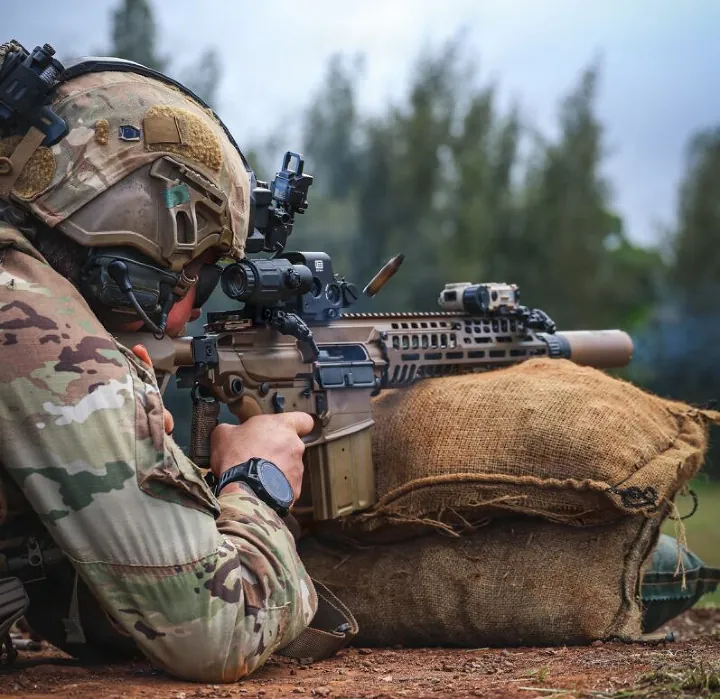
Army's NGSW Reaches Operational Units in the Pacific
POTD: Army's NGSW Reaches Operational Units in Pacific
Photo Of The Day, and we find ourselves on the wrong side of the M7 Next Generation Squad Weapon.Transition to a new service rifle means more than issue and familiarization, particularly for units committed to near-peer readiness.Soldiers from 2nd Battalion, 21st Infantry Regiment
www.thefirearmblog.com
@Cedric
et al.
USSOCOM has been using a 6.5CM AR-10 type for years.
https://soldiersystems.net/2018/03/23/ussocom-adopts-6-5-cm/
https://soldiersystems.net/2023/01/...xt-generation-individual-weapon-system-redux/
New Rifles Chambered In 6.5mm Creedmoor Heading To U.S. Special Operations Armories
The new Mid-Range Gas Gun-Assault will give U.S. special operators a rifle option for greater reach, accuracy, and ballistic performance.
U.S. Special Operations Command (SOCOM) has aggressively adopted 6.5mm Creedmoor for select mid-range and sniper rifles, including the Geissele MRGG-S and the multi-caliber LMT MRGG-A. The cartridge was selected because it effectively doubles hit probabilities at targets up to 1,000 meters compared to the legacy 7.62mm NATO round.
SOCOM 6.5 Creedmoor Programs
The U.S. military's embrace of the 6.5mm Creedmoor focuses on elite units requiring superior mid-range ballistic performance—flatter trajectory and better-retained energy.
Advantages Over 7.62mm NATO
- MRGG-A (Mid-Range Gas Gun-Assaulter): SOCOM awarded LMT Defense a 10-year, $92 million contract for the MRGG-A. This AR-10 platform rifle features a quick-change barrel system, allowing operators to rapidly swap between 7.62mm and 6.5mm Creedmoor depending on the mission and field supply environment.
- MRGG-S (Mid-Range Gas Gun-Sniper): SOCOM selected Geissele Automatics for a designated marksman and sniper support role. It features a 20-inch barrel and is explicitly designed to maximize stability and accuracy at extreme ranges.
- Conversion of Legacy Weapons: SOCOM also fielded kits to rechamber legacy weapons, such as the Knight’s Armament M110 Semi-Automatic Sniper System (SASS), to the 6.5mm Creedmoor.
SOCOM's testing has validated the 6.5mm Creedmoor as a major upgrade for special
forces:
- Extended Range: Supersonic past 1,400 yards, which is roughly 350+ yards further than the standard .308 Winchester.
- Superior Ballistics: Roughly 28% less wind drift at 500 yards, and at 1,000 meters, the round retains 30% more energy while exhibiting a flatter trajectory.
- Less Recoil: Produces about 40% less recoil than the .308, facilitating much faster follow-up shots in semi-automatic platforms.
Civilian Equivalents and Builds
Civilians and competitive shooters can access the same ballistic advantages using standard AR-10 pattern rifles chambered in 6.5mm Creedmoor. Numerous manufacturers sell specialized "SOCOM-style" 6.5 Creedmoor barrels and complete rifle builds:
- AR-10 Platforms: Brands like Lewis Machine & Tool (LMT), Luth-AR, and custom builders offer rifles that share the exact gas-gun modularity as SOCOM's adopted firearms.
- Barrels: Many manufacturers offer 20-inch, 1:8 twist, heavy "SOCOM" profile barrels built for AR-10 platforms, such as those available on Davidson Defense.
Sandboxx News | Military News with Meaning—Where Expertise Meets the Front Lines.
Sandboxx News makes the complex approachable. Bridging the gap between academic expertise and practical boots-on-the-ground experience, we remove the mystery from conflict and highlight the importance of military service and deterrence-reinforcing technology.
-----------
For a major caliber AR-type I've done the same.
Right now I've been using a PSA PA10 Gen 3 6.5CM, as an interim, but will replace it with a PWS Mk.218 MOD 2 6.5CM when it comes out later this year.
View attachment 114581
PWS just released the .308/7.62x51 in the new Gen recently, and the 6.5CM will follow.
MK216 MOD 2-M Rifle .308 WIN
Master any mission with the MK216 MOD 2-M Rifle. Features a 16.1" .308 Winchester barrel, long-stroke piston system, and fully ambidextrous forged lowers. Shop now!
View attachment 114578
View attachment 114579
Related...
Capstone Precision Group Awarded USSOCOM 6.5 Creedmoor Ammunition Contract - The Shooting Wire | The Shooting Wire
Capstone Precision Group, manufacturer of Berger Bullets and Ammunition, has been selected to produce M1200 6.5 Creedmoor Special Ball Long-Range Ammunition ...
www.shootingwire.com
LoneGunman
Operator
Yes longer barrels sustain pressure to keep the projectile accelerating.Sort of like the 5.56 lost performance by going from the A2 20" barrel to the M4 14.5 " because folks wanted to get in & out of APCs better? And everyone was OK with that until the M4s were outranged in Afganistan.