

In part one, the author described the ability to determine, based upon how human vision works and the actual science of sight, the best or most useful iron sight design.
For handgun sights, the best design is a front sight that’s easy to see and that reflects the most light combined with a rear sight which is uncomplicated and does not distract our eyes from seeing and focusing the front sight, the most important of the two.
Rear sights are meant to be looked through, not looked at.
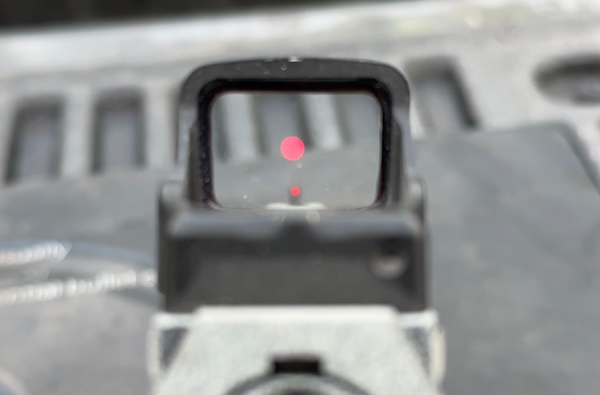
As the author mentioned during the previous part one, adding new sights or optics to a handgun doesn’t make a gun more accurate.
Installing a red or green dot optic on your handgun isn’t a shortcut around training and practice.
Even if the optic is mounted directly to the slide, the aiming reticle is still in a different location than the front sight. If you expect to achieve proficiency and then mastery, you have to put in the time.
For handgun sights, the best design is a front sight that’s easy to see and that reflects the most light combined with a rear sight which is uncomplicated and does not distract our eyes from seeing and focusing the front sight, the most important of the two.
Rear sights are meant to be looked through, not looked at.
As the author mentioned during the previous part one, adding new sights or optics to a handgun doesn’t make a gun more accurate.
Installing a red or green dot optic on your handgun isn’t a shortcut around training and practice.
Even if the optic is mounted directly to the slide, the aiming reticle is still in a different location than the front sight. If you expect to achieve proficiency and then mastery, you have to put in the time.

