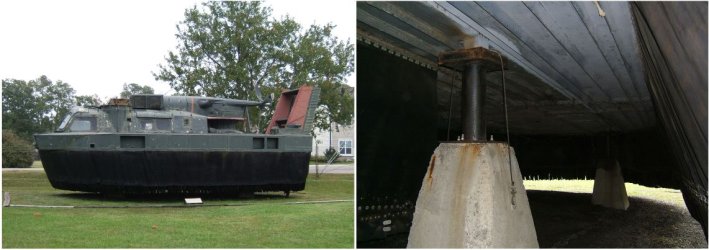

The PACV ( Patrol Air Cushion Vehicle ) was by far one of the strangest patrol vehicles used in Vietnam.
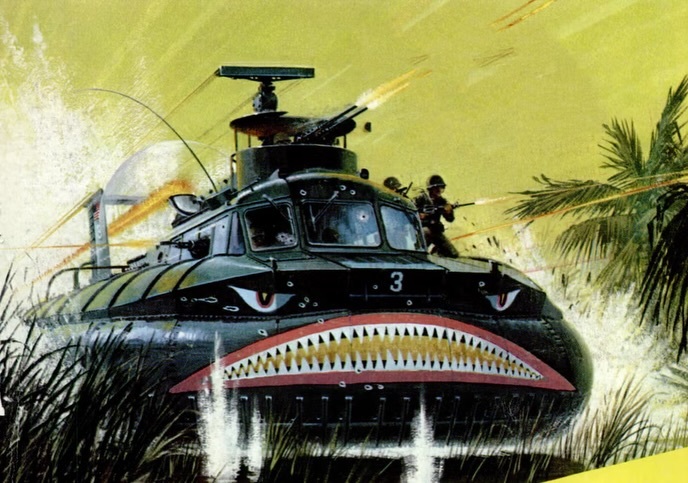
Built from a military version of the Bell SK-5 hovercraft, it was used by the Navy and Army in marshy river areas where regular boats and ground vehicles struggled to operate. Its air cushion let it move over water, mud, rice paddies, and swamp terrain that would stop almost anything else.

 www.popularmechanics.com
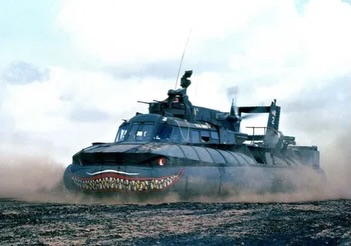
U.S. crews called them “Pac Vees” and the Viet Cong reportedly called them monsters.

 en.wikipedia.org
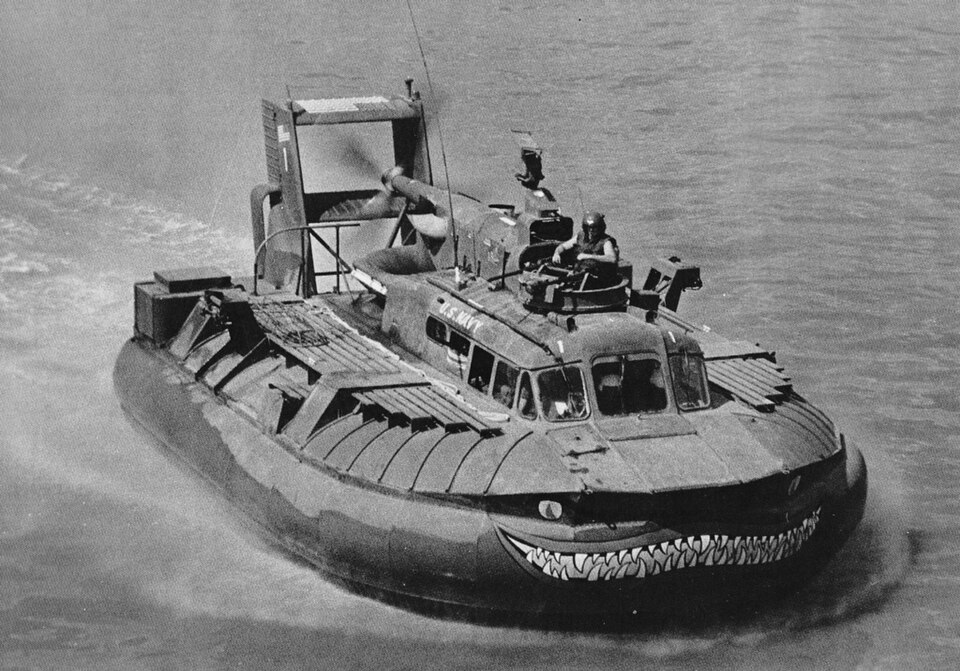
The Hovercraft was utilised by both the US Army and Navy during the Vietnam War, from recon patrols to inserting troops into combat. The humble PACV & ACVs proved their worth in the Mekong Delta, join me to learn more about these amazing watercraft.
Only a handful were built, The Navy got three and the army got threeand they never lasted past operational testing.
However, for a short time they gave U.S. forces a fast, heavily armed way to chase the enemy through terrain most vehicles could not touch. They could go 70 miles an hour but a little light in the armor department so they were discontinued.
PACVs were first deployed to Vietnam in May 1966 as PACV Division 107, Task Force 116, where they were used by the Navy for riverine patrol missions in the Mekong Delta and on the Mekong River. They were armed with a .50 caliber machine gun mounted on a rotating platform in the front and two side-mounted M60 machine guns.
In addition, the crew, and often US Army Special Forces and ARVN Rangers, riding on the side panels, employed assorted small arms such as M16 rifles and M79 grenade launchers as well as various other rifles, .45 pistols, light and medium machine guns, and grenades, although using small arms was dangerous because spent casings could fall into the propeller.
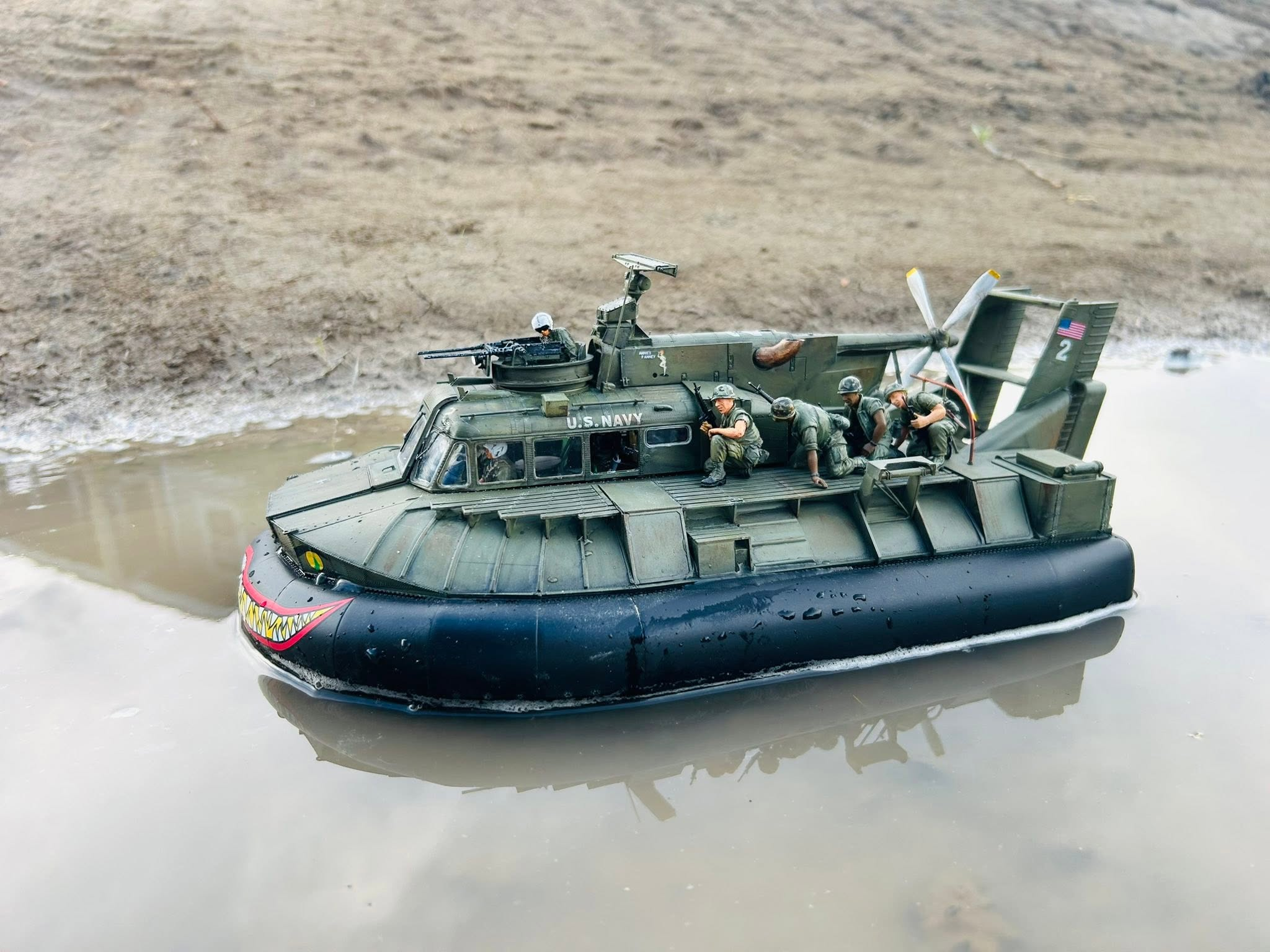
The PACV was used to prevent Viet Cong infiltration from the sea and tidal areas along river mouths and deltas. It was especially useful in shallow marshy areas, especially the Mekong Delta, where other patrol boats such as the Patrol Boat, River or Patrol Craft Fast (Swift boat) could not go.
PACV / ACV (Pac-Vee / Monster) Air Cushioned Patrol Boat / Hovercraft
Page details technical specifications, development, operational history of the PACV / ACV (Pac-Vee / Monster) Air Cushioned Patrol Boat / Hovercraft including pictures.
www.militaryfactory.com
Built from a military version of the Bell SK-5 hovercraft, it was used by the Navy and Army in marshy river areas where regular boats and ground vehicles struggled to operate. Its air cushion let it move over water, mud, rice paddies, and swamp terrain that would stop almost anything else.
In the November 1967 Issue, We Explored the Strange U.S. Navy Hovercraft That Fought in Vietnam
The big, awkward-looking, air-cushion vehicles surprised by the Vietcong (and the U.S. Navy) by riding over any terrain at 70 mph, knocking over trees and capsizing enemy sampans.
U.S. crews called them “Pac Vees” and the Viet Cong reportedly called them monsters.
Patrol Air Cushion Vehicle - Wikipedia
The Hovercraft was utilised by both the US Army and Navy during the Vietnam War, from recon patrols to inserting troops into combat. The humble PACV & ACVs proved their worth in the Mekong Delta, join me to learn more about these amazing watercraft.
Only a handful were built, The Navy got three and the army got threeand they never lasted past operational testing.
However, for a short time they gave U.S. forces a fast, heavily armed way to chase the enemy through terrain most vehicles could not touch. They could go 70 miles an hour but a little light in the armor department so they were discontinued.
PACVs were first deployed to Vietnam in May 1966 as PACV Division 107, Task Force 116, where they were used by the Navy for riverine patrol missions in the Mekong Delta and on the Mekong River. They were armed with a .50 caliber machine gun mounted on a rotating platform in the front and two side-mounted M60 machine guns.
In addition, the crew, and often US Army Special Forces and ARVN Rangers, riding on the side panels, employed assorted small arms such as M16 rifles and M79 grenade launchers as well as various other rifles, .45 pistols, light and medium machine guns, and grenades, although using small arms was dangerous because spent casings could fall into the propeller.
The PACV was used to prevent Viet Cong infiltration from the sea and tidal areas along river mouths and deltas. It was especially useful in shallow marshy areas, especially the Mekong Delta, where other patrol boats such as the Patrol Boat, River or Patrol Craft Fast (Swift boat) could not go.
Last edited: