

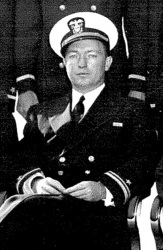
The story of Lieutenant Hugh Barr Miller, a World War II Robinson Crusoe
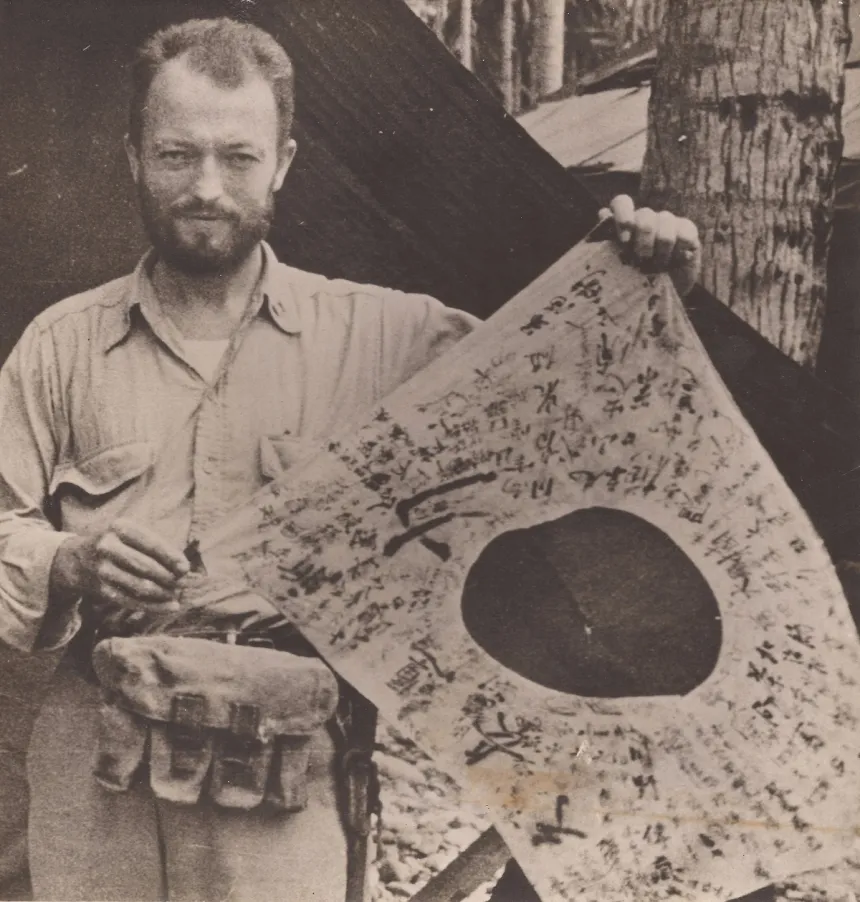
Making it to nearby Japanese-held Arundel Island, Miller survived there for 39 days, alternatively fighting, and coming on top in lop-sided
battles against malnutrition, dehydration, and Japanese troops before he was recovered. 190225-N-ZV259-0184

 laststandonzombieisland.com
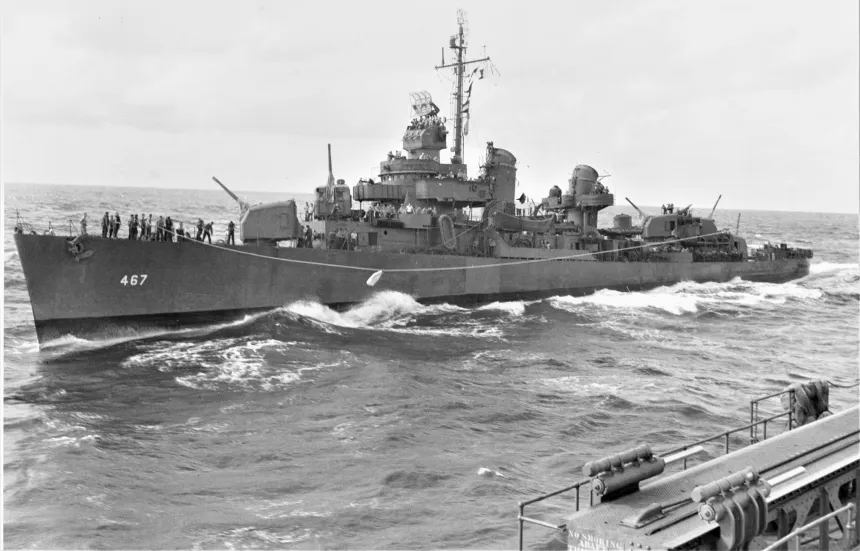
The Fletcher-class destroyer USS Strong (DD-467)
At 0043, a Japanese torpedo struck Lieutenant Hugh Barr Miller’s destroyer, the USS Strong. was struck by a torpedo that detonated on the port side of the forward fireroom at about frame 90.
The damage was catastrophic.
Miller rescued many of his men, but before he could board the rescue ship that had arrived, it fled under enemy fire. The USS Strong went down, and Miller went into the water wearing a kapok life jacket. Seriously injured from the shock wave created as the Strong’s depth charges exploded, he was pulled onto a floater net holding three other survivors. The four men washed ashore three days later at Arundel, a small Japanese-occupied island just ten miles long and six miles wide.
On that larger island they found water and coconuts, but they soon discovered that Japanese troops had occupied the island. The July 13 death of another sailor and Miller’s own worsening condition convinced him that the only hope of survival for the three remaining enlisted men was to leave him behind. He ordered them to do so, and on July 15 they set out across a nearby sound in an attempt to reach U.S. forces on New Georgia.
To his surprise, Miller didn’t die of his injuries.

 shopvalorgear.com
He miraculously recovered. Using woodsman skills learned in his adolescence and grit inspired by his collegiate football coach, Miller managed not only to evade Japanese search parties, but to kill more than a half dozen Japanese soldiers for 39 days.
On the morning of August 3, Miller found the body of a Japanese soldier and from it recovered socks, shoes, rice, some tinned beef, a bayonet and two hand grenades. The following night he hurled one grenade into the midst of an enemy patrol, killing all five men.
Between August 9 and 14, hiding from enemy patrols, using additional grenades taken from the dead soldiers and from the bodies of enemy troops washed ashore, Miller launched a one-man campaign attacked several shoreline machine-gun positions, killing their crews. His depredations didn’t go unnoticed, however; Japanese troops continued to comb the island in search of him.
The sojourn on Arundel finally ended when, after 43 days, Miller signaled a low-flying American TBM Avenger and the pilot sent a seaplane to rescue the lone castaway.
Within an hour a Marine Corps rescue team arrived in a J2F Duck amphibious biplane, landed on a nearby stretch of calm water and rowed ashore in an inflatable boat to collect the injured but resourceful castaway. They rushed Miller to a forward aid station on New Georgia, and he was ultimately evacuated to the fleet hospital at Espiritu Santo in the New Hebrides.
 en.wikipedia.org
As for “Rose Bowl” Miller, the hard-to-kill lieutenant was awarded the Navy Cross, two Silver Stars, six Bronze Stars, two Purple Hearts, and 27 other individual and unit decorations.
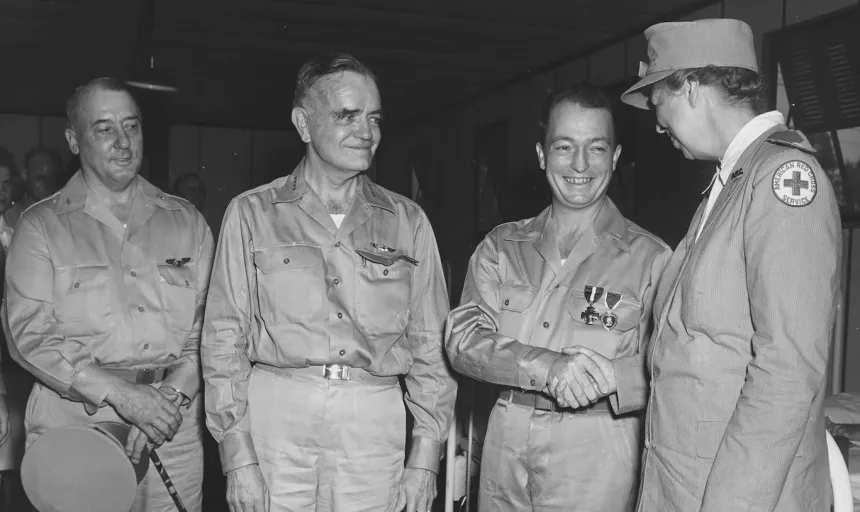
Miller was awarded the Navy Cross, personally bestowed on him by Eleanor Roosevelt, seen here ina Red Cross uniform, who
was on a Pacific swing with the American Red Cross. Note Halsey looking on. 190225-N-ZV259-0185

 pacificparatrooper.wordpress.com
The Castaway's War
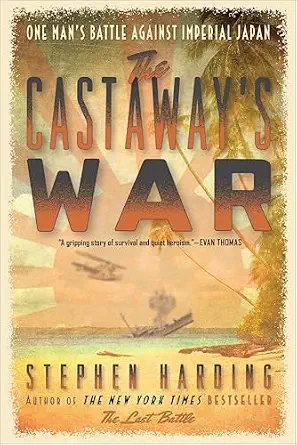
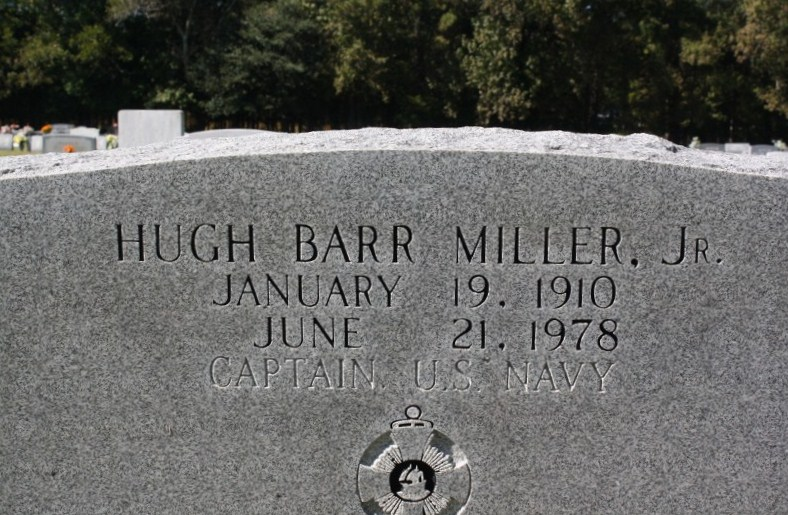
Hugh Barr Miller passed away 21 June 1978.

 www.findagrave.com
Making it to nearby Japanese-held Arundel Island, Miller survived there for 39 days, alternatively fighting, and coming on top in lop-sided
battles against malnutrition, dehydration, and Japanese troops before he was recovered. 190225-N-ZV259-0184
Warship Wednesday, June 28, 2023: A 22,000-Yard Fish and a One-Man Army
Here at LSOZI, we take off every for a look at the old steam/diesel navies of the 1833-1954 period and will profile a different ship each week. These ships have a life, a tale all their own, which …
laststandonzombieisland.com
The Fletcher-class destroyer USS Strong (DD-467)
The Battle of Kula Gulf
On the night of July 5, 1943, off the coast of the Solomon Islands, the USS Strong, in company with three cruisers and four destroyers, was headed back to Kolombangara for another nighttime gun raid. As the second ship in the column behind USS Nicholas, Strong steamed into the Kula Gulf just after midnight on the 5th and plastered Japanese positions on Kolombangara Island, then around the Bairoko Inlet on New Georgia Island.At 0043, a Japanese torpedo struck Lieutenant Hugh Barr Miller’s destroyer, the USS Strong. was struck by a torpedo that detonated on the port side of the forward fireroom at about frame 90.
The damage was catastrophic.
Miller rescued many of his men, but before he could board the rescue ship that had arrived, it fled under enemy fire. The USS Strong went down, and Miller went into the water wearing a kapok life jacket. Seriously injured from the shock wave created as the Strong’s depth charges exploded, he was pulled onto a floater net holding three other survivors. The four men washed ashore three days later at Arundel, a small Japanese-occupied island just ten miles long and six miles wide.
On that larger island they found water and coconuts, but they soon discovered that Japanese troops had occupied the island. The July 13 death of another sailor and Miller’s own worsening condition convinced him that the only hope of survival for the three remaining enlisted men was to leave him behind. He ordered them to do so, and on July 15 they set out across a nearby sound in an attempt to reach U.S. forces on New Georgia.
To his surprise, Miller didn’t die of his injuries.
Lt. Hugh B. Miller: The Wolfman of Arundel Island. He terrorized the J
On July 5, 1943, Lieutenant Hugh Miller’s destroyer, the USS Strong, was sunk by a Japanese torpedo. Exploding depth charges from the ship severely wounded Miller internally. After drifting for days, Miller and three crewmates washed ashore on Arundel Island, occupied by Japanese forces. Too...
shopvalorgear.com
He miraculously recovered. Using woodsman skills learned in his adolescence and grit inspired by his collegiate football coach, Miller managed not only to evade Japanese search parties, but to kill more than a half dozen Japanese soldiers for 39 days.
On the morning of August 3, Miller found the body of a Japanese soldier and from it recovered socks, shoes, rice, some tinned beef, a bayonet and two hand grenades. The following night he hurled one grenade into the midst of an enemy patrol, killing all five men.
Between August 9 and 14, hiding from enemy patrols, using additional grenades taken from the dead soldiers and from the bodies of enemy troops washed ashore, Miller launched a one-man campaign attacked several shoreline machine-gun positions, killing their crews. His depredations didn’t go unnoticed, however; Japanese troops continued to comb the island in search of him.
The sojourn on Arundel finally ended when, after 43 days, Miller signaled a low-flying American TBM Avenger and the pilot sent a seaplane to rescue the lone castaway.
Within an hour a Marine Corps rescue team arrived in a J2F Duck amphibious biplane, landed on a nearby stretch of calm water and rowed ashore in an inflatable boat to collect the injured but resourceful castaway. They rushed Miller to a forward aid station on New Georgia, and he was ultimately evacuated to the fleet hospital at Espiritu Santo in the New Hebrides.
Hugh B. Miller - Wikipedia
As for “Rose Bowl” Miller, the hard-to-kill lieutenant was awarded the Navy Cross, two Silver Stars, six Bronze Stars, two Purple Hearts, and 27 other individual and unit decorations.
Miller was awarded the Navy Cross, personally bestowed on him by Eleanor Roosevelt, seen here ina Red Cross uniform, who
was on a Pacific swing with the American Red Cross. Note Halsey looking on. 190225-N-ZV259-0185
Hugh Miller – Pacific Paratrooper
Posts about Hugh Miller written by GP
pacificparatrooper.wordpress.com
The Castaway's War
Hugh Barr Miller passed away 21 June 1978.
LT Hugh Barr Miller Jr. (1910-1978) - Find a Grave...
The President of the United States of America takes pleasure in presenting the Navy Cross to Lieutenant Hugh Barr Miller, Jr., United States Naval Reserve, for extraordinary heroism and distinguished service in the line of his profession while serving on board the Destroyer U.S.S. STRONG...
www.findagrave.com
Attachments
Last edited:


