

The conventional wisdom on patrol rifle optics has swung hard toward the LPVO in the last few years, mostly on the strength of what wins carbine matches. Match results are a poor proxy for a rifle that lives locked to a mount in a hot trunk or between the seats and gets deployed less than a dozen times a year (including quals), at ranges that would embarrass a competitor.
With a 50-yard zero, a 5.56 round crosses the line of sight at 50 yards and stays within roughly 2 inches high, peaking around 1.7 to 2.2 inches near 100 to 150 yards before crossing back down near 200 yards, and never rises far enough above line of sight to cause a miss on a torso-sized target anywhere in between.

 www.thefirearmblog.com
The competing option is the 100-yard zero, which is fine for a rifle used at deliberate distance and worse for one used up close. At close range, the round lands well below point of aim because of the sight's height over the bore, which means a headshot at 7 yards can land low enough to matter.
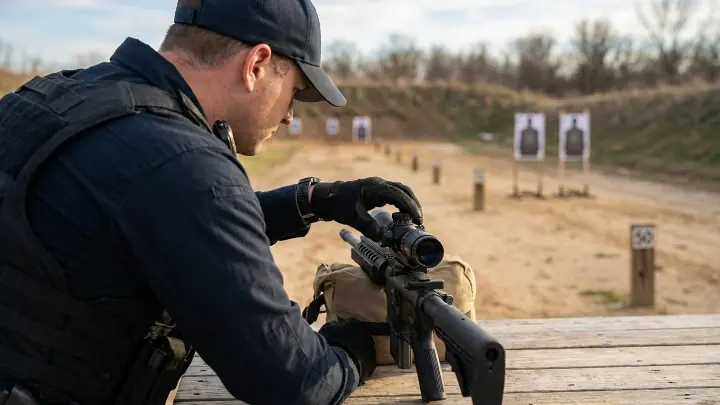
The 36-yard and 25-yard zeros solve part of that but arc higher downrange. For a general-purpose patrol rifle, the 50-yard zero is the least-bad compromise across the widest range of realistic distances, and least-bad across the widest range is exactly what you want on a gun that has to work at any distance without warning.
One practical note that applies whether you run a dot or an LPVO: confirm zero with the ammunition the agency actually issues, not with the cheapest range fodder. The author has personally seen a shift between training and duty loads at 100 yards, enough to turn a good zero into a marginal one. Zeroing is also a duty-ammo question.
Zero Distance and Why the 50 Yard Line Wins
Zero is where many otherwise sound optic decisions get quietly undermined. A 5.56 rifle zeroed at the wrong distance can potentially put rounds several inches off point of aim across the exact band of distances where patrol shots happen, and the officer will have no idea until it matters.With a 50-yard zero, a 5.56 round crosses the line of sight at 50 yards and stays within roughly 2 inches high, peaking around 1.7 to 2.2 inches near 100 to 150 yards before crossing back down near 200 yards, and never rises far enough above line of sight to cause a miss on a torso-sized target anywhere in between.
Front Line Friday #29: Optics for Patrol Rifles - Practical Selection
Welcome back to Front Line Friday.This week is a gear week, and the topic is optic selection for patrol rifles: red dot versus low power variable, zero distance, reticle choice in low light, and what actually survives being racked in and out of a car mount every shift.I know this can be a...
www.thefirearmblog.com
The competing option is the 100-yard zero, which is fine for a rifle used at deliberate distance and worse for one used up close. At close range, the round lands well below point of aim because of the sight's height over the bore, which means a headshot at 7 yards can land low enough to matter.
The 36-yard and 25-yard zeros solve part of that but arc higher downrange. For a general-purpose patrol rifle, the 50-yard zero is the least-bad compromise across the widest range of realistic distances, and least-bad across the widest range is exactly what you want on a gun that has to work at any distance without warning.
One practical note that applies whether you run a dot or an LPVO: confirm zero with the ammunition the agency actually issues, not with the cheapest range fodder. The author has personally seen a shift between training and duty loads at 100 yards, enough to turn a good zero into a marginal one. Zeroing is also a duty-ammo question.
