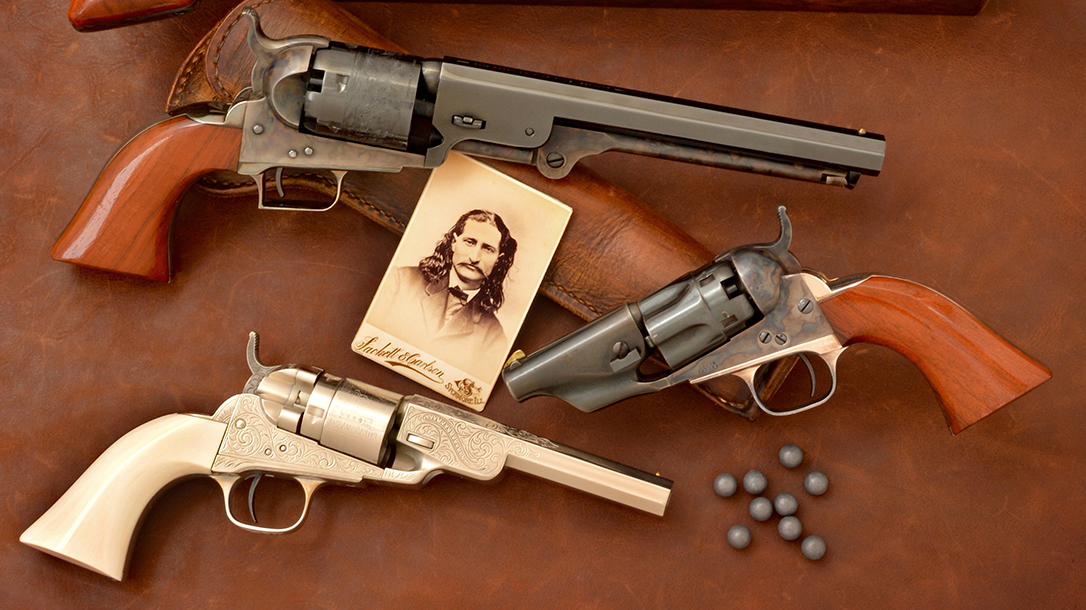
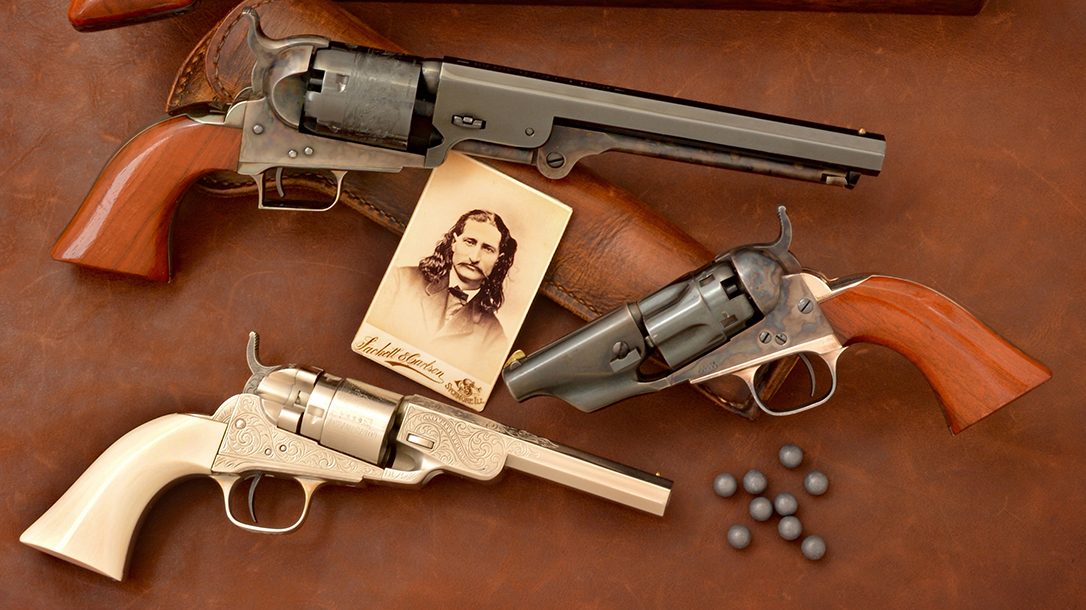
Sam Colt may have created the 1851 Navy, but Wild Bill Hickok made the .36 caliber Colt pistols immortal. Indeed, there may have been more famous guns than the brace of Colt Model 1851 Navy revolvers carried by Hickok.
But there was no more famous pistol caliber in its time. In 1855, Samuel Colt’s .36 caliber Model 1851 Navy was adopted by the U.S. military as its standard issue sidearm. It became the first Colt pistol to be so designated. The Model 1851 Navy began an unbroken chain of standard issue Colt sidearms for the next 130 years.
The .36 Caliber Pistol became popular choice with early gunfighters.
Athlon Outdoors Exclusive Firearm Updates, Reviews & News

athlonoutdoors.com
View attachment 108421
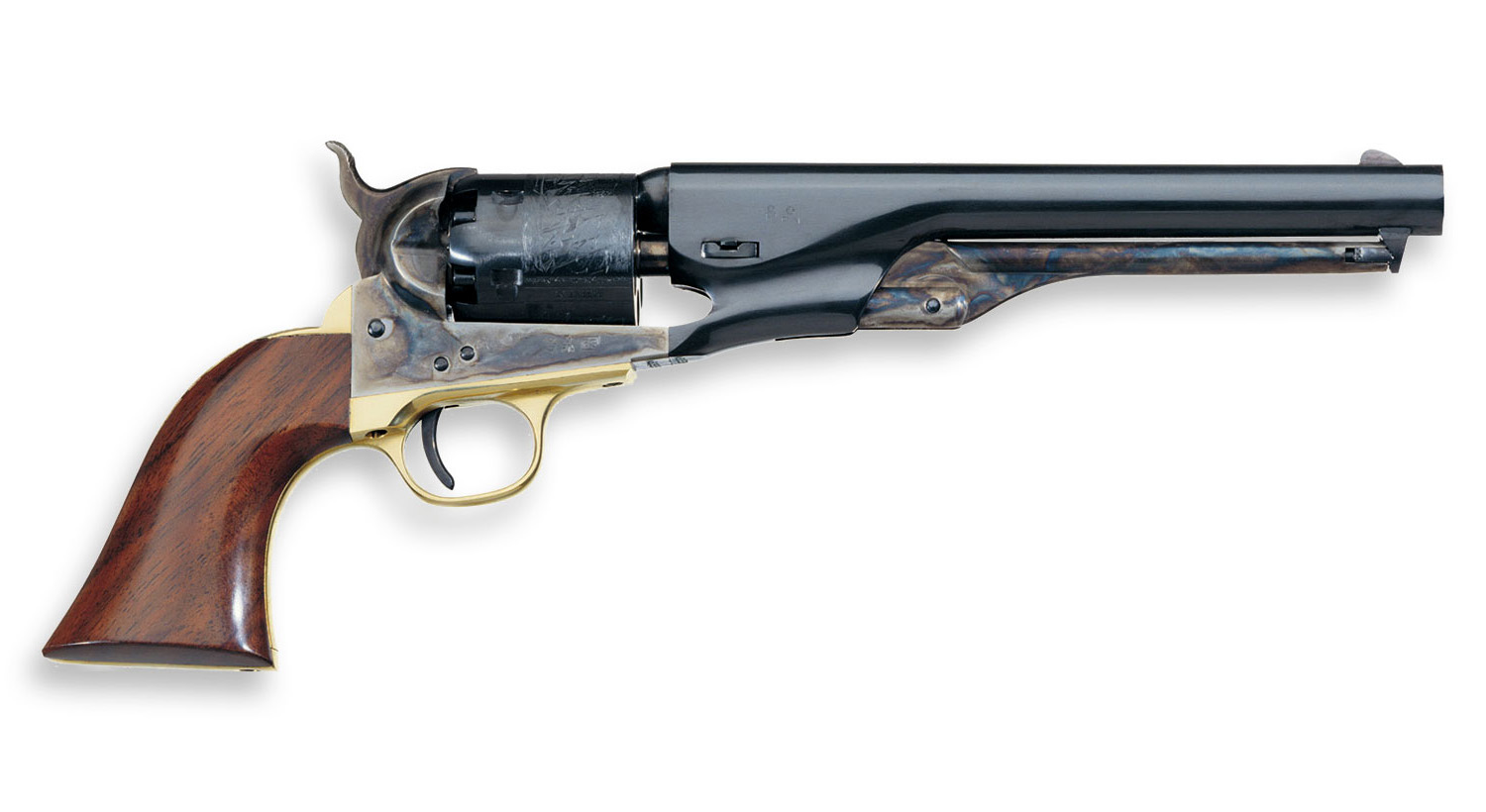
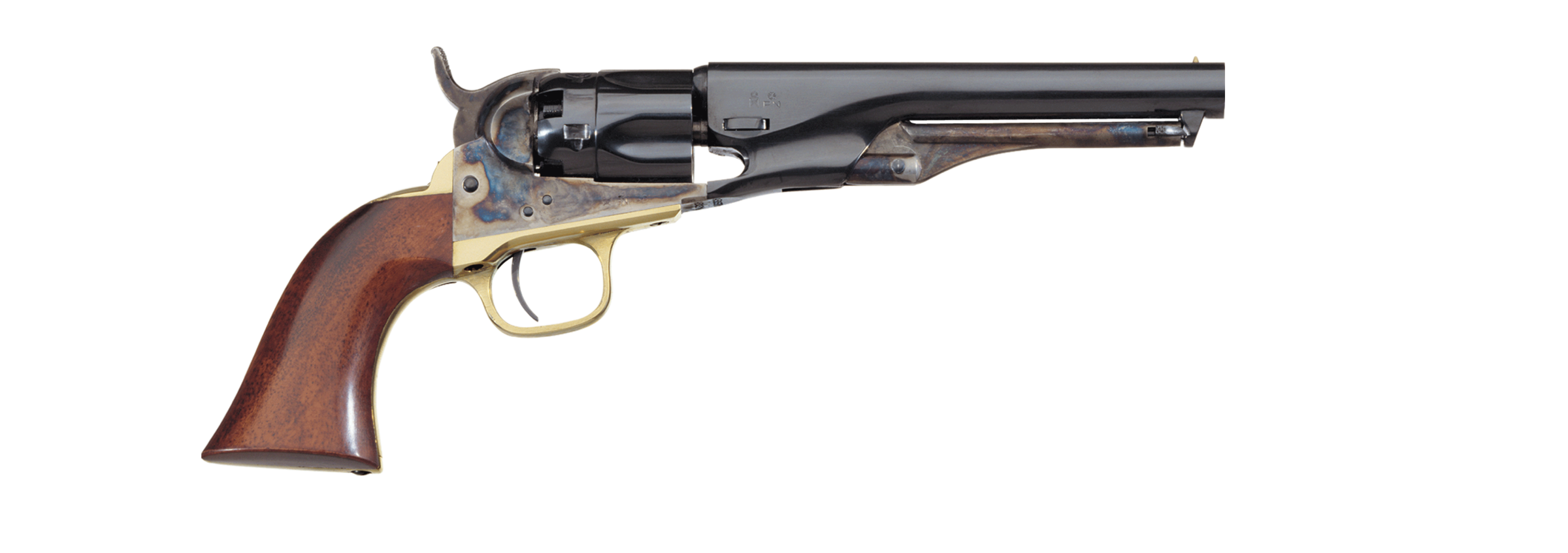
I like the 1861 Navy, and 1862 Pocket Police.
View attachment 108426
View attachment 108424
This replaces/ammends my previous response, it is not exactly a double post. I apologize for the clutter, but the edit/save time limit expired and I really want to supply a little more info than is in my first response. SO..... Here's the amended version:
This is a GREAT post! Thank you! Who can tell us why the .36 Colt revolver was called the "Navy" model? Boys and girls, raise your hands... Don't be shy.
The 38 Short Colt, 38 Long Colt, 38 Special, 357 Magnum and 357 Maximum are direct lineal descendants of the 36 cal cap & ball pistols.
If I'm not mistaken, the 38 Short Colt was a popular cartridge used in the post Civil War conversions performed on the cap & ball revolvers to change them to fire a centerfire metallic cartridge in place of a ball or conical projectile atop a charge ignited by a cap. This transitional cartridge design was initially topped with a "heeled" bullet (similar to what one still sees in the .22 rimfires today) in order to provide an adequate bullet-to-bore seal in these cartridge conversion revolvers.
The actual bore diameter on these cap-and-ball revolvers could be as large as .380" all the way down to about .376". The outer diameter of today's .38 cartridge family is .375". Just like their muzzle loaded predecessors, they were originally loaded with a spherical ball of appropriate diameter, but soon after were also commonly loaded with an enlongated conical nose slug having a hollow base to provide a snug bullet-to-bore seal. Both types of projectiles remained in use as some shooters actually preferred the round ball projectiles over the conical ones. Also, it was rather common for shooters to cast their own bullets instead of purchasing them ready-made, and not everyone could afford to buy new molds for the conical projectiles. The typical black powder charge was about 20 grains, but could be as little as 15 to 16 grains and as much as 22 to 25 grains, depending on the granularity of the black powder utilized.
The cartridge diameter (OD) for the cartridge conversion was selected specifically to fit the "average" ID of the charge holes on the .36 cap-and-ball revolvers in order to facilitate cartridge conversion without having to completely discard the cylinders. Rather, the cylinder of a .36 cap and ball revolver could be shipped to the facility where the conversion was performed. The factory (or other facility) would perform their "magic" on the cylinder and then return it chambered for what we now call a "38" caliber cartridge.
The cartridge conversion cartridges were also loaded with black powder, but with a lesser charge than would've been used in the original pre-conversion cylinder because of the space restrictions imposed by the conversion. Remember that the converted cylinder still had to fit within the dimensions of the original revolver frame, so space for the powder charge was reduced as a result of conversion. It wasn't until the 38 Special came onto the scene that the "power" of the centerfire cartridge in this caliber once again approached that of the original .36 ball loaded over 20 grains of black powder.
By the way, I most often see the assertion that the 38 Special was released in 1902. This isn't quite correct. 1902 is when Smith & Wesson released a revolver model specifically designed around the "new" cartridge and also when the 38 Special started to be loaded with smokeless powder to take advantage of the "new" revolver's design. The .38 Special was actually released in 1898, four years prior, as a black powder cartridge chambering in S&W's then-current revolvers. I can't remember when black powder cartridges for the 38 Special were finally discontinued, but I think it was as late as the 1920s. Today cartridge collectors highly value samples of those old 38 Special cartridges stuffed with black powder.
Thus, the 38 Special 's .36 cap-and-ball black powder roots and legacy continued well into the 20th century. Smokeless powder cartridges didn't "take over" immediately upon release. Older guns that could not handle the additional pressure of smokeless powder charges were still plentiful and in common use and not everyone had the means to run out and buy the "latest and greatest" in firearm technology. The switch by firearm manufacturers to produce arms with the requisite strength in "smokeless powder" chamberings was very rapid. However, ammunition companies did what corporations do today: They monitored their sales and adapted to meet market demand. The complete changeover from black powder to smokeless powder in terms of ammo sales was a 20 to 30 year slow roll.
Confusing nomenclature? Yes, definitely. Fascinating history? Again, yes, very much so. It fascinates me how each successive generation of firearm technology has "dimensional baggage" derived from older generations. For instance, the configuration and dimensions of the bore and grooves of the .36 cap and ball revolver was directly adopted from .36 caliber muzzle loaders.
The 36 caliber designation on the cap & ball revolvers was derived from the approximate bore diameter (barrel ID measured from land-to-land). Modern revolvers derive their caliber designation from the full barred ID measured from groove-to-groove. If the old 36 cal cap-and-ball six shooters had followed today's nomenclature conventions, they'd have been called 37s or maybe 38s, and who knows what naming we'd be using today instead of "38 Special" and "357 Magnum."




 ). Also the .44’s used a .451-.457 ball (can you say .45?)
 )
)
