testtest

The .36 Caliber Pistol – A Popular Choice With Early Gunfighters

Talyn

Emissary
Founding Member
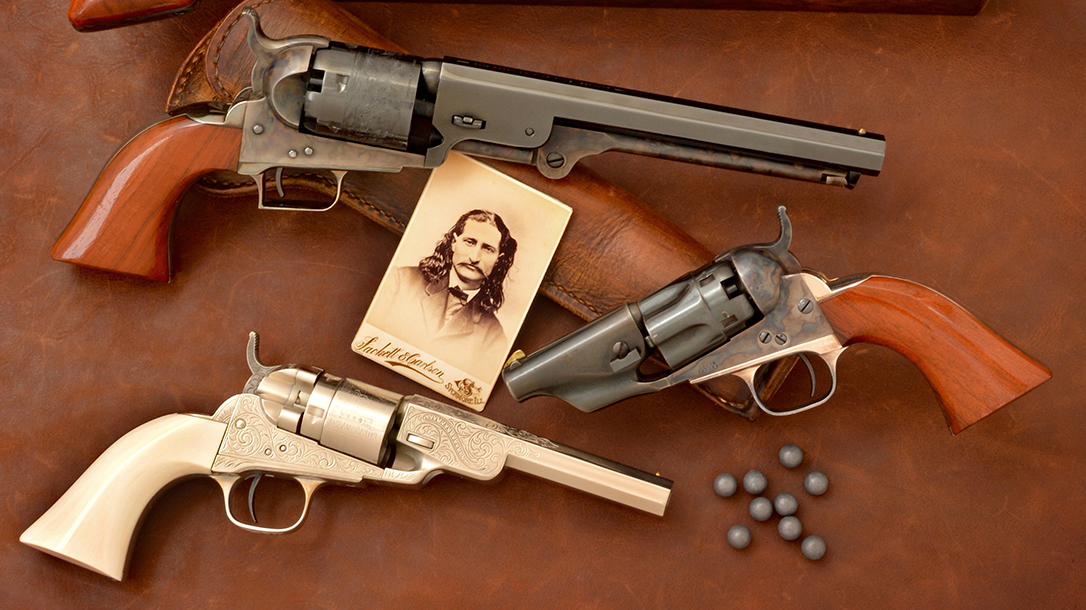
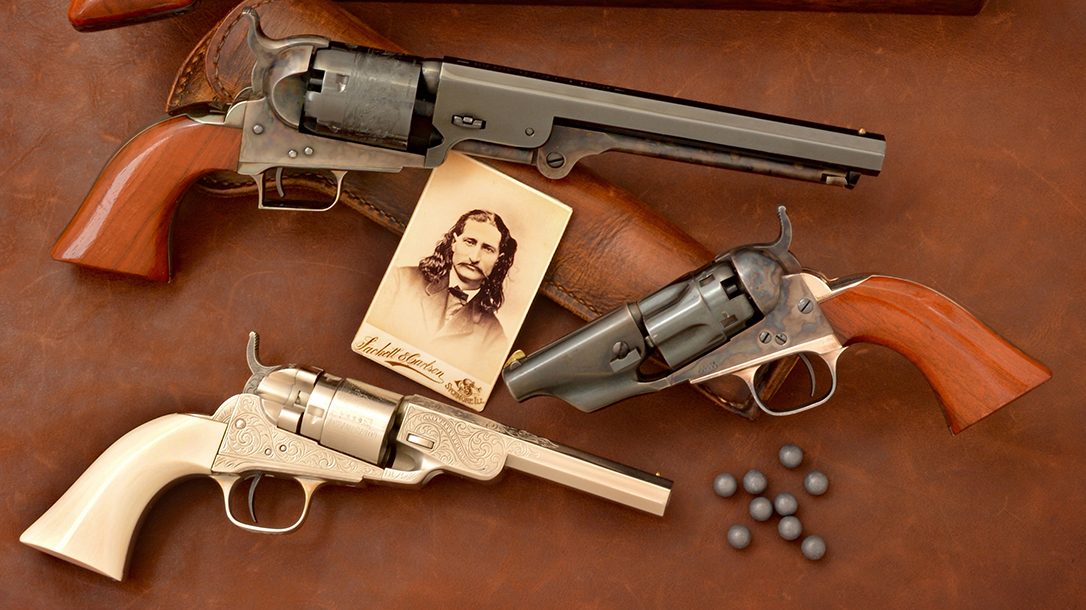
Sam Colt may have created the 1851 Navy, but Wild Bill Hickok made the .36 caliber Colt pistols immortal. Indeed, there may have been more famous guns than the brace of Colt Model 1851 Navy revolvers carried by Hickok.

But there was no more famous pistol caliber in its time. In 1855, Samuel Colt’s .36 caliber Model 1851 Navy was adopted by the U.S. military as its standard issue sidearm. It became the first Colt pistol to be so designated. The Model 1851 Navy began an unbroken chain of standard issue Colt sidearms for the next 130 years.

The .36 Caliber Pistol became popular choice with early gunfighters.


1776109167160.png


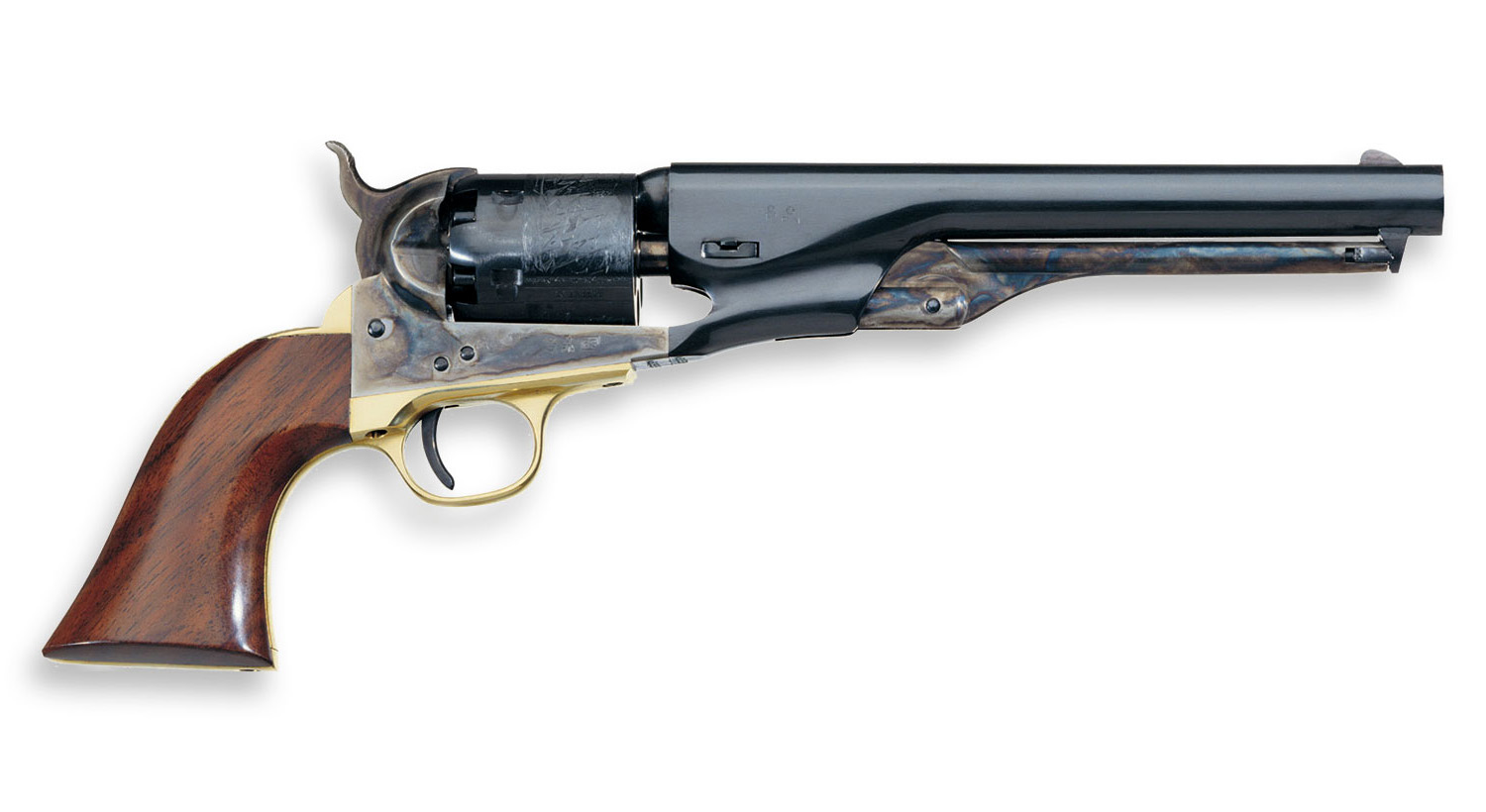
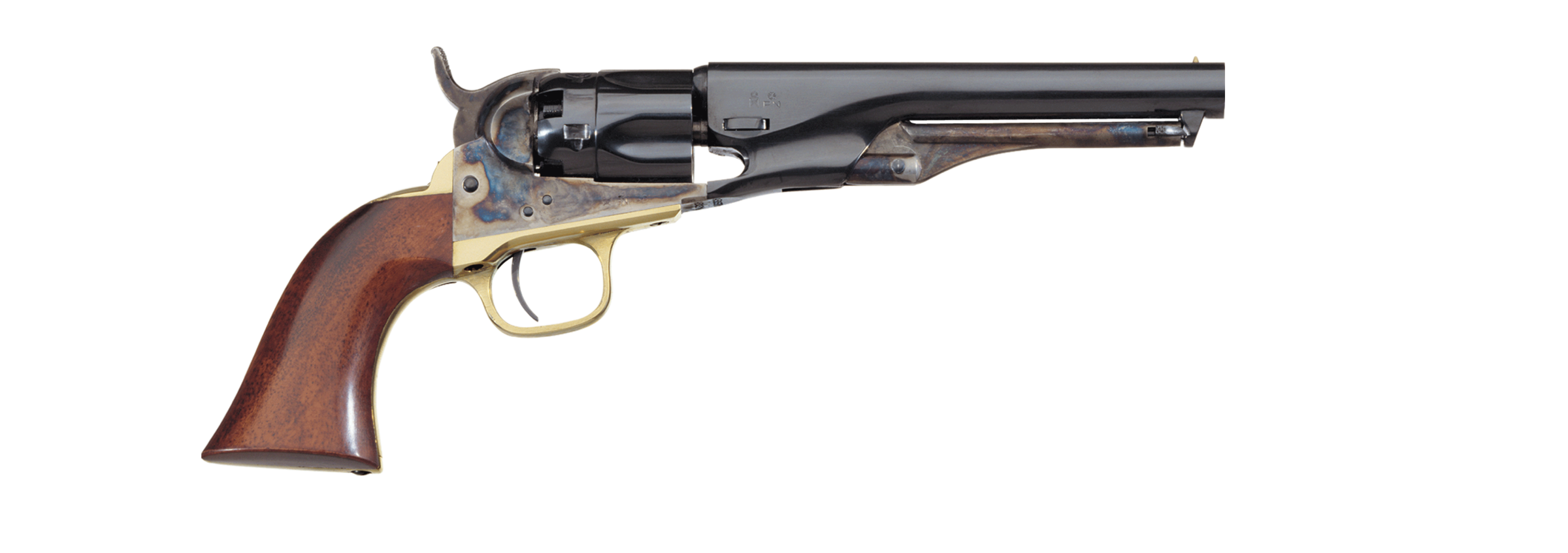
I like the 1861 Navy, and 1862 Pocket Police.

1776109406252.png

1776109338846.png
 
Were the originals designed to shoot round balls or conicals. Most of the Civil War era 44s I’ve dug up were solid base conicals.
Found my answer if google is correct:
Colt Navy revolvers—specifically the 1851 and 1861 models—were designed to shoot conical bullets (specifically, a pointed, tapered-base "picket" bullet) in addition to round balls. The US military even issued paper cartridges loaded with these conical bullets during the Civil War, with nearly 2 million on hand by the war's end.
Key Facts on Conical Use in Colt Navies:
  • Original Design: Original 1850s bullet molds produced a conical bullet weighing approximately 140 grains, tailored for the .36 caliber chambering.
  • Usage Considerations: While designed for them, some users, including historical accounts from users like Sam Fletcher, reported a preference for round balls for combat to ensure better expansion, while conical bullets were favored for deep penetration, such as in livestock hunting, say discussions on Facebook.
  • Modern Replicas: While designed for them, modern reproduction replicas may have tighter chambers or different tolerances, making some conical bullets difficult to seat, according to discussions on Facebook, say posts in Pietta 1851 clone 44 caliber conical bullet issues.
  • Optimal Performance: A properly designed conical bullet, like those reproduced by Eras Gone Bullet Molds, will seat properly using the loading lever.
For the best results with modern replicas, ensure your bullets are properly sized for the chamber to avoid damaging the loading lever, as discussed in GUNS Magazine and Facebook.
 
Sam Colt may have created the 1851 Navy, but Wild Bill Hickok made the .36 caliber Colt pistols immortal. Indeed, there may have been more famous guns than the brace of Colt Model 1851 Navy revolvers carried by Hickok.

But there was no more famous pistol caliber in its time. In 1855, Samuel Colt’s .36 caliber Model 1851 Navy was adopted by the U.S. military as its standard issue sidearm. It became the first Colt pistol to be so designated. The Model 1851 Navy began an unbroken chain of standard issue Colt sidearms for the next 130 years.

The .36 Caliber Pistol became popular choice with early gunfighters.


View attachment 108421

I like the 1861 Navy, and 1862 Pocket Police.

View attachment 108426
View attachment 108424
This is a GREAT post! Thank you! Who can tell us why the .36 Colt revolver was called the "Navy" model? Boys and girls, raise your hands... Don't be shy.

The 38 Short Colt, 38 Long Colt, 38 Special, 357 Magnum and 357 Maximum are direct lineal descendants of the 36 cal cap & ball pistols.

If I'm not mistaken, the 38 Short Colt was a popular cartridge used in the post Civil War conversions performed on the cap & ball revolvers to change them to fire a centerfire metallic cartridge in place of a ball or conical projectile atop a charge ignited by a cap. This transitional cartridge design was initially topped with a "heeled" bullet (similar to what one still sees in the .22 rimfires today) in order to provide an adequate bullet-to-bore seal in these cartridge conversion revolvers.

The actual bore diameter on these cap-and-ball revolvers could be as large as .380" all the way down to about .376". The outer diameter of today's .38 cartridge family is .375". Just like their muzzle loaded predecessors, they were originally loaded with a spherical ball of appropriate diameter, but soon after were also commonly loaded with an enlongated slug having a hollow base to provide a snug bullet-to-bore seal. Both types of projectiles have remained in use. The typical black powder charge was about 20 grains, but could be as little as 15 to 16 grains and as much as 22 to 25 grains, depending on the granularity of the black powder utilized.

The cartridge diameter (OD) for the cartridge conversion was selected specifically to fit the "average" ID of the charge holes on the .36 cap-and-ball revolvers in order to facilitate cartridge conversion without having to completely discard the cylinders. Rather, the cylinder of a .36 cap and ball revolver could be shipped to the facility where the conversion was performed. The factory (or other facility) would perform their "magic" on the cylinder and then return it chambered for what we now call a "38" caliber cartridge. The cartridge conversion cartridges were also loaded with black powder, but with a lesser charge than would've been used in the original pre-conversion cylinder because of the space restrictions imposed by the conversion. It wasn't until the 38 Special came onto the scene that the "power" of the centerfire cartridge in this caliber once again approached that of the original .36 ball loaded over 20 grains of black powder.

Confusing nomenclature? Yes, definitely. Fascinating history? Again, yes, very much so. It fascinates me how each successive generation of firearm technology has "dimensional baggage" derived from older generations. For instance, the configuration and dimensions of the bore and grooves of the .36 cap and ball revolver was directly adopted from .36 caliber muzzle loaders.

The 36 caliber designation on the cap & ball revolvers was derived from the approximate bore diameter (barrel ID measured from land-to-land). Modern revolvers derive their caliber designation from the full barred ID measured from groove-to-groove. If the old 36 cal cap-and-ball six shooters had followed today's nomenclature conventions, they'd have been called 37s or maybe 38s, and who knows what naming we'd be using today instead of "38 Special" and "357 Magnum."

 
Last edited:
Sam Colt may have created the 1851 Navy, but Wild Bill Hickok made the .36 caliber Colt pistols immortal. Indeed, there may have been more famous guns than the brace of Colt Model 1851 Navy revolvers carried by Hickok.

But there was no more famous pistol caliber in its time. In 1855, Samuel Colt’s .36 caliber Model 1851 Navy was adopted by the U.S. military as its standard issue sidearm. It became the first Colt pistol to be so designated. The Model 1851 Navy began an unbroken chain of standard issue Colt sidearms for the next 130 years.

The .36 Caliber Pistol became popular choice with early gunfighters.


View attachment 108421

I like the 1861 Navy, and 1862 Pocket Police.

View attachment 108426
View attachment 108424
This replaces/ammends my previous response, it is not exactly a double post. I apologize for the clutter, but the edit/save time limit expired and I really want to supply a little more info than is in my first response. SO..... Here's the amended version:

This is a GREAT post! Thank you! Who can tell us why the .36 Colt revolver was called the "Navy" model? Boys and girls, raise your hands... Don't be shy.

The 38 Short Colt, 38 Long Colt, 38 Special, 357 Magnum and 357 Maximum are direct lineal descendants of the 36 cal cap & ball pistols.

If I'm not mistaken, the 38 Short Colt was a popular cartridge used in the post Civil War conversions performed on the cap & ball revolvers to change them to fire a centerfire metallic cartridge in place of a ball or conical projectile atop a charge ignited by a cap. This transitional cartridge design was initially topped with a "heeled" bullet (similar to what one still sees in the .22 rimfires today) in order to provide an adequate bullet-to-bore seal in these cartridge conversion revolvers.

The actual bore diameter on these cap-and-ball revolvers could be as large as .380" all the way down to about .376". The outer diameter of today's .38 cartridge family is .375". Just like their muzzle loaded predecessors, they were originally loaded with a spherical ball of appropriate diameter, but soon after were also commonly loaded with an enlongated conical nose slug having a hollow base to provide a snug bullet-to-bore seal. Both types of projectiles remained in use as some shooters actually preferred the round ball projectiles over the conical ones. Also, it was rather common for shooters to cast their own bullets instead of purchasing them ready-made, and not everyone could afford to buy new molds for the conical projectiles. The typical black powder charge was about 20 grains, but could be as little as 15 to 16 grains and as much as 22 to 25 grains, depending on the granularity of the black powder utilized.

The cartridge diameter (OD) for the cartridge conversion was selected specifically to fit the "average" ID of the charge holes on the .36 cap-and-ball revolvers in order to facilitate cartridge conversion without having to completely discard the cylinders. Rather, the cylinder of a .36 cap and ball revolver could be shipped to the facility where the conversion was performed. The factory (or other facility) would perform their "magic" on the cylinder and then return it chambered for what we now call a "38" caliber cartridge.

The cartridge conversion cartridges were also loaded with black powder, but with a lesser charge than would've been used in the original pre-conversion cylinder because of the space restrictions imposed by the conversion. Remember that the converted cylinder still had to fit within the dimensions of the original revolver frame, so space for the powder charge was reduced as a result of conversion. It wasn't until the 38 Special came onto the scene that the "power" of the centerfire cartridge in this caliber once again approached that of the original .36 ball loaded over 20 grains of black powder.

By the way, I most often see the assertion that the 38 Special was released in 1902. This isn't quite correct. 1902 is when Smith & Wesson released a revolver model specifically designed around the "new" cartridge and also when the 38 Special started to be loaded with smokeless powder to take advantage of the "new" revolver's design. The .38 Special was actually released in 1898, four years prior, as a black powder cartridge chambering in S&W's then-current revolvers. I can't remember when black powder cartridges for the 38 Special were finally discontinued, but I think it was as late as the 1920s. Today cartridge collectors highly value samples of those old 38 Special cartridges stuffed with black powder.

Thus, the 38 Special 's .36 cap-and-ball black powder roots and legacy continued well into the 20th century. Smokeless powder cartridges didn't "take over" immediately upon release. Older guns that could not handle the additional pressure of smokeless powder charges were still plentiful and in common use and not everyone had the means to run out and buy the "latest and greatest" in firearm technology. The switch by firearm manufacturers to produce arms with the requisite strength in "smokeless powder" chamberings was very rapid. However, ammunition companies did what corporations do today: They monitored their sales and adapted to meet market demand. The complete changeover from black powder to smokeless powder in terms of ammo sales was a 20 to 30 year slow roll.

Confusing nomenclature? Yes, definitely. Fascinating history? Again, yes, very much so. It fascinates me how each successive generation of firearm technology has "dimensional baggage" derived from older generations. For instance, the configuration and dimensions of the bore and grooves of the .36 cap and ball revolver was directly adopted from .36 caliber muzzle loaders.

The 36 caliber designation on the cap & ball revolvers was derived from the approximate bore diameter (barrel ID measured from land-to-land). Modern revolvers derive their caliber designation from the full barred ID measured from groove-to-groove. If the old 36 cal cap-and-ball six shooters had followed today's nomenclature conventions, they'd have been called 37s or maybe 38s, and who knows what naming we'd be using today instead of "38 Special" and "357 Magnum."
 
Last edited:
Ehh don't skip over the rim fire cartridges.
It's true that there were rim fire cartridges which played a part in the cylinder conversion phase of the history of the .36 revolvers. That phase didn't last very long, and the rimfire cartridges were quickly superseded by the centerfires. I'm fairly ignorant of the details about the the rimfires. I suppose that you could just call me an "eclectic historian". Anything that I post about I have studied at length, and for me to post on the topic the history of rimfire cartridges would be just bluster and BS, so I won't do it.

My knowledge of the history of the .36 revolvers arose from my interest in the history of the 38 Special / 357 Magnum cartridges. I wanted to learn about how they came to be, the reasons for their massive case capacity versus the minimal usage of said space by modern smokeless powder loads. That lead me all the way back to the Navy Colts and the details about their loading and ballistics. I really should study up on the rimfire cartridges a bit more, but just have not (yet).

That said, if anyone else here has an interest in the history/intersection of the 36 revolvers and rimfire cartridges, please jump in here and share your knowledge. How 'bout you, @meistermash? Wanna 'fess up on what you're thinking about and share your knowledge?
 
Last edited:
Mr. "Wild William" was a very interesting character to study, as were many of the Old West "shootists." It is often difficult to sort out truth from legend regarding their exploits, however. And yes, he was a confirmed believer in the .36 Navy Colt. Most historians believe (with good reasons and pretty solid documentation) that he owned a brace of them. Sometimes he carried them as a pair, sometimes just one. Sometimes in a butt-forward belt-holster rig, sometimes just tucked in a "sash". He liked to dress dapper.

I'd say that his worst vice was gambling. His gambling habit eventuated his first documented gunfight and thus his first shooting (for which he was ultimately not charged), and gambling eventuated/facilitated his violent demise in that 1) he was always at the same location each day to play his preferred card game (predictable behavior pattern), 2) his killer was a man who held a grudge against Hickock over one or more prior gambling related incidents, and 3) he was so bent on participating in his card game on the day he was killed that he let his guard down and sat with his back to the doorway when the man occupying Hickcock's favorite seat which FACED the doorway refused to yield it to Hickock on that particular day.
 
Remember, those .36 revolvers used a .375 ball (a .38 uses a .357-go figure😏). Also the .44’s used a .451-.457 ball (can you say .45?)
Yep. The nomenclature is all over the map. For .36 caliber, the barrels had a groove-to-groove diameter of .375" up to .380", and thus were SUPPOSED to have a corresponding throat diameter in each charge hole of the cylinder. That meant that the cylinder charge hole IDs range from .375" to .380". When the "cartridge conversion" phase began, existing cylinders were converted to contain a case that had to be.... .375". Which amazingly enough, is the OD of a 38 Special case when fully resized and a bullet is seated within. Since the bullet must fit WITHIN the case, the diameter of the bullet must be reduced to accommodate the wall thickness of the case times two, leaving a diameter of.... .357". Funny how that all works.

For the ".36 caliber" black powder denomination, the ball/conical slug size can range anywhere from .375 up to about .380. The "standard" for .36 caliber black powder arms was (and still is), to put it bluntly, kind of "loosey-goosey". If one goes and searches out places where such can be ordered ready made, that is still the diameter range offered.

I'm not a black powder shooter and can only speculate based upon what I know and have read, but I'd guess that a critical bit of knowledge for the serious .36 cal cap-n-ball pistolero is the precise diameter of their guns barrel, measured groove-to-groove, and also the exact diameter of each charge hole where the bullet is to be seated. Sometimes in a given revolver, there is a significant disparity between the two and the shooter must choose a "compromise" diameter projectile. It must fit snugly enough in the cylinder charge hole that it will not dislodge during handling and carrying of the revolver, yet also be able to obturate (now there's a $50.00 word for ya) enough to seal the barrel as it travels through upon firing. I also strongly suspect that, if the barrel is on the large side and the cylinder charge hole throats are on the small side, it MIGHT force the use of the hollow-based conical slugs rather than plain round balls if any semblance of accuracy is desired.

I'm not as knowledgeable on the diameters of the blackpowder projectiles which have a nominal diameter starting with a "4".
 
Last edited:
Yep. The nomenclature is all over the map.

For the ".36 caliber" black powder denomination, the ball/conical slug size can range anywhere from .375 up to about .380. The "standard" for .36 caliber black powder arms was (and still is), to put it bluntly, kind of "loosey-goosey". If one goes and searches out places where such can be ordered ready made, that is still the diameter range offered.

I'm not a black powder shooter and can only speculate based upon what I know and have read, but I'd guess that a critical bit of knowledge for the serious .36 cal cap-n-ball pistolero is the precise diameter of their guns barrel, measured groove-to-groove, and also the exact diameter of each charge hole where the bullet is to be seated. Sometimes in a given revolver, there is a significant disparity between the two and the shooter must choose a "compromise" diameter projectile. It must fit snugly enough in the cylinder charge hole that it will not dislodge during handling and carrying of the revolver, yet also be able to obturate (now there's a $50.00 word for ya) enough to seal the barrel as it travels through upon firing. I also strongly suspect that, if the barrel is on the large side and the cylinder charge hole throats are on the small side, it MIGHT force the use of the hollow-based conical slugs rather than plain round balls if any semblance of accuracy is desired.

I'm not as knowledgeable on the diameters of the blackpowder projectiles which have a nominal diameter starting with a "4".
A properly fitted round ball will shave a tiny “wedding ring” as the ball is rammed home, helping seal the chamber. I bit of grease (or beeswax on paper cartridges) completes the seal and prevents a chain fire where multiple chamber discharge simultaneously (a rather exciting experience for the shooter and anyone in the immediate area😳)
 
A properly fitted round ball will shave a tiny “wedding ring” as the ball is rammed home, helping seal the chamber.
As I stated in my disclaimer above, I've no "hands on" blackpowder shooting experience, but I am very interested in the technical aspects of shooting the "holy black" in various arms. So I have questions for ya, assuming you've had "hands-on" experience with the cap-n-ball revolvers:

Q1: By "wedding ring", do you mean a small flat ring around the circumference of the ball resulting from a slight swaging action as the ball is seated? I also assume, based on what I've found as I've studied the topic, that the ball / projectile SHOULD be what is called an "interference fit" within the throat of the charge holes. Is that correct? I don't see how the aforementioned "wedding ring" could be formed otherwise.

Q2: You also mention something that I've always been curious about: I've read about the reasoning behind the grease and/or beeswax sealants. BUT... if the projectile IS an interference fit, would that not form an adequate seal? Or can a gap left by an imperfectly rounded projectile or one that has been damaged in a way to create a small imperfection allow for a chain firing event?

I've read that the preferred "at ones leisure" loading method was to always utilize a sealant, but when a reload had to be performed under duress, the shooters would sometimes forgo the sealant. Makes sense to me.

Also, it was, I believe, fairly common practice for serious shooters to carry one or more extra pre-loaded cylinders (ones that had been properly fitted to their own gun, of course) to expedite reloads. I guess it was up to the shooter to decide for themselves whether they were comfortable (for safety reasons) carrying these extra loaded cylinders with the caps already in place versus "capping" the loaded cylinder ONLY after switching it into the gun, a slower but probably much safer manual-of-arms procedure.

Another accoutrement popular with the well-equipped shooters of cap-n-ball was a separate loading stand. These stands were a convenience item designed to make reloading the cylinders easier than performing the same task with the cylinder in place on the gun. Shooters would remove the cylinder from the gun, and slide the center bore of the cylinder onto the rod serving as the "axis" of the stand so that the mouths of the cylinder charge holes were facing upward. The stands often (always??) had their own ramrod-lever mechanism for use to seat the projectiles once each charge hole was stuffed with the measured powder charge and a often (always?) a wadding was placed between the powder charge and the projectile. The last steps were to seat the projectiles over the charges, and perhaps (always?) a sealant applied over the nose of the projectiles to close off the throat of each charge hole.
 
Sam Colt may have created the 1851 Navy, but Wild Bill Hickok made the .36 caliber Colt pistols immortal. Indeed, there may have been more famous guns than the brace of Colt Model 1851 Navy revolvers carried by Hickok.

But there was no more famous pistol caliber in its time. In 1855, Samuel Colt’s .36 caliber Model 1851 Navy was adopted by the U.S. military as its standard issue sidearm. It became the first Colt pistol to be so designated. The Model 1851 Navy began an unbroken chain of standard issue Colt sidearms for the next 130 years.

The .36 Caliber Pistol became popular choice with early gunfighters.


View attachment 108421

I like the 1861 Navy, and 1862 Pocket Police.

View attachment 108426
View attachment 108424
OH heck, I've been sucked for years. these are the .38 sp conversions and my hand carved antique type eagles. ivory is from a piano synthetic ivroy. great stuff. enjoy the gunporn. Ken
 

Attachments

  • IMG_5338.jpeg
    IMG_5338.jpeg
    72.4 KB · Views: 4
  • IMG_5219.jpeg
    IMG_5219.jpeg
    49.9 KB · Views: 3
Back
Top