testtest

Essential medical skills

Texas Matador

Operator
Founding Member
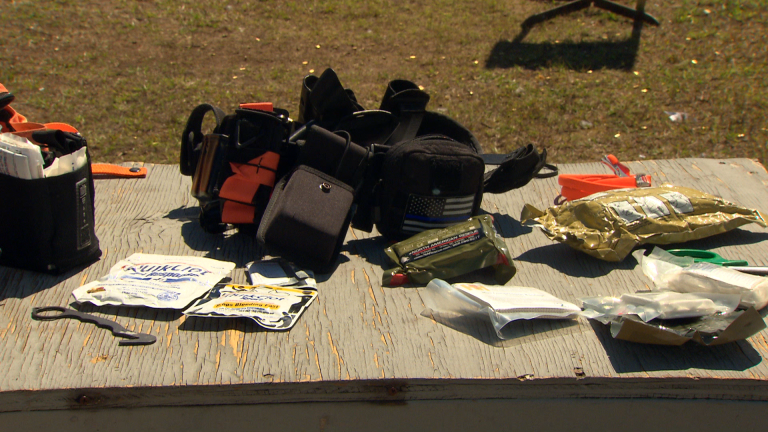
I recently participated in a tactical rifle course and the instructor made a comment that got me thinking. During his introduction, he was laying down the safety rules for the course and said that if anyone gets injured to make sure and let him know immediately as he has a med pack on him and he "actually knows how to use it." I knew exactly what he meant. I've seen so many people with med packs on their battle/duty belts and I've always wondered if they would have the first clue how to use the contents of a med pack if something happened to them or someone else needing their help.

I've been thinking about how to build the essential skills I would need to plug a hole in someone well enough to buy some time before first responders arrive. There are countless classes available to help us be safer and more effective with our guns but I haven't seen much about people taking courses designed to build essential medical skills.

You can find some of these types of courses with a quick search online; however, I'm curious if anyone has participated in this type of essential medial course before? If so, what did you think?
 
I recently participated in a tactical rifle course and the instructor made a comment that got me thinking. During his introduction, he was laying down the safety rules for the course and said that if anyone gets injured to make sure and let him know immediately as he has a med pack on him and he "actually knows how to use it." I knew exactly what he meant. I've seen so many people with med packs on their battle/duty belts and I've always wondered if they would have the first clue how to use the contents of a med pack if something happened to them or someone else needing their help.

I've been thinking about how to build the essential skills I would need to plug a hole in someone well enough to buy some time before first responders arrive. There are countless classes available to help us be safer and more effective with our guns but I haven't seen much about people taking courses designed to build essential medical skills.

You can find some of these types of courses with a quick search online; however, I'm curious if anyone has participated in this type of essential medial course before? If so, what did you think?
Reach out to your local community college; they likely have a First Responder/EMT Basic course you can take.

It will be a lot more in depth, covering more than just penetrating trauma, and will not be something you can just do over a weekend...but it will be good knowledge to have.
 
Reach out to your local community college; they likely have a First Responder/EMT Basic course you can take.

It will be a lot more in depth, covering more than just penetrating trauma, and will not be something you can just do over a weekend...but it will be good knowledge to have.

Exactly right! I took a couple of courses from our local Firefighters/EMT on Emergency first aid, stop the bleed, etc. Excellent resource!
 
The primary rule, the dominant rule, the overarching rule of medicine is do no harm. It applies to everyone treating a wounded person. It's wise to not exacerbate a wound. head and neck trauma, especially if it's accompanied by loss of consciousness, will require paramedics. Paramedics have ability to adhere to the Golden Hour. The Platinum Ten increase survival. Patients suffering severe trauma who arrive at trauma hospitals within ten minutes might determine survival. Paramedics have authority to summon Life Flight if required.

The Good Samaritan rule applies. However, the Good Samaritan rule is not a defense to negligence

Depending upon severity of wound, 911'ing paramedics might precede treatment, especially treating gunshot wounds. Posthaste paramedic response might determine whether a trauma patient survives.

A sound rule is to immediately think paramedics. If they're not required, treat in a manner consistent with wound.

If skin is breached, consider infection. Many infections effect very sudden death. When my daughter was about 7, she sustained a minor playground wound on the palm of her hand. No one at her school sent her to the school's nurse. MRSA invaded the portal on her palm. It would have killed her if I hadn't of immediately taken her to LLUMC.

Anyone can buy a trauma kit. Knowing how to properly use it is another story entirely.

Based upon my knowledge, training, expertise, and experience, when in doubt, 911 paramedics, especially with head and neck trauma.
 
“Depending upon severity of wound, 911'ing paramedics might precede treatment, especially treating gunshot wounds. Posthaste paramedic response might determine whether a trauma patient survives.”

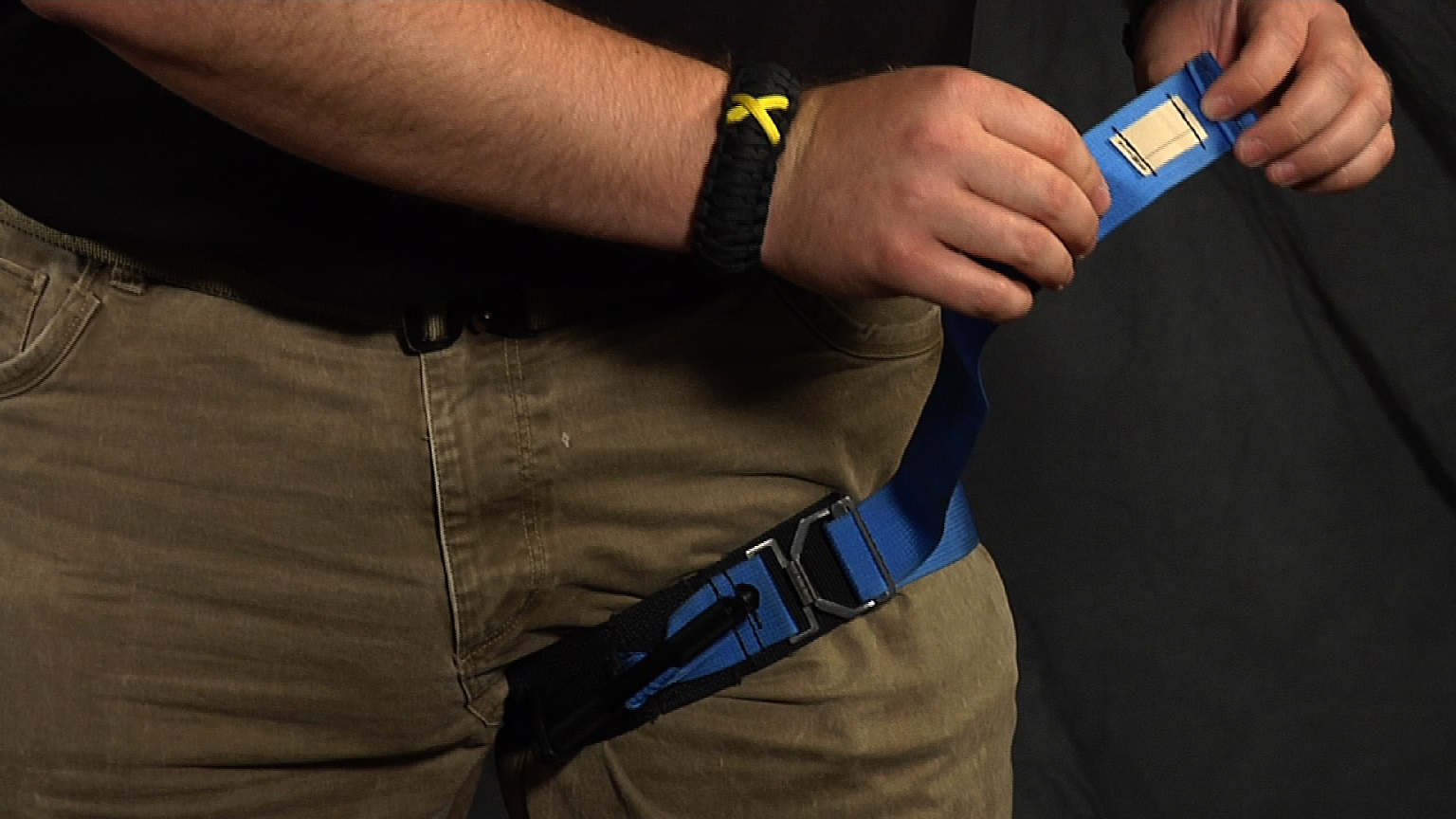
“Depending on the severity” is absolutely the key phrase there. Massive pumping bleeding from the extremities needs to be treated immediately with a tourniquet. With a round to a major artery, the time it takes to call 911 is long enough to loose a huge, likely deadly, volume of blood. Yes, seconds. You can learn to properly apply a TQ, from a video, until you have the $ and schedule to attend a class. If 911 doesn’t want the TQ on the patient you can take it off just as easily. There is no downside to TQ’ing a Massive Pumping Extremity wound before calling 911.

Watch a TQ video on Skinny Medic, THEN buy a TQ, then watch the video again, and sign up for one of the courses listed above.

You can also listen to The Civilian Medical Podcast by Skinny Medic and Shawn Herrin. They do NOT tell people how to treat wounds over the radio. They DO discuss current use cases, what tools were used, and which classes and gear you need to have to do the same. Skinny is a current Lead EMT and pre-hospital emergency care SME. Shawn is a certified and active TCCC, Stop the Bleed, and CPR instructor (along with NRA pistol instructor, Chief Range Officer, and host of the ‘We Like Shooting’ and ‘This Week in Gun’ podcasts). I may also have a bit of a man-crush on Shawn but the Restraining Order and Cease and Desist forbid me from talking about that. 😜
 
I took some courses a couple years back covering the basics including gun shot wounds, instructor was adamant that with any life threatening emergency is first call 911 to get help rolling in your direction, second, control the bleeding and keep the victim calm.
 
I took some courses a couple years back covering the basics including gun shot wounds, instructor was adamant that with any life threatening emergency is first call 911 to get help rolling in your direction, second, control the bleeding and keep the victim calm.
Yep. “Activating EMS” is one of the first things you should do, because they’re gonna have equipment & training you most likely don’t.

These days, it’s really not too hard to tell Siri/Alexa/HAL to make the call, and talk to the 911 operator at the same time you’re doing what you can...
 
Matador brings up a good thinking point about essential medical training but I can say from my professional standpoint is to call 911 first. Always. I have been a firefighter/EMT for over 20 years and have responded to countless calls where the 911 dispatcher is going through emergency medical treatment over the phone with family and bystanders. So 911 should be the absolute first call

As far as taking a EMT class, depending on the state you are looking at thousands of dollars. And that is just to become a Basic EMT. Paramedic is atleast a year long committment and round $7500 to start. The last Basic EMT trainees we sent through cost about $5000 each and the course was 4 months long and required a certain number of clinical hours in the hospital and third rides on an ambulance. But that is here in Michigan, not sure what the cost is in other states.

I've looked at a lot of the IFAK kits on the market and still feel like a lot of the basics are missing and they really push the tacticool elelment. Most kits are missing the "ABC's" (no airway device, no pocket mask for cpr....) but man you get a cool CAT, Quikclot, a patch and a sh*tton of band aids. Maybe I am looking too far into it because of my experience along with knowing the response times for the areas that I typically shoot at. My local range is down the road from one of our fire stations.

Long story short, training and the right equipment are very important and necessary to a successful medical response but dialing 911 is the best initial course of action.
 
Matador brings up a good thinking point about essential medical training but I can say from my professional standpoint is to call 911 first. Always. I have been a firefighter/EMT for over 20 years and have responded to countless calls where the 911 dispatcher is going through emergency medical treatment over the phone with family and bystanders. So 911 should be the absolute first call

As far as taking a EMT class, depending on the state you are looking at thousands of dollars. And that is just to become a Basic EMT. Paramedic is atleast a year long committment and round $7500 to start. The last Basic EMT trainees we sent through cost about $5000 each and the course was 4 months long and required a certain number of clinical hours in the hospital and third rides on an ambulance. But that is here in Michigan, not sure what the cost is in other states.

I've looked at a lot of the IFAK kits on the market and still feel like a lot of the basics are missing and they really push the tacticool elelment. Most kits are missing the "ABC's" (no airway device, no pocket mask for cpr....) but man you get a cool CAT, Quikclot, a patch and a sh*tton of band aids. Maybe I am looking too far into it because of my experience along with knowing the response times for the areas that I typically shoot at. My local range is down the road from one of our fire stations.

Long story short, training and the right equipment are very important and necessary to a successful medical response but dialing 911 is the best initial course of action.

Does your state have a “First Responder” level EMT course? Here, it’s a 40 hour course (usually taught in 4-5 hour sessions over a 4-5 week span), runs under $1000 (I think our company pays about $750 per student when we host courses, but we also guarantee the local CC a class size of at least 10 students).
 
The Medical First Responder course is still alive in Michigan but is pretty hard to find here in SE Michigan. But yeah similiar course. I started out as a MFR in the beginning but if you wanted to get hired full time into the FD you needed Basic EMT or Medic.
Honestly a MFR would be a great option for folks that wanted to learn the basics without breaking the bank and learn some skills that go beyond the range.
 
The Medical First Responder course is still alive in Michigan but is pretty hard to find here in SE Michigan. But yeah similiar course. I started out as a MFR in the beginning but if you wanted to get hired full time into the FD you needed Basic EMT or Medic.
Honestly a MFR would be a great option for folks that wanted to learn the basics without breaking the bank and learn some skills that go beyond the range.
I'm not sure if this is at all equivalent and it's more west than east buuuuut though I'd share just in case....MDFI seems to be tied into Dark Angel Medical
 
Does your state have a “First Responder” level EMT course? Here, it’s a 40 hour course (usually taught in 4-5 hour sessions over a 4-5 week span), runs under $1000 (I think our company pays about $750 per student when we host courses, but we also guarantee the local CC a class size of at least 10 students).
I was lucky enough to have the company I worked for at the time foot the cost of the course. And I got paid my hourly rate at the same time. A win win.
 
I thought this video (link posted below), went very well with the training topic of this thread. I have several medical trauma kits. Larger ones for "Go Bags", and truck bag, and a smaller ankle kit I bought through Every Day Ready / ATS (EDR provides training as well). In addition to the kits, I bought training material from USCCA (DVDs and book), on how to treat bleeding wounds. As suggested here, I'd also like to take a local hands on course to gain more experience, if God forbid I needed to assist someone.

 
Hi,

One of the most valuable courses anyone who spends time around firearms can take is a recognised first aid or trauma response course. Carrying a trauma kit is useful, but knowing when and how to use a tourniquet, pressure dressing or haemostatic gauze is what really makes the difference in an emergency.

Several people focus heavily on equipment, but training is what turns that equipment into something useful. A trauma-focused first aid course can teach essential skills such as controlling severe bleeding, managing airways, recognising shock and prioritising care until professional medical help arrives.

Another aspect that often gets overlooked is the importance of proper medical knowledge and following established procedures. Medical negligence cases regularly demonstrate how serious the consequences can be when treatment is delayed or carried out incorrectly. Firms such as Cian O’Carroll Solicitors, which deal with medical negligence claims in Ireland, frequently highlight the importance of appropriate training, competent care and timely intervention when dealing with injuries.

For anyone looking to build practical skills, a certified First Aid Responder, EMT or trauma care course is probably one of the best investments you can make. Having the right kit is important, but having the confidence and training to use it correctly is what can genuinely help save a life.

Welcome to the forum. Glad you found us. Thanks for reviving this thread. It reminds us to keep up with our basic first aid and CPR. "Stop the Bleed" classes are part of the training curriculum at my range. A lot of places offer "Stop the Bleed" classes at no cost.

Thank you for your indulgence,

BassCliff
 
My youngest daughter is a military physician who has done a trauma center residency. I prevailed upon her to give a class on gunshot wound emergency care for our RSO's. The focus is on stopping the bleeding and treating for shock. Keep the blood in and keep them alive until the paramedics arrive. Bloodstopper bandages, tourniquets, and wound packing have saved a lot of lives. I have a trauma bag in my truck. When I do classes, there is usually at least one person with emergency medical training in the group. I will designate one of them as medical responder and hand them the bag, make sure everyone knows the address where we are, and give instructions that someone will go meet first responders at the entrance to guide them in. Fortunately in all my years of doing training we have not had a firearm mishap but it is best to have some training and to remain prepared.
 
Back
Top