

NOTE: Hope some in Fed.gov is writting some "lessons-learned" based on recent events in the arm-pit of the world.
_______________________
Iranian attacks on U.S. logistics hubs that usually supply ships in the Persian Gulf have forced the Navy to bring in supplies from thousands of miles away.
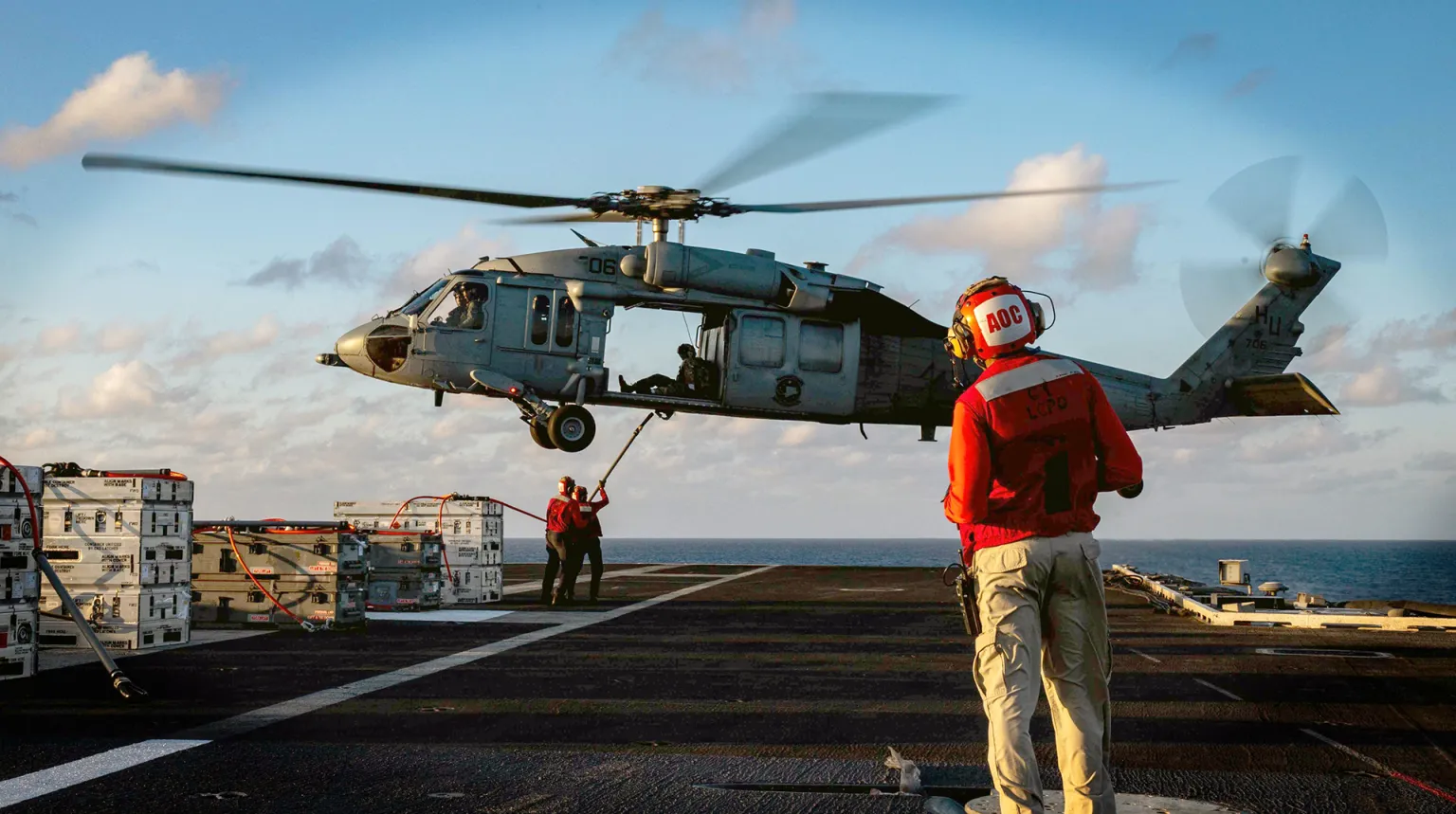
Aircraft carriers at sea typically need to be resupplied every three to six days, depending on the pace of operations.
For years, the U.S. military has been able to resupply its ships operating in the Middle East from ports and stockpiles within the Persian Gulf, said retired Navy Capt. Bradley Martin, a senior policy researcher with the RAND Corporation.
Iranian missile and drone attacks on a major U.S. base in Bahrain and a port in the United Arab Emirates have forced the Navy to bring supplies for warships like the Lincoln from locations such as Diego Garcia and Singapore, trips that can force resupply ships to sail more than 4,000 miles.
“Thus, resupply had to come from ports outside the Gulf – Diego Garcia and even as far as Singapore or through the Suez Canal – which of course meant that deliveries were bound to be delayed,” Martin said. “The distance problems were likely exacerbated by insufficient numbers of combat logistics force ships (aka UNREP) and the need for combatants supporting operations to move and reposition.”
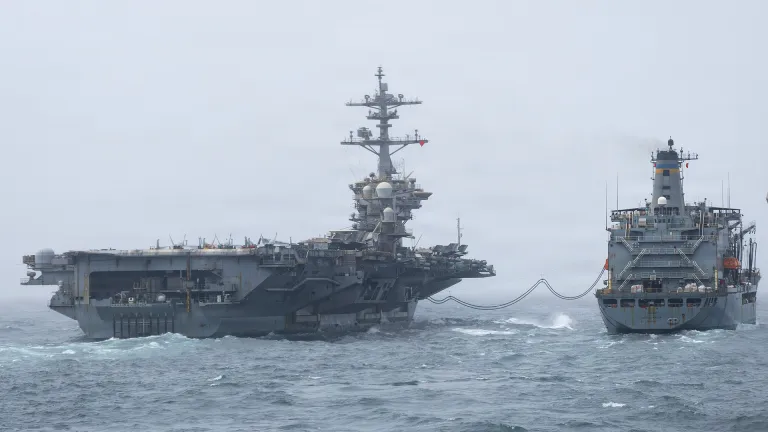
The aircraft carrier USS Abraham Lincoln conducts a replenishment-at-sea with fleet replenishment oiler USNS Henry J. Kaiser
on, Aug. 16, 2026. Navy photo.

 taskandpurpose.com
_______________________
Iranian attacks on U.S. logistics hubs that usually supply ships in the Persian Gulf have forced the Navy to bring in supplies from thousands of miles away.
Aircraft carriers at sea typically need to be resupplied every three to six days, depending on the pace of operations.
For years, the U.S. military has been able to resupply its ships operating in the Middle East from ports and stockpiles within the Persian Gulf, said retired Navy Capt. Bradley Martin, a senior policy researcher with the RAND Corporation.
Iranian missile and drone attacks on a major U.S. base in Bahrain and a port in the United Arab Emirates have forced the Navy to bring supplies for warships like the Lincoln from locations such as Diego Garcia and Singapore, trips that can force resupply ships to sail more than 4,000 miles.
“Thus, resupply had to come from ports outside the Gulf – Diego Garcia and even as far as Singapore or through the Suez Canal – which of course meant that deliveries were bound to be delayed,” Martin said. “The distance problems were likely exacerbated by insufficient numbers of combat logistics force ships (aka UNREP) and the need for combatants supporting operations to move and reposition.”
The aircraft carrier USS Abraham Lincoln conducts a replenishment-at-sea with fleet replenishment oiler USNS Henry J. Kaiser
on, Aug. 16, 2026. Navy photo.
How a Navy aircraft carrier ended up short on food in a war zone
Iranian attacks on U.S. logistics hubs in the Middle East have forced the Navy to bring in supplies from thousands of miles away
taskandpurpose.com


