

This year marks the M14’s 72nd birthday and the 52nd anniversary of its civilian variant, the M1A produced by Springfield Armory. And with the recent new that the CMP would be making surplus M14s available. The author takes a lokk at the development & history of this battle rifle.
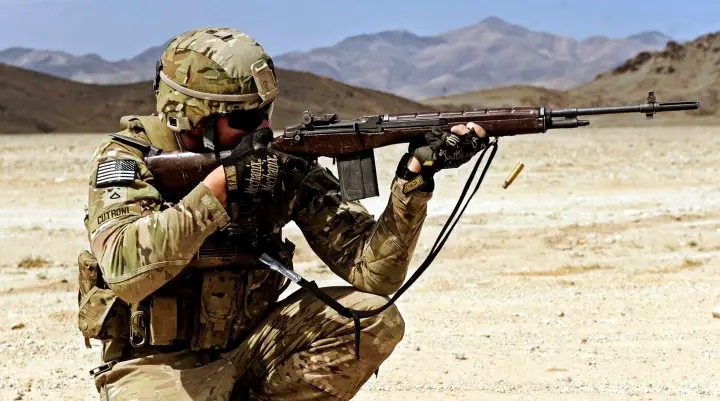
The M14 rifle holds a significant place in the history of American military firearms, serving as a bridge between the battle rifles of World War II and the US’ military’s modern assault rifles. Developed in the post-World War II era, the M14 was the standard-issue rifle for the U.S. military during the early stages of the Vietnam War. Despite its relatively short service life although it has soldiered on in niche roles.

 www.thefirearmblog.com
Its daddy, the M1 Garand. The M1 Garand rifle, developed by Canadian-American engineer John C. Garand, was the standard-issue semi-automatic rifle for the United States Armed Forces during World War II and the Korean War.
The development of the M14 began with the search for a weapon that could fulfil multiple roles: as a standard battle rifle, a light machine gun, and a replacement for several existing firearms. This led to the concept of a "universal rifle," which would be capable of firing in both semi-automatic and fully-automatic modes. The U.S. Army Ordnance Department initiated several programs and trials in the late 1940s and early 1950s to explore various designs.
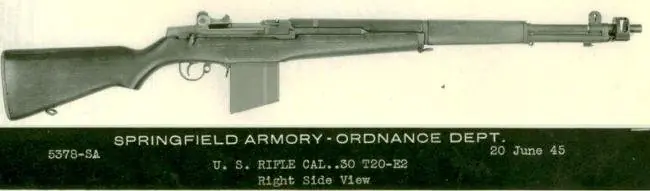
The T44 rifle, developed at the Springfield Armory, emerged as the frontrunner during these trials. The T44 was essentially an improved version of the T20, incorporating design elements from the M1 Garand but chambered for the new 7.62x51mm NATO round.
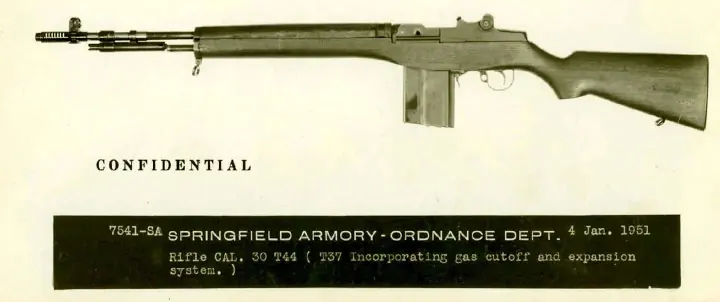
The M14 was officially adopted by the U.S. military in 1959, marking the beginning of its service as the standard-issue rifle. Initially, the rifle was met with enthusiasm, as it represented a significant technological advancement over the M1 Garand. The M14 was the first U.S. rifle to be mass-produced with a fully automatic capability, and its detachable 20-round magazine offered a substantial increase in firepower.
The rifle was issued to U.S. troops deployed in Vietnam, where it quickly became clear that the weapon was not ideally suited for the jungle warfare conditions prevalent in Southeast Asia. The dense vegetation, close-quarters combat, and harsh environmental conditions of Vietnam posed significant challenges for the M14.
As the Vietnam War progressed, it became increasingly clear that the M14 was not the ideal rifle for the conflict. The U.S. military began to look for alternatives, leading to the development and eventual adoption of the M16 rifle.
Given the strengths of the M14 at range, the rifle would soon be given the new role of what we would now call a Designated Marksman Rifle.
By the time the United States entered the Global War on Terror the M14 had been largely phased out of frontline service for over three decades. The M16 and its variants, along with the newer M4 carbine, had become the primary rifles for U.S. forces. However, the nature of the conflicts in Iraq and Afghanistan, characterized by a mix of urban combat and engagements in vast, open terrain, underscored a need for a rifle with longer range and greater stopping power than the 5.56mm NATO round used in the M16 and M4.
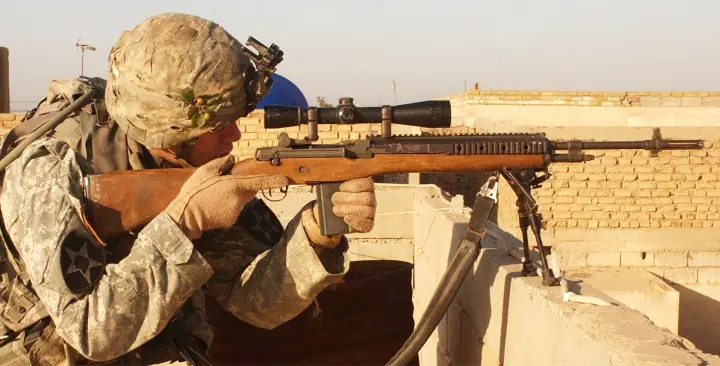
The Russo-Ukrainian War has seen a wide range of weaponry used, and the M14, was still available in military reserves and was included in the arms shipments to Ukraine. These rifles, often refurbished and equipped with modern optics, have been put to use by Ukrainian forces in various roles.
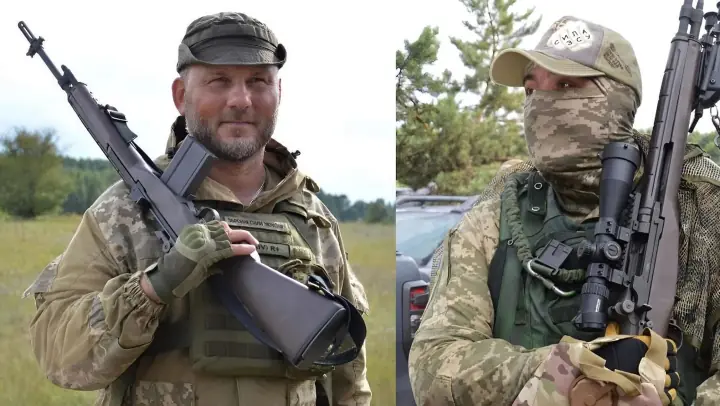
The M14’s primary role in the Ukrainian conflict has been as a sniper or designated marksman rifle. This makes the M14 particularly effective in the hands of Ukrainian marksmen tasked with neutralizing enemy positions, taking out high-value targets, or providing precision support during infantry assaults.
The M14 rifle occupies a unique place in the history of U.S. military firearms. While its service life as the standard-issue rifle was incredibly short, the M14's development, implementation, and ongoing use in specialized roles by both U.S and foreign militaries is really quite interesting.
The M14 rifle holds a significant place in the history of American military firearms, serving as a bridge between the battle rifles of World War II and the US’ military’s modern assault rifles. Developed in the post-World War II era, the M14 was the standard-issue rifle for the U.S. military during the early stages of the Vietnam War. Despite its relatively short service life although it has soldiered on in niche roles.
Packing a Punch: A History of the M14
The M14 rifle holds a significant place in the history of American military firearms, serving as a bridge between the battle rifles of World War II and the US’ military’s modern assault rifles.Developed in the post-World War II era, the M14 was the standard-issue rifle for the U.S.military...
www.thefirearmblog.com
Its daddy, the M1 Garand. The M1 Garand rifle, developed by Canadian-American engineer John C. Garand, was the standard-issue semi-automatic rifle for the United States Armed Forces during World War II and the Korean War.
The development of the M14 began with the search for a weapon that could fulfil multiple roles: as a standard battle rifle, a light machine gun, and a replacement for several existing firearms. This led to the concept of a "universal rifle," which would be capable of firing in both semi-automatic and fully-automatic modes. The U.S. Army Ordnance Department initiated several programs and trials in the late 1940s and early 1950s to explore various designs.
The T44 rifle, developed at the Springfield Armory, emerged as the frontrunner during these trials. The T44 was essentially an improved version of the T20, incorporating design elements from the M1 Garand but chambered for the new 7.62x51mm NATO round.
The M14 was officially adopted by the U.S. military in 1959, marking the beginning of its service as the standard-issue rifle. Initially, the rifle was met with enthusiasm, as it represented a significant technological advancement over the M1 Garand. The M14 was the first U.S. rifle to be mass-produced with a fully automatic capability, and its detachable 20-round magazine offered a substantial increase in firepower.
The rifle was issued to U.S. troops deployed in Vietnam, where it quickly became clear that the weapon was not ideally suited for the jungle warfare conditions prevalent in Southeast Asia. The dense vegetation, close-quarters combat, and harsh environmental conditions of Vietnam posed significant challenges for the M14.
As the Vietnam War progressed, it became increasingly clear that the M14 was not the ideal rifle for the conflict. The U.S. military began to look for alternatives, leading to the development and eventual adoption of the M16 rifle.
Given the strengths of the M14 at range, the rifle would soon be given the new role of what we would now call a Designated Marksman Rifle.
By the time the United States entered the Global War on Terror the M14 had been largely phased out of frontline service for over three decades. The M16 and its variants, along with the newer M4 carbine, had become the primary rifles for U.S. forces. However, the nature of the conflicts in Iraq and Afghanistan, characterized by a mix of urban combat and engagements in vast, open terrain, underscored a need for a rifle with longer range and greater stopping power than the 5.56mm NATO round used in the M16 and M4.
The Russo-Ukrainian War has seen a wide range of weaponry used, and the M14, was still available in military reserves and was included in the arms shipments to Ukraine. These rifles, often refurbished and equipped with modern optics, have been put to use by Ukrainian forces in various roles.
The M14’s primary role in the Ukrainian conflict has been as a sniper or designated marksman rifle. This makes the M14 particularly effective in the hands of Ukrainian marksmen tasked with neutralizing enemy positions, taking out high-value targets, or providing precision support during infantry assaults.
The M14 rifle occupies a unique place in the history of U.S. military firearms. While its service life as the standard-issue rifle was incredibly short, the M14's development, implementation, and ongoing use in specialized roles by both U.S and foreign militaries is really quite interesting.
