





 June 24th, 2019
 4:01 runtime
The first thing that hit me that morning was the smell of linseed oil. It is a small detail, but one that instantly anchors a memory. I was standing at Gunsite Academy in Paulden, Arizona, with a rifle in my hands that carried more history than most modern firearms ever will. This was my first experience with the M1A Scout Squad, chambered in .308, and I knew before the first round was fired that this was going to be more than a simple range session.

I had come here to get to know the rifle, not just to shoot it, but to understand where it came from and why it still matters. There is something about wood, steel, and history coming together that demands a slower pace. You do not rush a first meeting like this.
Meeting the M1A Scout Squad for the First Time
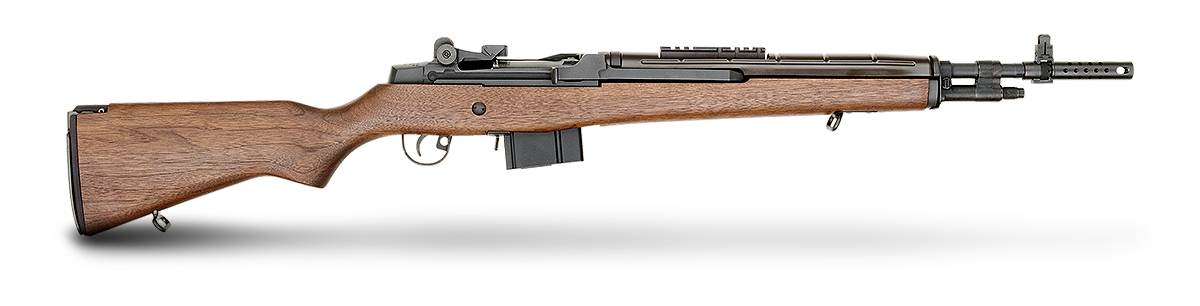
When I picked up the M1A Scout Squad, the weight felt reassuring. Not heavy in a burdensome way, but solid, like a tool that expects to be used with purpose. The walnut stock was smooth and warm, still carrying that linseed oil scent that made me think of old armories and careful hands finishing wood late into the night.
This rifle is the civilian descendant of the M 14, which itself was born from the legendary M1 rifle, the one many people still call the M1 Garand. Back in its military days, it was simply Rifle, M1. The M14 improved on that design by adding a box magazine and select fire capability. It served in the early years of Vietnam before giving way to the M16.
Holding the M1A Scout Squad, I could feel that lineage. This was not a plastic rifle with a short memory. This was a continuation of an idea that began long before I ever thought about reviewing firearms.
A Civilian Echo of a Military Classic
One of the first things I noticed was the magazine. From the factory, the rifle comes with a ten-round magazine, clean and reliable. But in my collection, I have a small pile of old Vietnam-era M14 magazines. One of them, marked BRW for Borg Warner, is rusty and rough around the edges, but it still locks in and feeds like it was made yesterday.

There is something humbling about using a piece of equipment that may have traveled halfway around the world before finding its way into your hands. During the war effort, companies that once made washing machines were suddenly producing gun parts. History has a way of showing up in the smallest details.
Sliding that old magazine into the M1A Scout Squad felt like connecting two different eras in one motion.
The Scout Squad Configuration
The Scout Squad variant stands apart from the standard M1A in a few important ways. The original M14 wore a 22″ barrel. This one carries an 18″ barrel, making it handier without losing the character of the rifle. Springfield Armory also offers a CQB version with a 16″ barrel, and I have fired that one before. It is loud, flashy, and all kinds of fun, but the Scout Squad feels like a better balance of control and performance.

At the muzzle, there is a flash hider and compensator with three large ports and several smaller ones. It is functional without being overly aggressive in appearance. The forward-mounted scout rail is another defining feature. It invites you to think about optics differently, to keep both eyes open, to shoot with speed and awareness.
This is not a bench rifle meant only for slow fire at distance. It is a general-purpose rifle in the truest sense of the word.
Falling in Love with Walnut and Steel
I have to admit that the walnut stock stole my attention more than any technical feature. The grain, the finish, the way it fit against my shoulder, all of it reminded me why wood still matters. In a world full of polymer, there is something honest about a rifle that shows its material without apology.
At the same time, that beauty comes with a problem. I know myself well enough to admit that I am going to beat this rifle up. It is going to get scratches, dings, and the kind of wear that only comes from real use. As much as I love this stock, I already know I will replace it with something I feel less guilty about abusing.
That decision says a lot about how I see this rifle. I do not want it to be a safe queen. I want it to be a working tool.
Before the First Shot
One thing that surprised me about this first experience is that I did not rush to the firing line. Instead, I spent time just handling the rifle. I worked the action, checked the sights, mounted and removed magazines. I let myself become familiar with the way it balanced and how it moved.

There is value in that kind of slow introduction. By the time I finally prepared to shoot, the rifle no longer felt foreign. It felt like something I already understood, at least a little.
I also knew that this was only the beginning. I had plans for upgrades, changes, and experiments. A new stock was first on the list, followed by optics and small adjustments that would make the rifle truly mine.
Expectations and First Impressions
Even before firing a single round, I had a clear sense of what the M1A Scout Squad represented. It was a bridge between the past and the present. It carried military DNA, but it lived firmly in the civilian world. It was powerful without being excessive, classic without being outdated.
The controls were familiar, but not modern in the way an AR is modern. Everything had a mechanical feel, deliberate and purposeful. This is a rifle that expects you to know what you are doing, or at least to learn quickly.
Standing there at Gunset Academy, I realized that this first experience was less about performance and more about connection.
Looking Ahead to Making It My Own
I left that day without firing as many rounds as I normally would. Instead, I left with a plan. I wanted to document the process of turning this factory rifle into something personal. A new stock would come first, followed by careful upgrades that respected the original design rather than replacing it.

There is a temptation with any rifle to modernize it beyond recognition. With the M1A Scout Squad, I wanted to resist that urge. I wanted to enhance it, not erase what made it special.
This rifle deserved patience.
Final Thoughts on a First Encounter
My first experience with the M1A Scout Squad was not defined by noise or recoil or tight groups on paper. It was defined by smell, texture, and history. By the feel of walnut against my cheek and the knowledge that this design had served soldiers long before it served me.
As I packed up and prepared to leave, I took one last look at the rifle resting on the bench. It was still clean, still beautiful, still unmarked by hard use. That would change soon enough.
For now, this was just the introduction. The real story of this rifle was only beginning, and I was looking forward to writing every chapter with it, one careful round at a time.
Join the Discussion
Featured in this video
Share


Continue Reading


Did you enjoy this video?

 62
62
Springfield Armory® recommends you seek qualified and competent training from a
certified instructor prior to handling any firearm and be sure to read your owner’s manual. These
articles and videos are considered to be suggestions and not recommendations from Springfield Armory. The views
and opinions expressed on this website are those of the authors and do not necessarily reflect the
views and opinions of Springfield Armory.
Product prices mentioned in articles and videos are current as of the date of publication.

Yamil Sued
Yamil is a graduate of the prestigious Brooks Institute of Photographic Arts and Sciences in Santa Barbara, CA with a Major in Illustration Photography and Color Technology with over 34 years of professional experience. Yamil started his professional relationship with the Shooting Industry in 1995 and has since worked with companies like Springfield Armory, S&W, Glock, FNH USA, Remington, Bushmaster, Bushnell, Leupold, Aimpoint, PWS, Vortex Optics, Cor-Bon Ammunition, ERGO Grips, AmeriGlo Sights, Krause Publications, Comp Tac Victory Gear, The Beta Company, IDPA, MGM Targets, Rainier Ballistics, Rock Castle Shooting Center, SIG Sauer and was a Staff Photographer for Cabela’s in Sidney, NE. Yamil is also a Writer and Photographer for Guns & Ammo, Guns & Ammo SIP's and Gun Digest.