




 July 5th, 2019
 4:00 runtime
If you spend any real time training with a handgun, you eventually run into a hard truth: what you think is fast usually isn’t. I’ve been there myself — running drills that felt smooth and aggressive, only to realize later that my performance wasn’t improving in any measurable way.
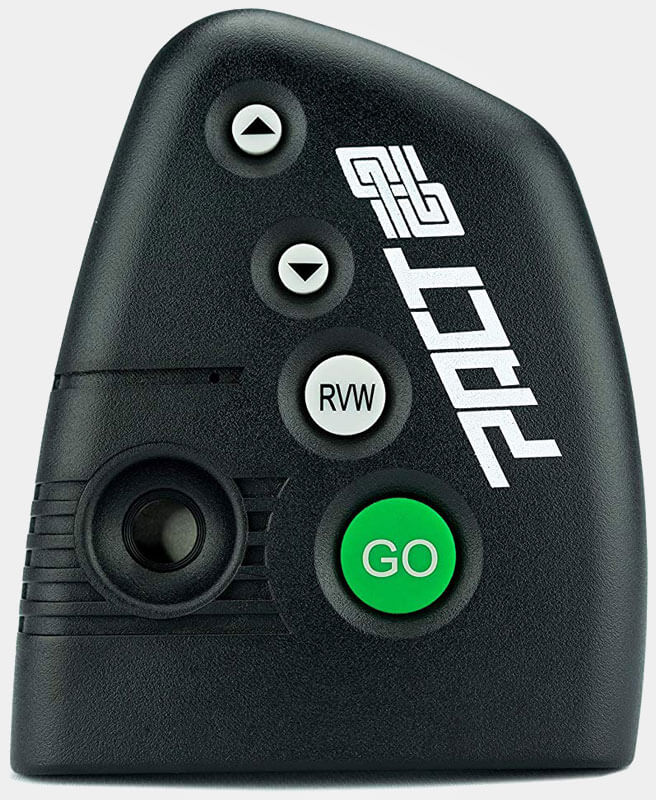
That’s exactly where the PACT Club Shot Timer III comes in.

This review isn’t based on spec sheets or marketing claims. It’s based on how this timer actually performs in real-world defensive training — especially for those of us who carry concealed and care about efficiency under pressure. Whether you’re working from concealment, refining your draw stroke, or testing different shooting techniques, a shot timer like this forces you to deal with reality instead of perception.
And for most shooters, that’s the missing piece.
Quick Summary
Strengths
- Simple, reliable operation
- Accurately tracks split times and total time
- Useful delay and par time functions
- Durable enough for regular range use
- Affordable compared to high-end timers
Limitations
- Basic interface (not modern or intuitive at first)
- No Bluetooth or app integration
- Can occasionally pick up false inputs in noisy environments
- Not ideal for large group training sessions
Verdict
If you’re serious about improving your speed and efficiency with a handgun, the PACT Club Shot Timer III is one of the most practical tools you can own. It’s not flashy, but it does exactly what matters.
What the PACT Club Shot Timer III Is
At its core, the PACT Club Shot Timer III is a dedicated electronic shot timer designed to measure shooting performance. It detects the sound signature of gunfire and records:
- Time to first shot
- Split times between shots
- Total elapsed time
It’s often referred to as the “PACT Pro Timer” in casual conversation, but the correct model name is Club Shot Timer III.

This kind of tool is standard in competitive shooting — USPSA, IDPA, and similar disciplines — but it’s just as valuable, if not more so, for defensive shooters.
Why? Because in a real defensive encounter, speed matters. Not reckless speed — but efficient, repeatable speed under stress.
Key Features and Components
Here’s a breakdown of what you actually get and what matters.
Core Features
- Shot detection microphone
- Start buzzer (audible signal)
- LCD display for time readout
- Instant or delayed start options
- Par time (second beep) capability
- Belt clip for hands-free use
Feature Table
| Feature | What It Does | Why It Matters |
|---|---|---|
| Instant Start | Timer begins immediately | Useful for coached or partner drills |
| Random Delay Start | Delayed buzzer | Critical for solo training realism |
| Par Time | Second beep at preset time | Helps enforce performance standards |
| Shot Recording | Tracks each shot | Lets you analyze splits and cadence |
| Compact Design | Portable unit | Easy to carry on the range |
There’s nothing overly complicated here — and that’s part of the appeal. It’s built to do one job, and it does it consistently.
How It Works / How I Use It
Using the PACT timer is straightforward, but the real value comes from how you apply it.

Basic Operation
- Turn on the unit
- Select start mode (instant or delay)
- Press start
- Respond to the buzzer
- Fire your shots
- Review recorded times
The timer detects each shot based on sound pressure. It’s calibrated to pick up gunfire, not minor noises, though you can occasionally trigger it with a sharp impact if you’re careless.
My Typical Setup
When I’m training alone — which is most of the time — I use:
- Random delay start
- Belt-mounted position
- Pre-set par times for specific drills

That delay is critical. Without it, you start anticipating the beep, which creates unrealistic timing. With a random delay, you’re forced to react — just like you would in a real defensive scenario.
Practical Use Cases and Applications
This is where the PACT Club Shot Timer III really earns its place.
1. Draw-to-First-Shot Training
If you carry concealed, this is non-negotiable.
Setup:
- Concealed carry position
- Target at 3–7 yards
- Par time: 1.5–2.0 seconds (adjust based on skill)
Goal:
- Clean draw
- Accurate first shot
- Consistent time
Without a timer, you’re guessing. With one, you know exactly where you stand.
2. Split Time Analysis
This is where many shooters get humbled.
You might feel like you’re shooting fast — but the timer tells the truth.
What to look for:
- Consistent splits between shots
- Ability to maintain accuracy at speed
- Differences between shooting styles
I’ve personally tested different approaches — “tactical” vs. relaxed shooting — and seen dramatic differences in time. What felt controlled and professional was often slower than a more natural, relaxed cadence.
3. Multi-Target Engagement
Set up a simple array of 2–3 targets.

Focus on:
- Target transitions
- Visual acquisition
- Shot timing
The timer reveals inefficiencies you won’t notice otherwise — especially hesitation between targets.
4. Par Time Drills
Par time is one of the most underused features.
It gives you a hard performance standard.
Example drill:
- Par time: 1.0 second
- Start from low ready
- Fire one accurate shot before the second beep
If you miss the par, you know immediately. No excuses.
5. Technique Comparison
This is where things get interesting.
You can test:
- Different grip pressures
- Stance variations
- Draw techniques
- Trigger control methods
Instead of debating theory, you get measurable results.
Pros and Cons
Pros
1. Honest Feedback
This is the biggest advantage. The timer doesn’t care how something feels — it shows you what actually happened.
2. Simple and Durable
No complicated menus or fragile components. It’s built for range use.
3. Effective for Solo Training
The delay function makes it ideal if you don’t have a training partner.
4. Affordable Entry Point
Compared to high-end shot timers, it’s reasonably priced.
Cons
1. Outdated Interface
The controls aren’t intuitive at first. There’s a bit of a learning curve.
2. No Connectivity
No Bluetooth, no app integration, no data export.
If you’re someone who likes tracking performance digitally, this will feel limited.
3. Occasional False Reads
Loud impacts or nearby shooters can sometimes register as shots, though it’s not common in controlled settings.
4. Not Ideal for Large Classes
For group instruction, there are better timers with louder buzzers and broader pickup capability.
Comparison to Alternatives
There are several other shot timers on the market, and it’s worth understanding where the PACT fits.

vs. Competition Electronics Pocket Pro II
- Similar price range
- Slightly more intuitive interface
- Comparable performance
Verdict: A close competitor. Comes down to personal preference.
vs. CED7000
- Rechargeable battery
- Advanced features
- Better display
Verdict: More refined, but also more expensive. Better for high-volume shooters or instructors.
vs. Smartphone Shot Timer Apps
- Cheap or free
- Convenient
But:
- Less reliable shot detection
- Dependent on phone hardware
- Not as durable
Verdict: Fine for casual use, not serious training.
Who This Is Best For
The PACT Club Shot Timer III is a strong fit if you:
- Carry concealed and train regularly
- Want measurable improvement in speed and efficiency
- Prefer simple, reliable gear over tech-heavy options
- Train primarily on your own
It’s not ideal if you:
- Want advanced data tracking or app integration
- Run large group classes
- Prefer modern UI and controls
Final Verdict
The PACT Club Shot Timer III isn’t flashy, and it doesn’t try to be.
What it does is give you something most shooters avoid: objective truth about your performance.
In defensive handgun training, that matters more than anything else.
You can spend thousands on firearms, holsters, optics, and ammunition — but if you’re not measuring your performance, you’re leaving a major gap in your training.
I’ve seen firsthand how a simple timer can cut through assumptions and expose inefficiencies. Techniques that feel fast often aren’t. Methods that seem less “tactical” can outperform more complicated approaches.
That’s the real value here.
If you’re serious about becoming more efficient, more consistent, and ultimately more capable with your carry gun, the PACT Club Shot Timer III is a tool worth owning — and actually using.
Join the Discussion
Featured in this video
Share


Continue Reading


Did you enjoy this video?

 11
11
Springfield Armory® recommends you seek qualified and competent training from a certified instructor prior to handling any firearm, and to be sure to read your owner's manual. The views and opinions expressed on this website are those of the authors and do not represent the views and opinions of Springfield Armory.
Product prices mentioned in articles and videos are current as of the date of publication.

Clay Martin
Clay Martin is a former USMC Infantryman, Reconnaissance Marine, and Scout/Sniper. Cross decking to the US Army in 2003, he retired as a Special Forces Intelligence Sergeant from 3rd SFG (A). Clay has been a competitive shooter in USPSA, 3 Gun, and PRS disciplines, as well as a contract instructor for marksmanship and Close Quarters Battle. Aside from being a gunslinger, Clay is the author of Last Son of the War God, and the soon to be published Sword of the Caliphate series. He currently lives in the Pacific Northwest with his wife, sons, and pack of feral dogs.