





 August 14th, 2019
 8:23 runtime
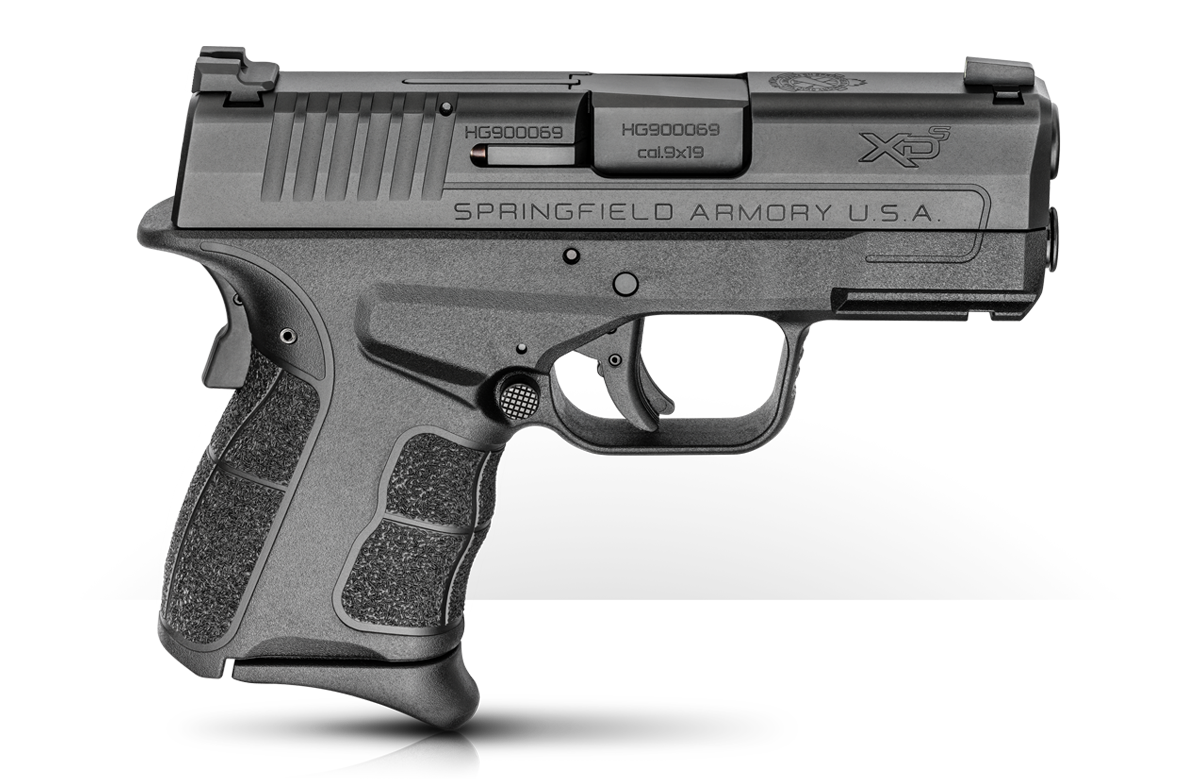
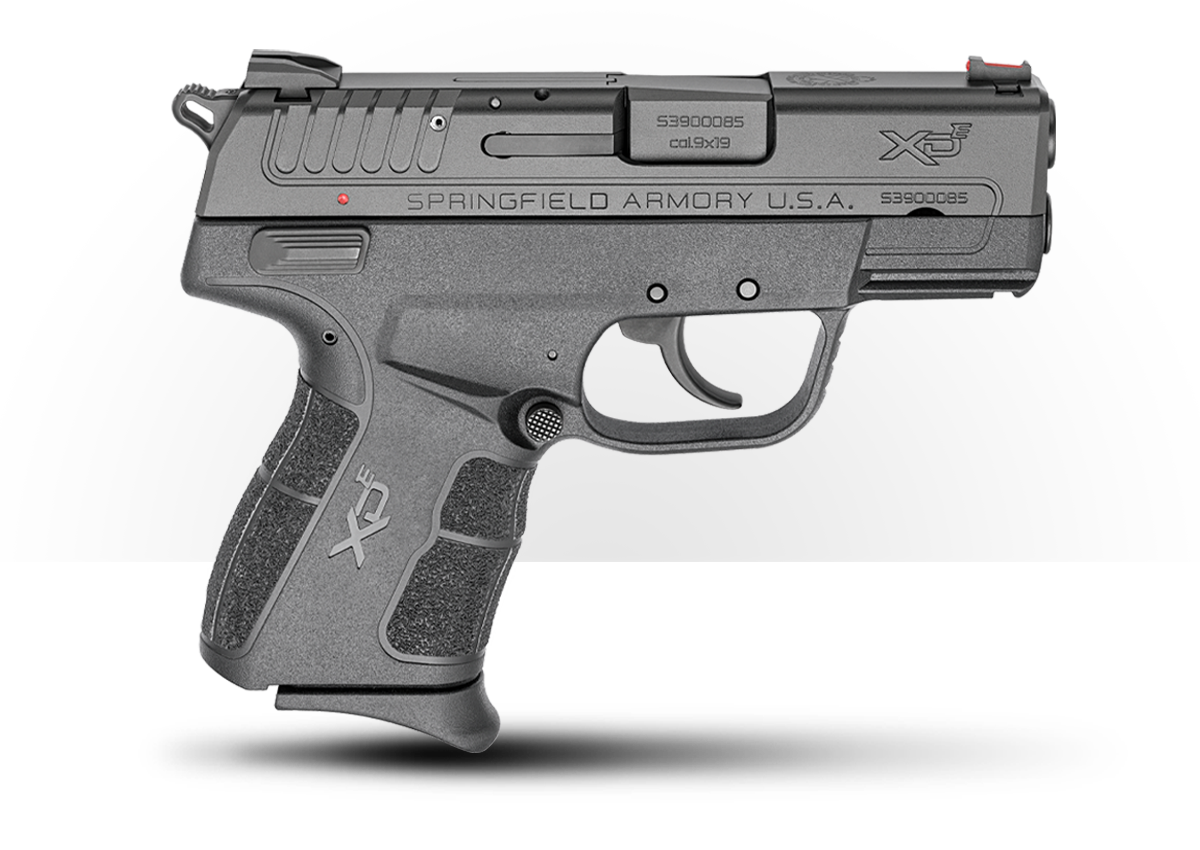
When I sit down to compare polymer-framed CCW guns, I always try to ground the conversation in real shooting experience instead of spec sheets and internet arguments. That is exactly what happened when I spent time on the range talking and shooting with Freddie Blish while evaluating two compact carry pistols that look similar on the surface but take very different approaches internally. The Springfield Armory XD-S and XD-E gave me a perfect opportunity to explore how polymer-framed concealed carry guns can serve very different shooters while still occupying the same niche.

At first glance, these pistols appear similar. Same manufacturer. Same general size. Same single-stack profile. Same 3.3″ barrel length. Both are clearly designed for concealed everyday carry. But once you get past the surface, the differences start to matter, especially if you are someone who carries daily and actually trains with your gun.
Polymer Frames and Why They Matter for CCW
Polymer-framed handguns dominate the concealed carry world for a reason. They are lighter, more durable, and generally easier to carry all day without fatigue. When you slide a polymer-framed pistol into an inside-the-waistband holster, especially after years of carrying heavier metal-framed guns, the difference is immediate.

I felt that right away. With both pistols riding in my holster, they almost disappeared. That matters. Comfort drives consistency, and consistency keeps a CCW gun on your body rather than left at home. A polymer frame does not mean sacrificing durability or shootability. It simply shifts the balance toward practical carry.
Striker Fired Confidence With the XD-S
I have carried striker-fired pistols for years, so the XD-S felt immediately familiar. The trigger press is consistent from shot to shot, and there is something comforting about that simplicity when you are under stress. No transition between trigger pulls. No manual decocking to think about. Just draw, press, repeat.

The XDS is slim, compact, and very easy to conceal. I previously shot the original XD-S Model 1 in .45 ACP, and it was known for reliability at the time. That reputation holds. Even straight out of the box, with nothing more than factory lubrication, it ran flawlessly with Federal American Eagle full metal jacket ammunition.
From a polymer-framed CCW perspective, this pistol checks all the expected boxes. Lightweight, reliable, simple manual of arms, and easy to customize with aftermarket sights and accessories.
XD-E: Double Action Single Action in a Striker World
I will admit it. I was skeptical when the XD-E first came out. In a market dominated by striker-fired pistols, a double-action/single-action (DA/SA) carry gun felt like a step backward. After spending real time shooting it, that skepticism faded quickly.

There is still real merit to a DA/SA pistol for concealed carry. The longer first trigger pull provides an extra layer of intentionality, which some shooters value for appendix carry or reholstering. After that first shot, the single-action trigger becomes lighter and faster. If you train with it, the transition becomes second nature.
Freddie made a great point on the range. People often claim DA/SA pistols are slower, but that argument falls apart when you look at skilled shooters who run them exceptionally fast. Speed comes from training, not trigger type.
Shooting Them Side by Side at 10 Yards
At ten yards, both pistols were boringly accurate, and I mean that in the best way possible. If you did your part, hits were easy. The grips felt remarkably similar, which helped eliminate variables when switching between them. That similarity made it easier to focus purely on trigger differences and recoil impulse.

The sights differed slightly between the two. One pistol had a fiber-optic front sight with a white rear, while the other had a night-sight front paired with a black rear. Both configurations were easy to see in daylight, and both would serve well for defensive use. The key takeaway was that Springfield offers options, and the aftermarket expands them further.
Carry Comfort and Holster Choices
Both pistols paired beautifully with inside-the-waistband holsters. Lightweight carry guns excel in this role, especially when paired with a holster that allows flexible positioning. Whether strong-side or appendix carry, the ability to fine-tune placement makes a noticeable difference in comfort over long hours.
When a gun feels like it is not even there, you are far more likely to carry it consistently. That consistency is the entire point of a concealed carry weapon.

Neither pistol received any special treatment before hitting the range. No trigger jobs. No aftermarket parts. No break-in rituals. They ran reliably with factory lubrication and quality ammunition. For a CCW gun, that matters more than almost anything else.
A polymer-framed carry gun should work when you need it, without excuses or tinkering. Both of these pistols delivered exactly that.
Choosing Between Them Comes Down to You
By the end of the session, the question of which pistol was better became almost irrelevant. The real answer was that both excel, just in different ways. The striker-fired XD-S offers simplicity and consistency. The DA/SA XD-E offers flexibility and an added layer of control for those who want it.

If you are comparing polymer-framed CCW guns, this experience reinforced something I already believed. There is no universal best choice. The best concealed carry pistol is the one that fits your hand, matches your training, and gives you confidence every time you holster it.
In my case, the honest answer might be the same one we joked about on the range. Get both. Each has its place, and both prove that polymer-framed CCW guns can still surprise you, even in a crowded market.
Join the Discussion
Featured in this video
Share


Continue Reading


Did you enjoy this video?

 24
24
Springfield Armory® recommends you seek qualified and competent training from a
certified instructor prior to handling any firearm and be sure to read your owner’s manual. These
articles and videos are considered to be suggestions and not recommendations from Springfield Armory. The views
and opinions expressed on this website are those of the authors and do not necessarily reflect the
views and opinions of Springfield Armory.
Product prices mentioned in articles and videos are current as of the date of publication.

Yamil Sued
Yamil is a graduate of the prestigious Brooks Institute of Photographic Arts and Sciences in Santa Barbara, CA with a Major in Illustration Photography and Color Technology with over 34 years of professional experience. Yamil started his professional relationship with the Shooting Industry in 1995 and has since worked with companies like Springfield Armory, S&W, Glock, FNH USA, Remington, Bushmaster, Bushnell, Leupold, Aimpoint, PWS, Vortex Optics, Cor-Bon Ammunition, ERGO Grips, AmeriGlo Sights, Krause Publications, Comp Tac Victory Gear, The Beta Company, IDPA, MGM Targets, Rainier Ballistics, Rock Castle Shooting Center, SIG Sauer and was a Staff Photographer for Cabela’s in Sidney, NE. Yamil is also a Writer and Photographer for Guns & Ammo, Guns & Ammo SIP's and Gun Digest.