




 June 7th, 2019
 5:40 runtime
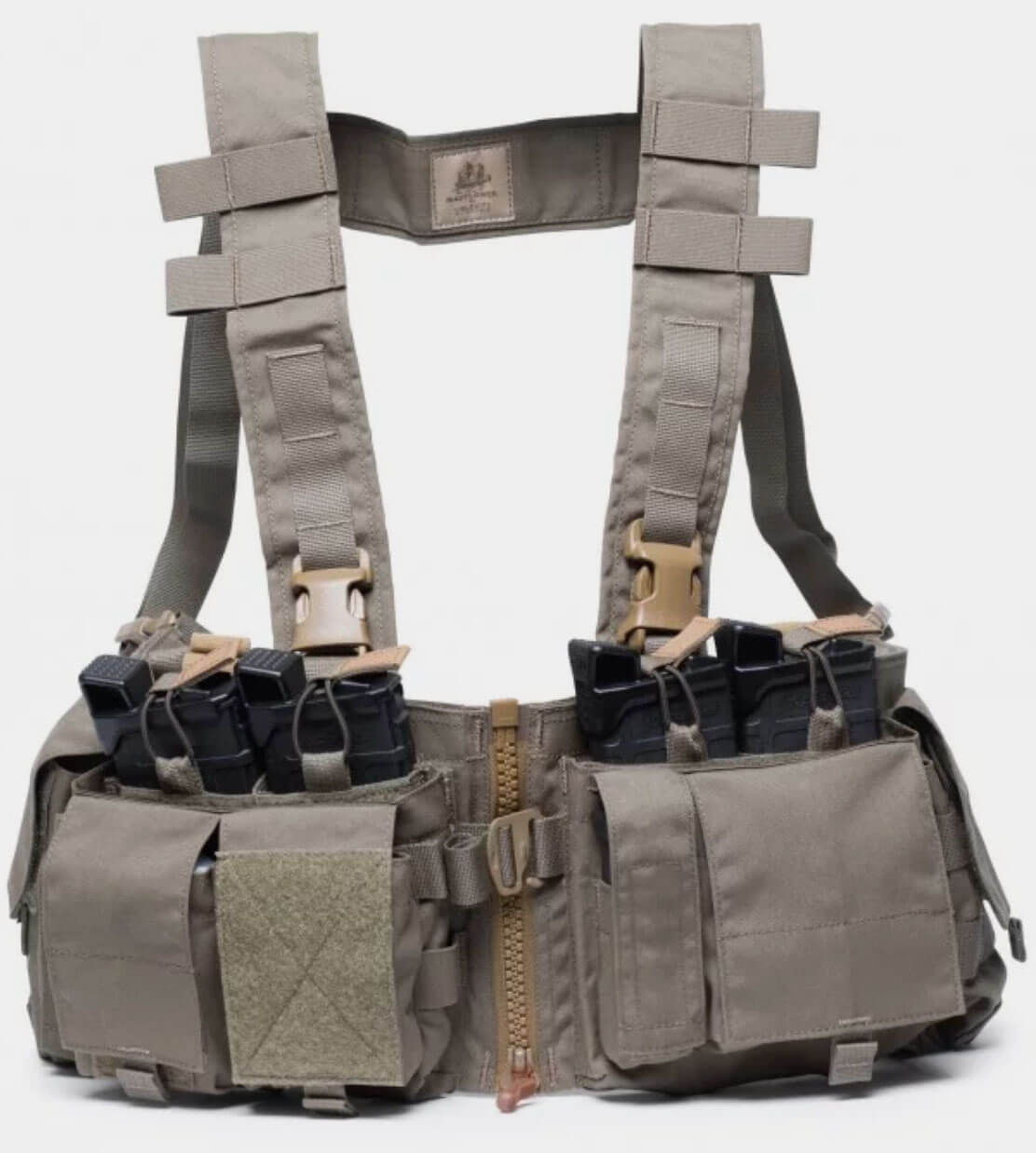
In today’s article, Clay Martin reviews the Mayflower Split-Front Chest Rig. For clarification, Mayflower was acquired by Velocity Systems, so the two brands are now part of one company. The Mayflower Chest Rig is the same as the Velocity Systems Chest Rig. The company provided the author with the current version of its rig for this review.
If you’re looking for a Mayflower Split-Front chest rig review that cuts through marketing noise and focuses on real-world application, this is it. I’ve spent enough time around gear to know that most of it either ends up sitting in a closet or gets overbuilt for problems you’ll never actually face.

This rig sits in a different category.
It’s not trying to turn you into a plate carrier-wearing door kicker. It’s not pretending you’re deploying overseas. What it does, quietly and effectively, is bridge the gap between everyday concealed carry and a more capable “things just got real” setup.
That’s where it earns its place.

The perspective here is grounded in practical use, not theory. The original discussion that shaped this review emphasized that balance point between normal life and preparedness, and that’s exactly how I approach gear like this.
Quick Summary
Strengths
- Compact and highly portable
- Modular magazine inserts (5.56, .308, AK)
- Split-front design improves ventilation and access
- Integrated admin and medical capability
- Comfortable H-harness for extended wear
Limitations
- Limited capacity compared to full chest rigs or plate carriers
- Not designed for armor integration
- Requires user setup (med kit, pouch organization)
Verdict
If you want a low-profile, scalable chest rig for emergency use, the Split-Front is one of the most practical options out there.
What the Mayflower Split-Front Chest Rig Is
The Mayflower Split-Front chest rig, originally developed under the Mayflower brand, is a lightweight, modular chest rig designed for carrying essential fighting and survival gear without going full tactical overload.

Velocity Systems and Mayflower are now the same company, combining armor expertise with soft gear design. That shows in how this rig is built: everything has a purpose, and nothing feels like filler.
At its core, this is a “grab-and-go” load-bearing platform. It’s designed for:
- Civilian emergency preparedness
- Vehicle-based gear setups
- Low-visibility or minimalist tactical use
- Supplementing concealed carry
This isn’t something you wear all day every day. It’s something you deploy when the situation changes.
Key Features and Components
Here’s where the Split-Front chest rig stands out: it’s compact, but intelligently laid out.
Core Layout
- Split-front zippered design
- Integrated magazine pouches with removable inserts
- Built-in admin and utility pouches
- Dedicated medical pouch
- H-style harness system
Magazine Compatibility
| Insert Type | Supported Platforms |
|---|---|
| 5.56 | AR-15 platforms |
| .308 | AR-10, M1A |
| AK | 7.62×39 rifles |
The removable insert system is one of the biggest advantages. You’re not locked into a single platform.
Pouch Configuration
Out of the box, you get:
- Dual-purpose side pouches (radio, pistol mags, multitool)
- General-purpose utility pouch
- Integrated IFAK pouch (empty, user-configured)
- Velcro field for additional magazine shingles (optional)
Harness System
The H-harness deserves mention. It distributes weight better than simple strap systems and avoids neck fatigue during longer wear periods.
How It Works / How I Use It
I don’t believe in building gear setups around fantasy scenarios. My baseline is simple:
- Concealed handgun
- Normal clothing
- Low profile
That solves almost everything.

But not everything.
This is where the Split-Front chest rig fits into my setup.
My Typical Configuration
When I set this rig up, I keep it lean:
- 2–3 rifle magazines
- 1–2 pistol magazines
- Tourniquet + trauma kit
- Flashlight
- Multitool
That’s it.
No unnecessary extras. No “just in case” overload.
Deployment Concept
This is what I’d call a “vehicle-based escalation system.”
- I’m out living normal life
- Something changes (natural disaster, civil unrest, etc.)
- I access my bag
- Chest rig goes on in seconds
- Capability increases immediately
That transition, from low profile to prepared, is where this rig shines.
Practical Use Cases
This isn’t a range toy. It’s meant for real-world scenarios.
1. Vehicle Emergency Kit
This is probably the most realistic application.
Keep it in a discreet bag. If something happens:
- Grab it
- Throw it on
- Move
You now have:
- Ammunition
- Medical capability
- Light
- Tools
2. Natural Disaster Response
After hurricanes or major storms (especially in places like Florida), infrastructure can break down fast.
This rig gives you:
- Hands-free mobility
- Immediate access to critical gear
- Better situational readiness
3. Rural Property Defense
If you live on acreage, response times matter.
This rig lets you:
- Step outside quickly
- Carry essential gear
- Stay mobile

4. Training and Range Use
It’s also a solid training platform:
- Lightweight enough for extended sessions
- Forces you to prioritize gear
- Easy to reconfigure
Pros and Cons
Pros
1. Compact Without Being Useless
A lot of minimalist rigs sacrifice capability. This one doesn’t.
2. Modular Magazine System
Switching between platforms is simple and effective.
3. Split-Front Design
This is more useful than it sounds:
- Easier access when wearing jackets
- Improved airflow in hot climates
4. Comfortable Load Distribution
The H-harness makes a difference, especially when moving.
5. Realistic Capacity
It carries what you actually need, not what looks cool online.

Cons
1. Limited Expansion Without Compromise
Yes, you can add more mags. You probably shouldn’t.
2. No Armor Integration
This is not a plate carrier substitute.
3. Requires Thoughtful Setup
It comes partially configured; you need to finish the job.
4. Not Ideal for Extended Operations
This is a short-duration solution, not a sustainment rig.
Comparison to Alternatives
Split-Front Chest Rig vs. Plate Carrier
| Feature | Split-Front Chest Rig | Plate Carrier |
|---|---|---|
| Weight | Light | Heavy |
| Protection | None | Ballistic |
| Mobility | High | Moderate |
| Setup Speed | Fast | Slower |
If you’re expecting incoming rounds, armor matters. Otherwise, mobility often wins.
Split-Front Chest Rig vs. Full Chest Rig
Full-size rigs give you:
- More ammo
- More pouches
- More bulk
The Split-Front gives you:
- Just enough
- Better portability
- Faster deployment
Split-Front Chest Rig vs. Battle Belt
Battle belts are great, but:
- They require belt compatibility
- They’re harder to stage in a bag
- They don’t scale as easily
The Split-Front rig is more self-contained and deployable.
Who This Is Best For
This rig makes the most sense for a specific type of user.
Ideal User Profile
- Carries concealed regularly
- Values low-profile preparedness
- Doesn’t want to walk around in full tactical gear
- Understands realistic threat scenarios
Not Ideal For
- People building a full combat loadout
- Those expecting extended engagements
- Anyone who prioritizes maximum capacity over mobility
Final Verdict
The Mayflower Split-Front chest rig isn’t flashy, and that’s exactly why it works.
It respects a simple truth: most of us are not operating in combat zones. But situations can change fast, and when they do, you need something that scales your capability without turning you into a walking gear rack.
This rig does that well.
It’s small enough to stash, fast enough to deploy, and capable enough to matter.
If you approach it with the right mindset, keep it light, keep it practical, it becomes one of the most useful pieces of gear you can own.
And in my experience, the gear you actually use is the only gear that matters.
Join the Discussion
Featured in this video
Share


Continue Reading


Did you enjoy this video?

 22
22
Springfield Armory® recommends you seek qualified and competent training from a certified instructor prior to handling any firearm, and to be sure to read your owner's manual. The views and opinions expressed on this website are those of the authors and do not represent the views and opinions of Springfield Armory.
Product prices mentioned in articles and videos are current as of the date of publication.

Clay Martin
Clay Martin is a former USMC Infantryman, Reconnaissance Marine, and Scout/Sniper. Cross decking to the US Army in 2003, he retired as a Special Forces Intelligence Sergeant from 3rd SFG (A). Clay has been a competitive shooter in USPSA, 3 Gun, and PRS disciplines, as well as a contract instructor for marksmanship and Close Quarters Battle. Aside from being a gunslinger, Clay is the author of Last Son of the War God, and the soon to be published Sword of the Caliphate series. He currently lives in the Pacific Northwest with his wife, sons, and pack of feral dogs.