





 June 3rd, 2019
 8:58 runtime
When I think about building a tactical AR-15 setup, I am not thinking about a rifle covered in accessories just to look cool. A real tactical rifle needs to be practical, reliable, and easy to run under stress. Recently, I spent time reviewing the SAINT Edge AR-15 and quickly realized it provides an excellent foundation for a well-balanced tactical rifle. In this post, I want to walk through my process for evaluating the rifle, the upgrades I made, and how I configured it into a practical tactical AR-15 setup.

Starting with a Solid AR-15 Platform
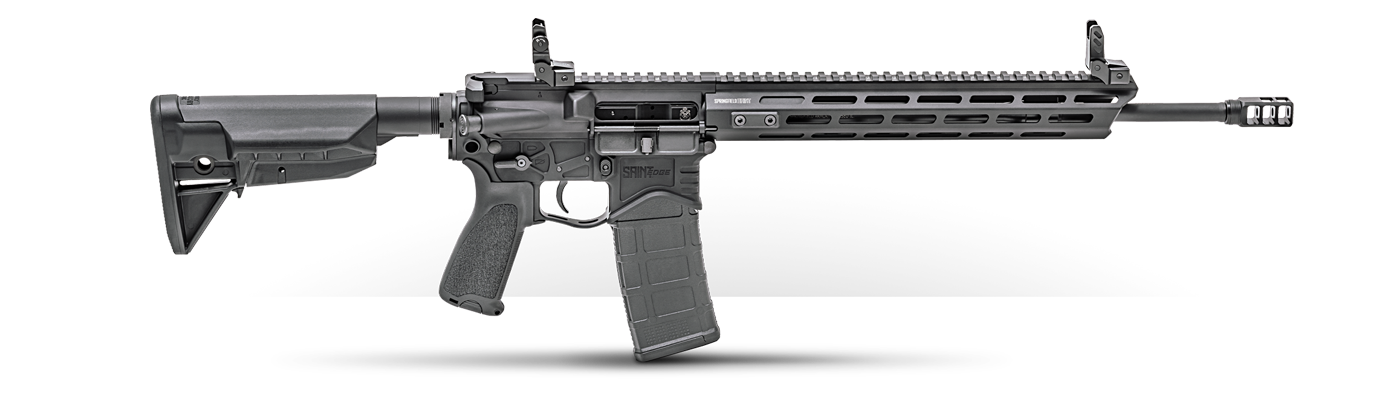
Every good tactical rifle starts with the right base platform. In my case, I began with the Springfield Armory SAINT Edge.
Right out of the box, this rifle impressed me. It already includes several upgrades that many shooters normally install themselves. The rifle comes with solid furniture, a quality trigger, and an oversized charging handle that makes manipulations easier when running drills.

The receivers are lightweight, which helps keep the overall rifle manageable during long training sessions or when carrying it in the field. A lighter rifle might not seem like a big deal at first, but after hiking with a rifle or running through several hours of drills, the weight becomes extremely noticeable.
Another feature I appreciated was the ambidextrous safety. I usually end up removing ambidextrous safeties on many rifles because they can interfere with my grip. However, with the grip design on this rifle, the safety actually worked well for me and did not cause the usual discomfort.
In short, the rifle already had many of the core features I look for in a tactical AR-15.
Lightweight Barrel and AR-15 Accuracy
One thing that always sparks debate in the AR-15 community is barrel profile. Some shooters insist that heavier barrels are necessary because they resist heat better during extended firing.
That is true to a certain point, but there is always a tradeoff.

A heavier barrel adds weight to the rifle, and weight matters if you ever have to carry your rifle for long periods of time. In my experience, a lightweight barrel often makes far more sense for a practical tactical setup.
The barrel on the SAINT Edge is a lightweight profile, and during testing, it delivered impressive accuracy. I was able to achieve just under one minute of angle, which is excellent performance for a lightweight AR-15.
For a rifle that is intended to be carried and used dynamically rather than fired from a bench all day, that level of accuracy is more than enough.
Muzzle Brake vs. Flash Hider for Tactical Use
One of the first things I noticed on the rifle was the factory muzzle brake. It does its job extremely well.
A muzzle brake dramatically reduces recoil and keeps the rifle flat during rapid fire. When shooting quickly between targets, that control is noticeable.

However, muzzle brakes come with several downsides that make them less ideal for a tactical AR-15 setup.
First, they are extremely loud. The blast is directed outward to the sides, which makes the rifle unpleasant for anyone standing nearby. If you are training with a team or attending a class, the people next to you will absolutely feel it.
Second, muzzle brakes create a large flash signature. At night, it can look like a fireball coming out of the end of your rifle. That is the opposite of what you want in a tactical scenario.
Third, the concussion inside confined spaces like vehicles or buildings can be brutal.
Because of those factors, I decided that the muzzle brake needed to be replaced.
Installing a Tactical AR-15 Flash Hider
Instead of the muzzle brake, I installed a three-prong flash hider.
This type of flash suppressor is designed to reduce visible muzzle flash while also minimizing the blast signature. The design is similar to the original flash hiders used on early military rifles, but modern versions often include improvements that further reduce noise and flash.

One advantage I really like about this type of flash hider is that it does not require timing. Many muzzle devices require careful alignment with crush washers to ensure the ports are oriented correctly.
With this flash hider, I was able to install it quickly without worrying about perfect alignment.
Once installed, the rifle was noticeably better suited for tactical use. The recoil control was slightly reduced compared to the muzzle brake, but the improvement in flash and blast signature was absolutely worth it.
Adding Essential AR-15 Accessories
With the muzzle device sorted out, I moved on to the accessories that I consider essential for a tactical AR-15 setup.
The rifle uses an M-LOK compatible handguard, which makes mounting accessories simple and flexible.
I added several M-LOK sections where I needed them. One section went on the bottom of the handguard so I could mount a bipod for accuracy testing when needed. The others were placed on the side of the rail for mounting accessories.
The ability to customize rail placement makes M-LOK systems extremely practical.
Rather than covering the entire handguard with bulky rails, you can place mounting points exactly where they are needed.
Weapon Light for Low Light Shooting
A weapon-mounted light is one accessory that I consider extremely important on a tactical rifle.
Positive identification of a target is critical, especially in low-light environments. Without a light, you may not be able to see clearly enough to make safe decisions.

For this build, I chose a SureFire Mini Scout light review. I’ve previously tested it, and it is compact, durable, and widely trusted by both military and law enforcement users.
I mounted the light on the side of the handguard so it could be easily activated with my support hand. The pressure switch was secured using both Velcro and a zip tie.
The zip tie may seem like a small detail, but it prevents the switch from coming loose during training or heavy use. Having a cable or switch suddenly start flopping around during a drill is incredibly frustrating, so securing it properly is worth the extra effort.
Choosing the Right AR-15 Sling Setup
A sling is another critical component of a tactical rifle setup. We’ve previously explored selecting the best one in our article What Is the Best AR-15 Sling?
I prefer a two-point sling because it provides a good balance between stability and mobility. A properly adjusted sling allows you to transition between positions, secure the rifle when needed, and maintain control during movement.

The stock on the rifle already includes a quick-detach sling point, which made installation simple.
Once the sling was mounted, the rifle felt far more manageable when transitioning between tasks or moving around the range. You can learn how to use a two-point sling fairly easily.
Red Dot Optic for a Tactical AR-15
The final piece of the setup was the optic.
For a tactical AR-15, I typically prefer either a red dot sight or a low-power variable optic (LPVO). Both options have their advantages depending on how the rifle will be used.
For this particular setup, I chose a red dot optic. You can explore which is better here: LPVO vs. Red Dot.
Red dot sights are extremely fast for target acquisition and work very well at typical engagement distances. They allow you to keep both eyes open and quickly move between targets.
I mounted the optic so that it provided an absolute co-witness with the iron sights. This means that when the iron sights are flipped up, the red dot sits directly on top of the front sight post.
That setup makes zeroing the optic simple. Once the iron sights are zeroed, the red dot can be adjusted to align with them. I recommend checking out Steve Horman’s article on how to zero an AR-15.
Testing the Tactical AR-15 Setup
After installing the flash hider, accessories, light, sling, and optic, it was time to test the rifle again.
Running drills with the new configuration showed that the rifle was still very controllable. While the muzzle brake had slightly better recoil control, the difference was minor.

The major improvement was the reduction in flash and blast.
The rifle felt more practical and more comfortable to run in realistic scenarios. The weapon light allowed me to easily activate illumination during drills, and the red dot made target transitions fast and intuitive.
Overall, the rifle handled exactly the way I want a tactical AR-15 to handle.
Final Thoughts on Building a Tactical AR-15 Setup
Building a tactical AR-15 setup is not about attaching every accessory you can find. The goal is to create a rifle that works efficiently for real-world use.
Starting with a strong base rifle like the SAINT Edge makes the process much easier. From there, the focus should be on practical upgrades that improve usability without adding unnecessary complexity.
For me, the key elements of this setup were simple.
A reliable rifle platform, a flash hider that reduces signature, a durable weapon light, a functional sling, and a fast optic.
With those components in place, the rifle became a well-balanced tactical tool that performs exactly the way I want it to.
Sometimes the best setups are not the most complicated ones. They are simply the ones that work.
Join the Discussion
Featured in this video
Share


Continue Reading


Did you enjoy this video?

 35
35
Springfield Armory® recommends you seek qualified and competent training from a
certified instructor prior to handling any firearm and be sure to read your owner’s manual. These
articles and videos are considered to be suggestions and not recommendations from Springfield Armory. The views
and opinions expressed on this website are those of the authors and do not necessarily reflect the
views and opinions of Springfield Armory.
Product prices mentioned in articles and videos are current as of the date of publication.

Clay Martin
Clay Martin is a former USMC Infantryman, Reconnaissance Marine, and Scout/Sniper. Cross decking to the US Army in 2003, he retired as a Special Forces Intelligence Sergeant from 3rd SFG (A). Clay has been a competitive shooter in USPSA, 3 Gun, and PRS disciplines, as well as a contract instructor for marksmanship and Close Quarters Battle. Aside from being a gunslinger, Clay is the author of Last Son of the War God, and the soon to be published Sword of the Caliphate series. He currently lives in the Pacific Northwest with his wife, sons, and pack of feral dogs.