




 July 22nd, 2019
 6:52 runtime
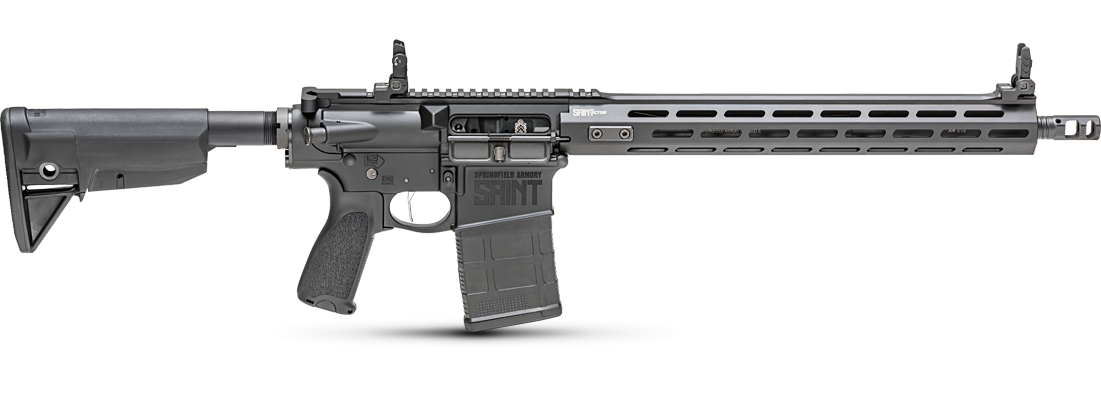
When I showed up at Cowtown USA Range to work with Freddie Blish, I knew I was about to learn something useful. The training focus of the day was the Springfield Armory SAINT Victor .308, and more specifically, how to train with it at close range in a way that actually translates to real performance.

I have run a lot of rifles over the years, but the SAINT Victor .308 sits in an interesting space. It is a battle rifle in a true sense, yet many of the same carbine skills from a 5.56 platform carry over. The challenge is understanding the differences and training around them.
Understanding Mechanical Offset at Close Distance
The very first lesson we covered was mechanical offset. On the AR platform, the optic’s centerline sits roughly 2.5″ above the bore centerline. That matters a lot when targets are close.

At 10 yards, if I put my dot exactly where I want the round to land, I will hit low. The fix is simple but easy to forget. I need to hold about two inches above my intended impact point. For shooting around barricades, the offset is important as you could easily hit the barricade instead of the target you are seeing through the optic or sights.
Freddie explained it in a way that stuck with me. This is not a traditional bolt gun with a drop comb. This is a straight stock system. If I mount the optic too low or forget about offset, my hits will always be off at close range.
Running Control Pairs with the SAINT Victor .308
We started with control pairs. Two well-aimed shots, each with a full sight picture.
The goal here was not speed. It was precision and consistency. I held just above the “T” box on the target, accounting for the offset, and let the rifle do its job.

The result was immediate feedback. When I respected the offset, the rounds landed exactly where they were supposed to. It reinforced how important this concept is when working inside of 25 yards.
Learning Hammer Pairs with a .308
Next, we moved into hammer pairs. Two shots, one sight picture.
With a .308, this is more demanding than with a lighter carbine. Recoil management becomes critical. I had to pull the rifle firmly into my shoulder, stay aggressive in my stance, and trust my grip.
My first attempt was high. That was on me. I forgot that holding high and then adding offset stacks errors. Once I brought the crosshair back to the top of the scoring area and let the offset work for me, both rounds stayed in the chest cavity.
This drill showed me that the SAINT Victor .308 can absolutely be run fast, but only if fundamentals are solid.
Failure to Stop Drill
The final drill tied everything together. A hammer pair to the chest, followed by a single round to the head. This is a failure to stop drill, which is very similar to the Mozambique drill.

This is where training becomes real. Transitioning from recoil control to a precise head shot forces discipline. I had to manage the rifle, recover the sight, and apply offset again for that final shot.
When the hits came together, it felt like all the pieces clicked at once. Control pair skills, hammer pair recoil management, and mechanical offset awareness all merged into one clean string.
Why the SAINT Victor .308 Demands Thoughtful Training
What stood out to me most is how unforgiving this rifle can be if I get lazy. The SAINT Victor .308 rewards correct setup, correct optic height, and disciplined aiming. It punishes shortcuts.

Freddie made a point I completely agree with. Too many shooters mount optics too low and try to treat this like a traditional rifle. On the AR platform, that mistake shows up fast at close range.
This session reminded me that training is not about burning ammo. It is about understanding the system, respecting the rifle’s geometry, and building habits that hold up under pressure.
Closing Thoughts on Training with the SAINT Victor .308
Training with the SAINT Victor .308 gave me a deeper appreciation for what a true battle rifle demands. The skills are transferable from a 5.56 carbine, but the margin for error is smaller, and the consequences of bad technique are bigger.
Control pairs, hammer pairs, and failure to stop drills are simple on paper. With a .308, they become a serious test of fundamentals.
I left the range better than I arrived, and that is the whole point of training.
Join the Discussion
Featured in this video
Share


Continue Reading


Did you enjoy this video?

 21
21
Springfield Armory® recommends you seek qualified and competent training from a certified instructor prior to handling any firearm, and to be sure to read your owner's manual. The views and opinions expressed on this website are those of the authors and do not represent the views and opinions of Springfield Armory.
Product prices mentioned in articles and videos are current as of the date of publication.

Yamil Sued
Yamil is a graduate of the prestigious Brooks Institute of Photographic Arts and Sciences in Santa Barbara, CA with a Major in Illustration Photography and Color Technology with over 34 years of professional experience. Yamil started his professional relationship with the Shooting Industry in 1995 and has since worked with companies like Springfield Armory, S&W, Glock, FNH USA, Remington, Bushmaster, Bushnell, Leupold, Aimpoint, PWS, Vortex Optics, Cor-Bon Ammunition, ERGO Grips, AmeriGlo Sights, Krause Publications, Comp Tac Victory Gear, The Beta Company, IDPA, MGM Targets, Rainier Ballistics, Rock Castle Shooting Center, SIG Sauer and was a Staff Photographer for Cabela’s in Sidney, NE. Yamil is also a Writer and Photographer for Guns & Ammo, Guns & Ammo SIP's and Gun Digest.