





 June 19th, 2019
 2:45 runtime
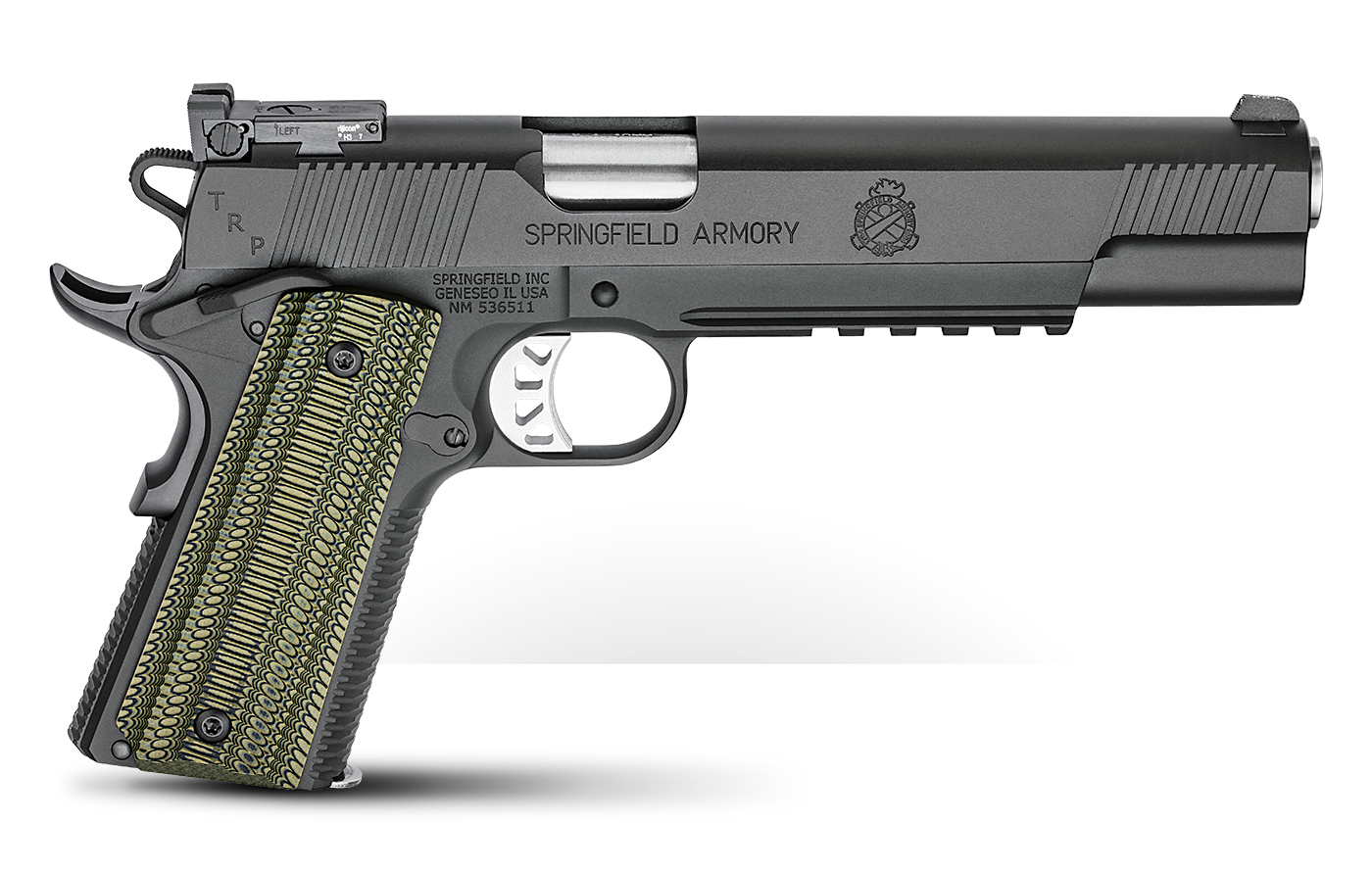
When I think about upgrades to my nightstand gun, I am not thinking small. My bedside setup is a Springfield Armory 10 mm Auto 1911-style pistol because I am not messing around when it comes to home defense.

Over the years, one of the biggest questions I have wrestled with is what to mount on it. A flashlight or a laser. Both have real advantages. Both solve different problems. And when you start working through non-standard response drill scenarios, the answer becomes clear. Having both is a serious advantage.
The non-standard response drill focuses on solving problems when things do not look perfect. It is about engaging from awkward positions, in low light, under stress, and sometimes without a textbook stance. That is where a high-quality light-and-laser combination starts to shine.
Why Lighting Matters
Most defensive encounters inside the home occur in low light. It might be the middle of the night. It might be a dark hallway. It might be a shadowed living room. If I cannot see clearly, I cannot make good decisions. That is step one.

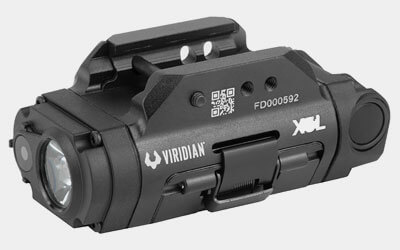
The light I run is a 500-lumen unit. Indoors, that is more than enough. In my house, the furthest shot I could realistically take is across my living room. When I hit that light, the entire space is illuminated. I can positively identify what I am looking at. I can see hands. I can see movement. I can see whether I am facing a threat or something else entirely.
For non-standard response drill training, this is critical. When I am working from unconventional positions, like kneeling behind furniture or leaning around a doorway, I do not want to also fight the darkness. The light simplifies the visual problem, allowing me to focus on movement and positioning.
The Role of the Laser in Awkward Positions
The green laser is the part that really changes the game for me. In bright sunlight, it can be harder to see, but indoors, it is incredibly visible. Even during the day, I can still track it to my target.

In a traditional shooting stance, I rely on my sights. Front sight focus, good alignment, clean trigger press. That is the foundation. But the non-standard response drill is not always about textbook form. It is about solving the problem when I cannot get a perfect sight picture.
If I am forced to shoot from retention. If I am holding the pistol close to my body because the space is tight. If I am angled awkwardly around cover. The laser provides an immediate reference point for the target. Aiming becomes much easier under stress because I do not have to align iron sights at eye level.
Aiming, in those moments, is the easy part. Managing recoil and controlling the gun still requires skill. But that initial confirmation that I am on target is dramatically faster with a visible laser.
Mounting for Performance and Flexibility
One of the things I appreciate most about running a combined light-and-laser setup is how simple the mounting system is. As long as I have a Picatinny rail, I am in business. I clear the gun, slide the unit onto the rail where I want it, and lock it down. It is straightforward and secure.

On my 1911-style pistol, the activation switch falls right where my thumb naturally rests. That matters more than people think. In a defensive scenario, I do not want to shift my grip to activate my equipment. The more natural the controls feel, the more consistent I will be under stress.
Where this really gets interesting for non-standard response drill work is when I mount the unit on a different platform, like an AR-style pistol with a Picatinny rail. Instead of mounting the light under the hood as usual, I can mount it on top. That sounds unconventional, but there is a purpose behind it.
With a top mount, the activation switch is still accessible with my support hand thumb. It also acts a bit like a hand stop, helping me index my grip in the same place every time. When I am working through unconventional shooting positions, that consistency matters.
Hip Shooting and the Non-Standard Response Drill
Let’s talk about something that makes people uncomfortable. Shooting from the hip.
In a perfect world, I shoulder the gun, build a solid stance, and use my sights. In a non-standard response drill, I prepare for the imperfect world. Maybe I cannot shoulder the firearm. Maybe I am behind cover that prevents a full presentation. Maybe I am moving.

With a laser and light combination, I can engage from the hip if necessary. Is it ideal for recoil management? No. But it gives me the capability.
The laser provides an aiming reference even when the firearm is not at eye level. The light ensures I can see what I am engaging. That combination allows me to train realistically for close-quarters defensive scenarios inside the home.
The key is not to rely on gimmicks. The key is to integrate this equipment into structured training. I practice activating the light and laser as part of my presentation. I practice engaging from compressed positions. I practice moving through my home in a safe, dry fire environment so that muscle memory is built before I ever need it.
Turning Up the Capability of a Home Defense Pistol
When people talk about upgrading a home defense pistol, they often focus on triggers or cosmetics. For me, capability matters more than appearance. A reliable light and laser combination meaningfully expands what I can do in low light and unconventional positions.

The non-standard response drill forces me to confront reality. I may not have perfect posture. I may not have two hands fully extended. I may not even be able to bring the firearm to eye level. Equipment that supports those realities is not a luxury. It is a force multiplier.
That does not replace fundamentals. I still need recoil control. I still need discipline. I still need to identify my target and what is beyond it. But when aiming becomes simpler because of a visible laser, I can devote more mental bandwidth to tactics and decision-making.
Final Thoughts
At the range, under bright lights, standing upright in a lane, almost any setup works. The real world is different. The non-standard response drill exists to bridge that gap between the square range and the unpredictable environment of a home defense scenario.
For me, adding a 500-lumen light and a green laser to my nightstand pistol was not about looking cool. It was about preparing for less-than-perfect conditions. It was about acknowledging that I may need to shoot from retention, from the hip, or from behind cover. It was about making aiming the easy part, so I can focus on everything else that matters.
If you are serious about home defense, do not just practice the ideal scenario. Train for the messy one. That is where the non-standard response drill lives. And that is where a high-quality light-and-laser combination truly earns its place on your firearm.
Join the Discussion
Featured in this video
Share


Continue Reading


Did you enjoy this video?

 19
19
Springfield Armory® recommends you seek qualified and competent training from a
certified instructor prior to handling any firearm and be sure to read your owner’s manual. These
articles and videos are considered to be suggestions and not recommendations from Springfield Armory. The views
and opinions expressed on this website are those of the authors and do not necessarily reflect the
views and opinions of Springfield Armory.
Product prices mentioned in articles and videos are current as of the date of publication.

Clay Martin
Clay Martin is a former USMC Infantryman, Reconnaissance Marine, and Scout/Sniper. Cross decking to the US Army in 2003, he retired as a Special Forces Intelligence Sergeant from 3rd SFG (A). Clay has been a competitive shooter in USPSA, 3 Gun, and PRS disciplines, as well as a contract instructor for marksmanship and Close Quarters Battle. Aside from being a gunslinger, Clay is the author of Last Son of the War God, and the soon to be published Sword of the Caliphate series. He currently lives in the Pacific Northwest with his wife, sons, and pack of feral dogs.