





 July 9th, 2019
 2:52 runtime
When I started looking for a compact, low-profile optic for a compact AR pistol setup, I wasn’t chasing trends — I was trying to solve a specific problem. I wanted something durable, simple, and unobtrusive that wouldn’t get in the way when working in tight spaces, especially inside a vehicle or when pulling a firearm from a bag.

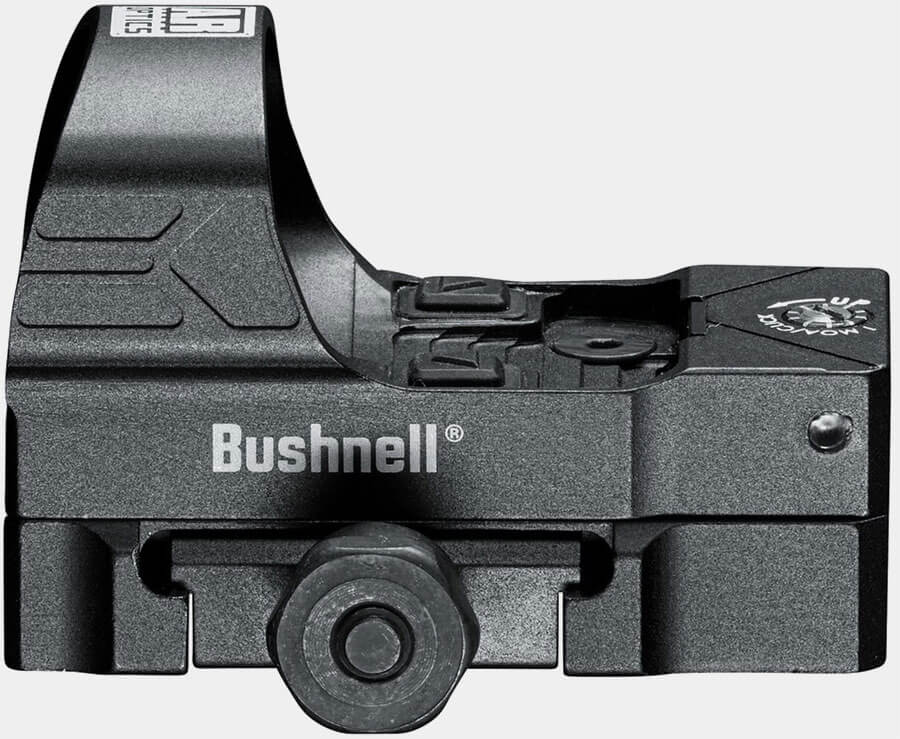
That search led me to the Bushnell First Strike 2.0. In this Bushnell First Strike 2.0 review, I’m going to walk through how it performs in real-world use, where it makes sense, and where it doesn’t. This isn’t a spec-sheet breakdown — it’s a practical evaluation from someone who actually runs this kind of gear.
If you’re a concealed carrier or someone who keeps a truck gun, you’ll probably recognize the use case immediately.
Quick Summary
Strengths:
- Extremely compact and lightweight
- Comes with both low and high mounts
- Easy battery access without removing the optic
- Bright, usable dot for close-range work
- Affordable price point (around $200)
Limitations:
- Low mount restricts field of view on rifles
- Not ideal for traditional upright shooting posture
- Limited track record compared to premium optics
- Not designed for long-range precision
Verdict:
For close-range defensive setups — especially AR pistols or compact truck guns — the First Strike 2.0 is a solid, practical option. It’s not trying to compete with high-end duty optics, and that’s fine. It fills a specific niche well.
What the Bushnell First Strike 2.0 Is
The Bushnell First Strike 2.0 is a compact reflex red dot sight designed primarily for close-quarters shooting. It’s part of the micro red dot category — small optics that prioritize speed, simplicity, and minimal footprint.

Unlike traditional tube-style red dots, this is an open reflex design. That means:
- You’re looking through a small window
- The dot is projected onto the lens
- There’s no enclosed tube body
This keeps weight down and profile low, which is exactly why I started looking at it in the first place.
It’s marketed for a range of platforms:
- AR-style rifles and pistols
- Shotguns
- Rimfire setups
- Even handguns in some configurations
But in my experience, where it really shines is on compact defensive builds.
Key Features and Components
Here’s a breakdown of what you’re actually getting.

Core Features
- 3 MOA red dot (fast acquisition, suitable for close to mid-range)
- Multiple brightness settings
- Top-mounted controls
- Side battery tray
- Shock-resistant housing
- Lightweight aluminum construction
Mounting Options
One thing Bushnell did right here was to include both mounting configurations:
| Feature | Description |
|---|---|
| Low mount | Ideal for low-profile builds, pistols, and compact storage |
| High mount | Better for traditional rifle use and upright shooting |
| Picatinny compatibility | Standard rail interface |
That flexibility matters more than people think. It lets you adapt the optic to your specific use case without buying additional parts.
How It Works / How I Use It
At its core, the First Strike 2.0 works like any other reflex sight:
- The LED projects a dot onto the lens
- You place that dot on your target
- Wherever the dot is, that’s where your round goes (assuming proper zero)
Simple, and that’s the point.
My Setup
I primarily run this optic on a compact AR pistol setup configured as a truck gun. That means:
- Stored in a standard backpack
- Not a dedicated rifle bag
- Needs to be discreet and compact
- Must deploy quickly in confined spaces
That’s where the low-profile mount becomes important.

Why I Chose the Low Mount
Most shooters are used to elevated optics for good reason:
- Better head position
- Wider field of view
- Easier target tracking
But inside a vehicle or when working from a confined space, those advantages shift.
With a low mount:
- The overall height of the firearm decreases
- It’s easier to store in smaller bags
- Less snagging during deployment
- More natural alignment in unconventional shooting positions
The trade-off? You sacrifice some visibility and comfort when shooting upright.
That’s a conscious decision, not a flaw.
Practical Use Cases
This optic isn’t trying to be everything. It’s designed for specific roles, and when you use it in those roles, it makes sense.

1. Truck Gun Setup
This is where I think the First Strike 2.0 makes the most sense.
Why it works:
- Low profile fits better in a backpack
- Quick target acquisition at close range
- Minimal bulk inside a vehicle
I also tend to run a 20-round magazine instead of a 30-round in this setup. That combination — short mag + low optic — keeps the entire system compact and manageable.
2. Home Defense AR Pistol
For a bedside or staged firearm:
- Engagement distances are short
- Speed matters more than precision
- Simplicity is critical under stress
The First Strike delivers on all three.
3. Backup or Secondary Optic
If you run a primary optic like an LPVO or magnified scope, this can serve as a lightweight alternative on another platform without breaking the bank.
4. Range Training for Close Quarters
If you’re working on:
- Target transitions
- Snap shooting
- Close-range drills
The small window actually forces you to be more deliberate with presentation and alignment.

Pros and Cons
Pros
1. Compact Size
This thing is small — noticeably smaller than most budget red dots. That matters for storage and maneuverability.
2. Easy Battery Access
The side-mounted battery tray is a big deal. You don’t have to remove the optic to swap batteries, which means:
- No loss of zero
- Faster maintenance
- Less hassle overall
3. Bright, Usable Dot
Even in daylight, the dot is easy to pick up. It’s not overly refined, but it’s functional.
4. Included Mount Options
Getting both low and high mounts out of the box adds real value.
5. Affordable
At around $199, it sits in a reasonable price range for what it offers.
Cons
1. Limited Field of View (Low Mount)
When mounted low on a rifle, you’ll notice:
- More head movement required
- Reduced situational awareness
- Less natural shooting posture
This is the biggest trade-off.
2. Not Built for Long Range
This is a close-range optic. Trying to stretch it beyond 100–150 yards isn’t where it excels.
3. Open Reflex Design
Compared to enclosed optics:
- More exposure to debris
- Less protection in harsh environments
4. Track Record
Bushnell has a solid reputation overall, but this optic doesn’t have the same long-term duty-proven history as higher-end brands.
Comparison to Alternatives
Let’s put this in context.
vs. Budget Tube Red Dots
Examples: Primary Arms Micro Dot
- Pros of First Strike 2.0:
- Smaller footprint
- Lower profile
- Lighter weight
- Cons:
- Less durability in extreme conditions
- Smaller viewing window
- Not as versatile
vs. Premium Micro Red Dots
Examples: Aimpoint Micro series, Trijicon MRO
- Pros:
- Much cheaper
- Simpler feature set
- Good enough for most civilian defensive use
- Cons:
- Not as rugged
- Shorter track record
- Fewer advanced features
vs. Pistol Red Dot Optics
Examples: RMR-style optics
- Larger than most pistol optics
- Smaller than rifle optics
- Not always compatible with handgun slides without modification
Who This Is Best For
This optic isn’t for everyone — and that’s a good thing.
Ideal Users
- Concealed carriers who maintain a truck gun
- Shooters running compact AR pistol builds
- Those who prioritize low-profile setups
- Budget-conscious buyers who still want reliability
- Users focused on close-range defensive scenarios
Not Ideal For
- Long-range shooters
- Duty use in extreme environments
- Users who prefer a traditional upright shooting posture
- Anyone who relies heavily on co-witnessing with iron sights
Final Verdict
The Bushnell First Strike 2.0 does exactly what it’s supposed to do — and nothing more.
If you try to force it into roles it wasn’t designed for, you’ll be disappointed. But if you use it as intended — a compact, low-profile red dot for close-range defensive use — it holds its own.
What I appreciate most is the practicality:
- It’s easy to mount
- Easy to adjust
- Easy to maintain
- And easy to live with day-to-day
For my purposes — running a discreet AR pistol setup in a vehicle — it checks the boxes that matter.
Would I replace a duty-grade optic with it? No.
Would I trust it in a realistic defensive scenario within its intended range? Yes.
And for around $200, that’s a reasonable place to land.
Join the Discussion
Featured in this video
Share


Continue Reading


Did you enjoy this video?

 24
24
Springfield Armory® recommends you seek qualified and competent training from a
certified instructor prior to handling any firearm and be sure to read your owner’s manual. These
articles and videos are considered to be suggestions and not recommendations from Springfield Armory. The views
and opinions expressed on this website are those of the authors and do not necessarily reflect the
views and opinions of Springfield Armory.
Product prices mentioned in articles and videos are current as of the date of publication.

Clay Martin
Clay Martin is a former USMC Infantryman, Reconnaissance Marine, and Scout/Sniper. Cross decking to the US Army in 2003, he retired as a Special Forces Intelligence Sergeant from 3rd SFG (A). Clay has been a competitive shooter in USPSA, 3 Gun, and PRS disciplines, as well as a contract instructor for marksmanship and Close Quarters Battle. Aside from being a gunslinger, Clay is the author of Last Son of the War God, and the soon to be published Sword of the Caliphate series. He currently lives in the Pacific Northwest with his wife, sons, and pack of feral dogs.