





 July 17th, 2019
 4:50 runtime
Spending time on the range with good people always sharpens my perspective, and this session was no exception. I was out at the range working with my friend Freddie Blish, an instructor at Gunsite, and we were digging into a feature that does not get nearly enough appreciation these days. The double strike capability of the polymer-framed Springfield Armory XD-E. In a world dominated by striker-fired pistols, revisiting a double-action/single-action design felt both refreshing and deeply practical.

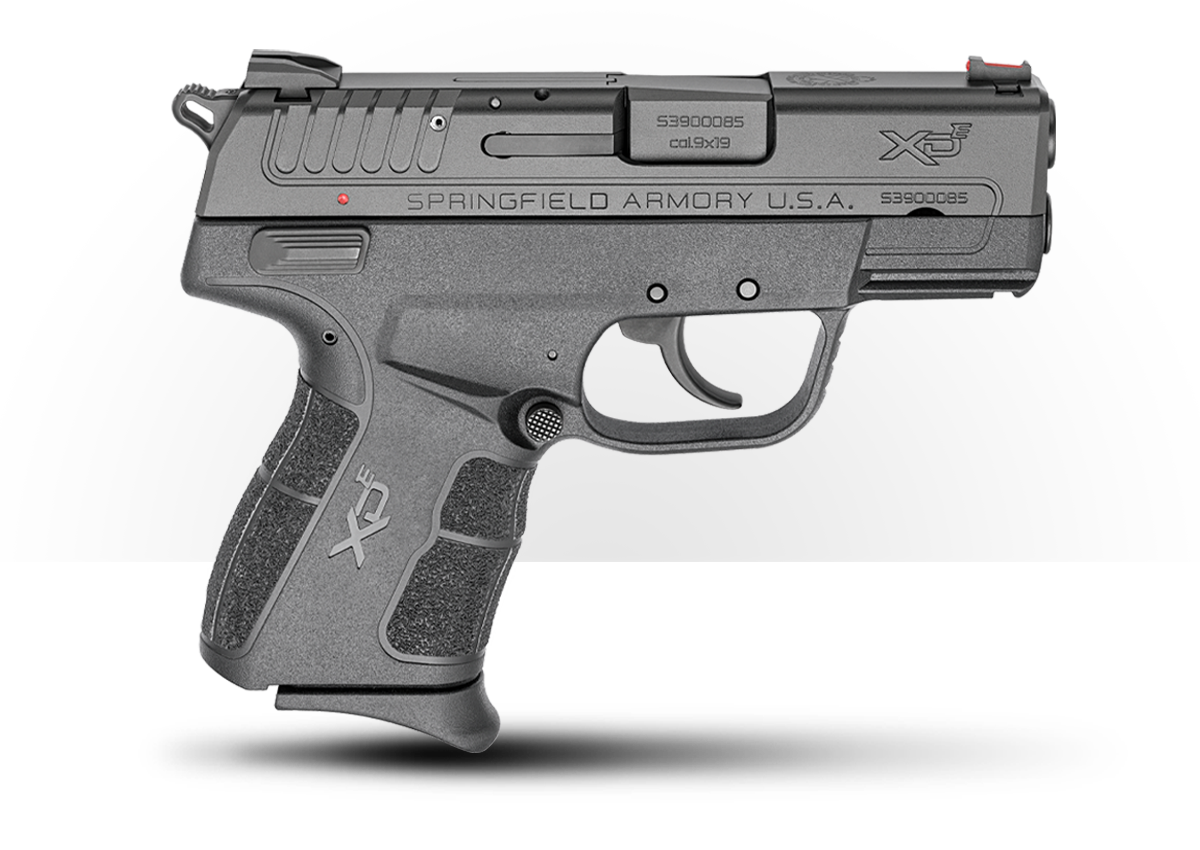
The pistol we were running was the XD-E from Springfield Armory. It is a compact, single-stack 9mm that carries easily and shoots far better than its size would suggest. What really sets it apart, though, is how it handles one of the most common and stressful problems a shooter can face. A failure to fire.
Understanding the Failure to Fire
A type one malfunction, commonly called a failure to fire, happens when you press the trigger and nothing goes bang. There is no recoil, no report, just a dead trigger press and a lot of questions if you are not prepared. The causes can vary. Light primer strikes. Hard primers. Bad ammo. High primers, especially for those of us who reload.

This is where the XD-E’s double-action trigger earns its keep. With a striker-fired pistol, a dead trigger almost always means you are going straight into a tap rack sequence. With a double-action/single-action pistol like the XD-E, you have an immediate option. Press the trigger again.
That second trigger press gives the hammer another run at the primer. If the first strike was light or the primer was slightly stubborn, that second hit can solve the problem instantly. No extra movement. No change in grip. Just press again and see if the gun goes bang.
Why Double Strike Matters
I have personally experienced the value of double strike capability. Years ago, I loaded a batch of ammunition with high primers. It was my fault. I did not seat them all the way. On the range, those rounds failed to fire on the first hit but went off cleanly on the second strike from a double action pistol.

That experience stuck with me. Mechanical redundancy is not a bad thing when lives or performance are on the line. The XD-E gives you that redundancy without adding complexity to your manual of arms.
Freddie and I talked through this exact scenario. The double-action trigger allows you to attempt ignition again immediately. If it works, you are back in business. If it does not, you have confirmed that the cartridge itself is the problem, and it is time to clear it.
Running the Drill on the Range
To demonstrate this, I set up a simple but realistic drill. I loaded the magazine with a dummy round as the first cartridge. Everything else was live. The goal was to induce a failure to fire and work through it in real time.
I chambered the round, confirmed the pistol was ready, and pressed the trigger. Click. Nothing. I pressed the trigger again. Click. At that point, I knew exactly what was going on. Bad round.

Now I transitioned into remedial action. Tap. Roll. Rack. The dummy round was ejected cleanly, a fresh cartridge chambered, and the pistol was immediately back in the fight. The process was smooth, deliberate, and confidence-building.
This is where training and equipment intersect. The XD-E gave me options, and training told me when to move from one option to the next.
Carry Considerations and Trigger Safety
Another major advantage of the XD-E is how it carries. The long double-action trigger pull provides a margin of safety that many shooters appreciate, especially those who carry appendix. That deliberate first trigger press reduces the likelihood of a negligent discharge during holstering or movement.
For shooters who are hesitant about striker-fired pistols for concealed carry, this design can be a game changer. You still get a crisp single-action trigger after the first shot, but the initial pull adds peace of mind without sacrificing performance.

The pistol also features a decocker, which allows you to safely lower the hammer without touching the trigger. This lets you carry the pistol in a decocked state with confidence. Some people used to call this half cock, but the key point is that the pistol is secure and ready for a deliberate first shot.
Shooting Performance at Distance
Despite its compact size, the XD-E shoots exceptionally well. At ten yards, the hits came easily and consistently. The grip geometry, trigger reach, and sight picture all work together in a way that inspires confidence.
This is not just a backup gun. It is fully capable of serving as a primary concealed carry pistol. Its slim profile makes it comfortable to carry all day, while its accuracy makes it effective when it matters.
Freddie and I both agreed that it would also make an excellent backup pistol. Whether carried on the belt or staged as a secondary option, the XD-E offers reliability and flexibility that should not be overlooked.
Training Implications
The biggest takeaway from this session was the importance of understanding your equipment. Knowing that your pistol has double strike capability changes how you diagnose and respond to a malfunction. It buys you time and options.
That does not mean you ignore malfunction clearance drills. Quite the opposite. You still need to be fluent in tap rack techniques and remedial actions. The difference is that the XD-E lets you attempt the simplest solution first. Press the trigger again.
If it works, great. If it does not, you have lost nothing and gained information.
Final Thoughts on the XD-E
The XD-E may not be the newest or flashiest pistol on the market, but it brings real-world advantages that matter. Double strike capability. A safe and deliberate trigger system. Compact size with excellent shootability.
As we wrapped up the session, I found myself appreciating how thoughtfully this pistol is designed. It balances modern expectations with proven mechanics. It rewards good training and provides backup options when things do not go as planned.
If you value reliability, flexibility, and a little extra forgiveness when ammunition or conditions are less than perfect, the XD-E deserves a serious look. Double strike with the XD-E is not just a feature. It is a mindset.
Join the Discussion
Featured in this video
Share


Continue Reading


Did you enjoy this video?

 28
28
Springfield Armory® recommends you seek qualified and competent training from a
certified instructor prior to handling any firearm and be sure to read your owner’s manual. These
articles and videos are considered to be suggestions and not recommendations from Springfield Armory. The views
and opinions expressed on this website are those of the authors and do not necessarily reflect the
views and opinions of Springfield Armory.
Product prices mentioned in articles and videos are current as of the date of publication.

Yamil Sued
Yamil is a graduate of the prestigious Brooks Institute of Photographic Arts and Sciences in Santa Barbara, CA with a Major in Illustration Photography and Color Technology with over 34 years of professional experience. Yamil started his professional relationship with the Shooting Industry in 1995 and has since worked with companies like Springfield Armory, S&W, Glock, FNH USA, Remington, Bushmaster, Bushnell, Leupold, Aimpoint, PWS, Vortex Optics, Cor-Bon Ammunition, ERGO Grips, AmeriGlo Sights, Krause Publications, Comp Tac Victory Gear, The Beta Company, IDPA, MGM Targets, Rainier Ballistics, Rock Castle Shooting Center, SIG Sauer and was a Staff Photographer for Cabela’s in Sidney, NE. Yamil is also a Writer and Photographer for Guns & Ammo, Guns & Ammo SIP's and Gun Digest.