




Is the AR Past Its Prime?
 June 25th, 2026
 5 minute read
The AR-15 was designed in the 1950’s a time when tail fins were on Cadillacs, the Cold War was running hot, and the Soviet Union and the U.S. were in a race to be the first to reach the moon. As that’s roughly seven decades ago, it begs the question: Is the AR past its prime?

Let’s dive in and decide.
Matured and Refined?
Historically, the military had always contracted for a rifle constructed of steel and wood. Old ways of thinking don’t change easily, but this modern combat rifle — circa the early 1960’s —was made of lightweight aluminum and plastics. Yes, plastic, which most people back then equated to cheap and flimsy.

The reduction in weight was impressive, as was the ergonomics of the M16. A change in calibers from 7.62 NATO with the M14 to 5.56 NATO with the M16 meant more rounds could be carried by individual soldiers. In addition, the recoil of the 5.56 was virtually nil compared to the 7.62 NATO.
When I look at an M16A2 like the SA-16A2 next to a modern AR-15 like any of the SAINT Victor series, I see leaps in evolutionary design changes and unmatched modularity. Barrel lengths have changed from the original 20” to shorter options, with gas systems in turn tweaked to better perform with less barrel. Iron sights evolved into red dot, scopes and other optic options.

The AR15’s modularity is exceptionally adaptable, allowing the design to take on a variety of scenarios from competition shooting, hunting or home defense. I collect upper receivers like I do magazines and swap them out for deer, hog or varmint hunting depending on the season. Then, I switch back to an upper in 5.56 NATO with a tactical light for home defense.
Unlimited Customization
An SA-16A2 looks like a retro rifle because it is. The evolution of the platform took time to adapt to what was needed. Remember when AR-15 flattops were new? Now, practically all AR-15’s have Picatinny rails with real estate to mount long-range optics or night vision and thermal optics. Do I miss the carry handle on the A2? Apart from nostalgia, no. That’s why I have a sling.

Swapping out the stock and pistol grip are the two most popular customizations. I have always liked the fixed A2 stock mostly because it fits my stature, provides a comfortable cheek weld, and doesn’t rattle — especially when I’m hunting. The angled pistol grip is a feature that makes shooting the rifle easier. However, I’m partial to more vertical grips, which are more comfortable for me and a modern improvement on the AR pistol grip design.
Handguards are probably the third most popular customization. Quad rails were innovative back in the day, offering four Picatinny rails for accessories like tactical lights, vertical grips, bipods and more. You learned to shoot rifles equipped with quad rails wearing gloves because the Picatinny rail acted like a cheese grater. Smooth aluminum rails were the solution and, whether you like KeyMod or M-Lok slots, you still have acres of area to attach your stuff. The original round forend of the A2 was comfortable to hold, but it could do more. Now, it’s hard to imagine an AR without the ability to easily attach accessories.

Live The Armory Life. The latest content straight to your inbox plus an automatic entry to each of our monthly gun giveaways!
Drop-in triggers are perhaps the fourth most popular DIY project for the AR-15 platform. A good trigger makes all the difference. I’ve experienced a 2 MOA rifle becoming a 1 MOA simply because I swapped the mil-spec trigger for a light and crisp flat-faced trigger.
Because It Works
The great ergonomics combined with the direct impingement operating system creates performance that is measured by the small cluster of bullet holes on target and piles of empty brass. AR-15 rifles are easy and fun long arms to shoot. Recoil is low, especially in 20” barrel rifles, with a rifle-length gas system. I tend to shoot my A2 for the soft recoil and to still prove to myself I can use open sights.
My trigger finger is either operating the trigger or on the magazine release to dump a magazine. I also use my trigger finger to flick the safety on. I can do that with a rifle set up with an ambidextrous safety, but not with an A2. My shooting hand thumb has that job. I like the fact that charging handles have gotten larger. I still operate the A2 mil-spec handle with my support hand even though it is small.
Wall Hanger or Problem Solver?
I’ll admit that the longer A2 wouldn’t be my first choice if a rifle was needed to solve a problem. The fact we get in and out of vehicles constantly and live in houses with narrow hallways dings the 20” barrel A2.

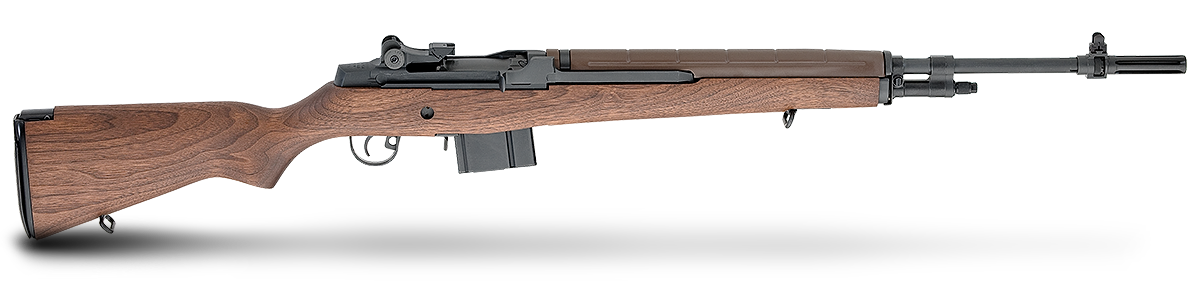
There is no doubt the A2 has the fun factor going for it at the range and would look great on the wall next to a Springfield Trapdoor, M1 Garand or an M1A. The thing is, we need to know where we have been to know where we are and where we are going.
Conclusion
I have used the AR-15 platform for so long that muscle memory takes over. Magazine changes, selector switch manipulation, and charging handle operation is second nature. When I shoot a different platform, there is that voice in my head that says “this isn’t an AR-15.” So, I adapt. But I know exactly how to shoot an AR, and shoot it well.
For me, the incremental changes to the AR-15 mean the design is enduring. The fact that the platform is still being used, means it performs. I’m sold on it.
Editor’s Note: Please be sure to check out The Armory Life Forum, where you can comment about our daily articles, as well as just talk guns and gear. Click the “Go To Forum Thread” link below to jump in and discuss this article and much more!
Join the Discussion
Featured in this article


Share


Continue Reading

Did you enjoy this article?

 240
240
Springfield Armory® recommends you seek qualified and competent training from a certified instructor prior to handling any firearm, and to be sure to read your owner's manual. The views and opinions expressed on this website are those of the authors and do not represent the views and opinions of Springfield Armory.
Product prices mentioned in articles and videos are current as of the date of publication.

Robert A. Sadowski
Robert A. Sadowski has written about firearms and hunting for more than fifteen years. He has trained with some of the country’s finest firearm instructors in handguns, rifles/carbines, shotguns and long-range shooting. He is the author of numerous gun books, including 9MM — Guide to America's Most Popular Caliber, a #1 New Release on Amazon. He is a contributing editor to numerous gun-enthusiast magazines and websites, including Combat Handguns, Black Guns, Gun Tests, Gun Digest, Gun World, Ballistic, range365.com, SHOT Business, and others. He also edited Shooter’s Bible Guide to Firearms Assembly, Disassembly, and Cleaning; 50 Guns That Changed the World; and Gun Traders Guide.